Google offers publishers new tool to combat AI search traffic decline
The tech giant has released an embeddable button allowing readers to designate publishers as preferred sources, aiming to retain click-throughs as AI-driven search reduces direct website visits.
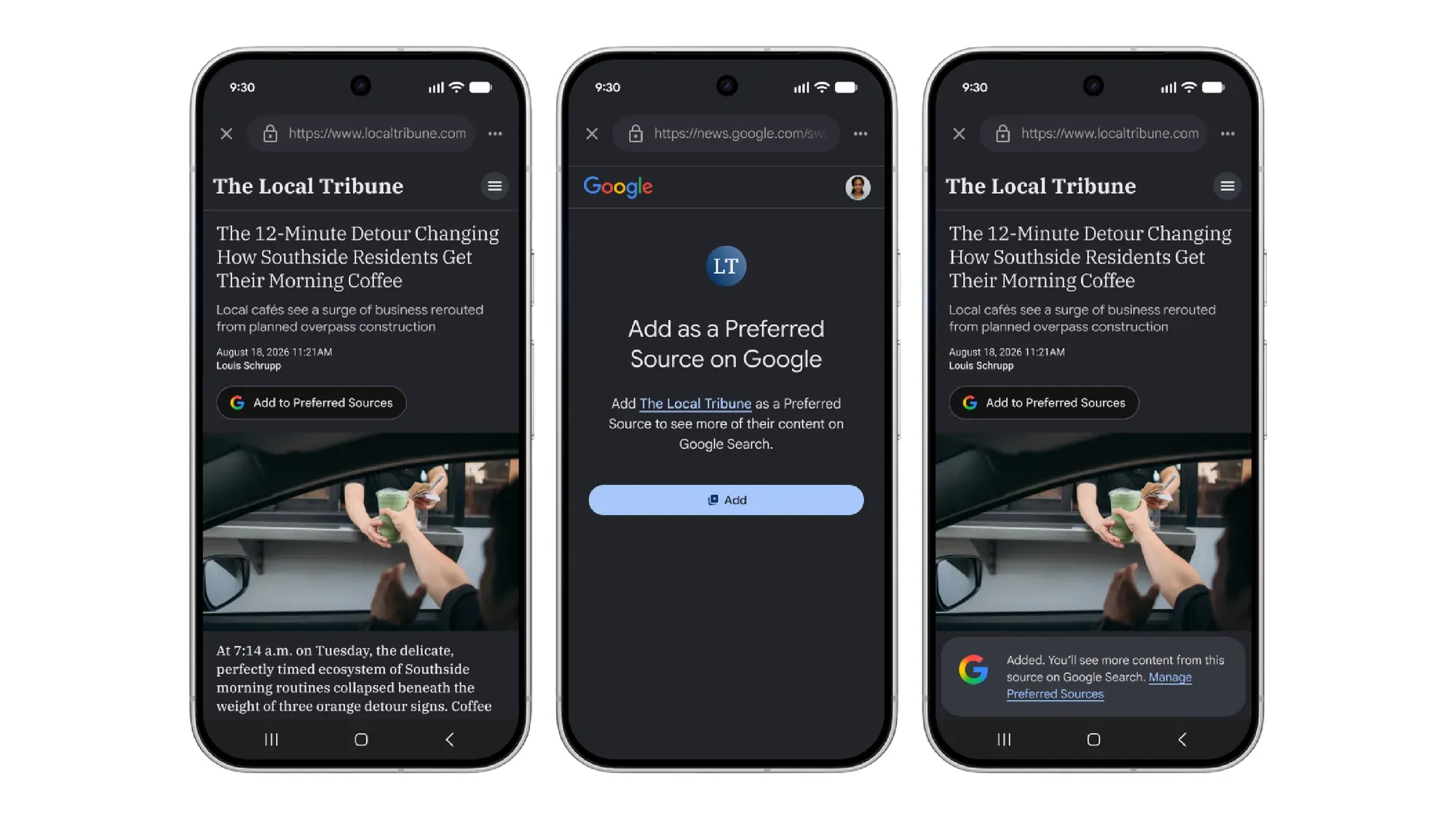
Google has introduced a new interactive button designed to help online publishers retain reader traffic as AI-driven search features reduce direct clicks to websites. The “Preferred Sources” button is now available for publishers to embed directly on their own websites, allowing readers to designate a specific publication as a favourite source. Once selected, the site is highlighted more frequently across Google Search, Discover, and Google News, providing a direct pathway for users to access trusted content.
The launch follows Google’s initial rollout of the Preferred Sources feature in May 2026, which was integrated into its AI experiences, including AI Mode and AI Overviews. The option had previously been available in Top Stories. As of that May launch, Google reported that users across the web had already selected over 345,000 unique sources through the feature. The company stated that the move is intended to make it easier for readers to find links from sites they know and trust when searching for content or interacting with Google’s AI.
To address the impact of AI on traffic-dependent businesses, Google cited earlier studies indicating that people are twice as likely to click through to a preferred source when available. By offering publishers these additional tools, the tech giant aims to assuage the damage caused by the rapid growth of AI-powered search features. The new button provides a tangible mechanism for publishers to encourage readers to formalise their preference, potentially stabilising traffic flows that have been disrupted by AI summaries and overviews.
Alongside the new button, Google announced that readers will soon be able to customise their Discover feed in the Google app using natural language commands. To use this feature, readers will tap a three-dot menu in the feed and specify which topics they would like to see more or less of. This allows Google to refine the feed in real-time, offering a level of user control that mirrors recent developments in other digital platforms.
The search giant is not the only company turning to AI to offer feed-tuning tools. In recent months, a number of top social media apps have launched user-controlled algorithms that allow people to fine-tune the content recommended to them. Google’s addition of natural language customisation positions it within this broader trend of giving users more agency over their digital consumption, while simultaneously helping to manage the volume of content generated by AI systems.
In addition to personalising the Discover feed, Google said Android users will soon be able to customise their audio daily briefings in the Google News app. These updates, described as features readers will “soon” be able to use, suggest that the full suite of customisation tools is not yet available to all users. The company continues to refine its ecosystem to balance the efficiency of AI with the need for personalised, trusted sources in a shifting media landscape.