Global press freedom index hits 25-year low as nations face tightening media controls
For the first time since the index began in 2002, more than half of assessed nations are classified as having difficult or very serious conditions for media operations, with criminalisation cited as a primary driver of the decline.
Reporters Without Borders has released its annual World Press Freedom Index, revealing that global press freedom has deteriorated to its lowest point in a quarter of a century. The Paris-based NGO assessed 180 countries and found that for the first time since the index began in 2002, more than half of the nations fall into categories classified as having difficult or very serious conditions for journalism. This marks a significant shift in the global media landscape, with the proportion of countries facing poor press freedom conditions reaching a historic high.
The organisation warns that journalism is increasingly being criminalised worldwide, with over 60 per cent of nations imposing various restrictions on media workers. Only seven countries, mostly from the Nordic region, are ranked as having good press freedom. The report attributes this broad decline to a combination of authoritarianism, ongoing wars, and the misuse of emergency legislation to suppress media access. Eastern Europe and the Middle East remain the most dangerous regions for journalists, with Russia and Iran ranking in the bottom ten of the index.
Significant declines were recorded in major democracies, with the United States dropping seven places to rank 64th under the current administration. Reporters Without Borders downgraded the US to a problematic score, citing a systematic policy of attacks on the press. Specific concerns include the detention and deportation of Salvadoran journalist Mario Guevara and the suspension of public media institutions. In Latin America, Argentina fell 11 places to 98th under President Javier Milei, while El Salvador plummeted 105 places to 143rd following a declared war on criminal gangs.
The index highlights that the criminalisation of journalism is a global phenomenon driven by authoritarian states, political powers, predatory economic actors, and under-regulated online platforms. Anne Bocande, RSF's Editorial Director, noted that attacks on the right to information are now operating in plain sight. She called on democratic governments and citizens to implement firm guarantees and meaningful sanctions, arguing that current protection mechanisms are insufficient and that international law is being undermined by a culture of impunity.
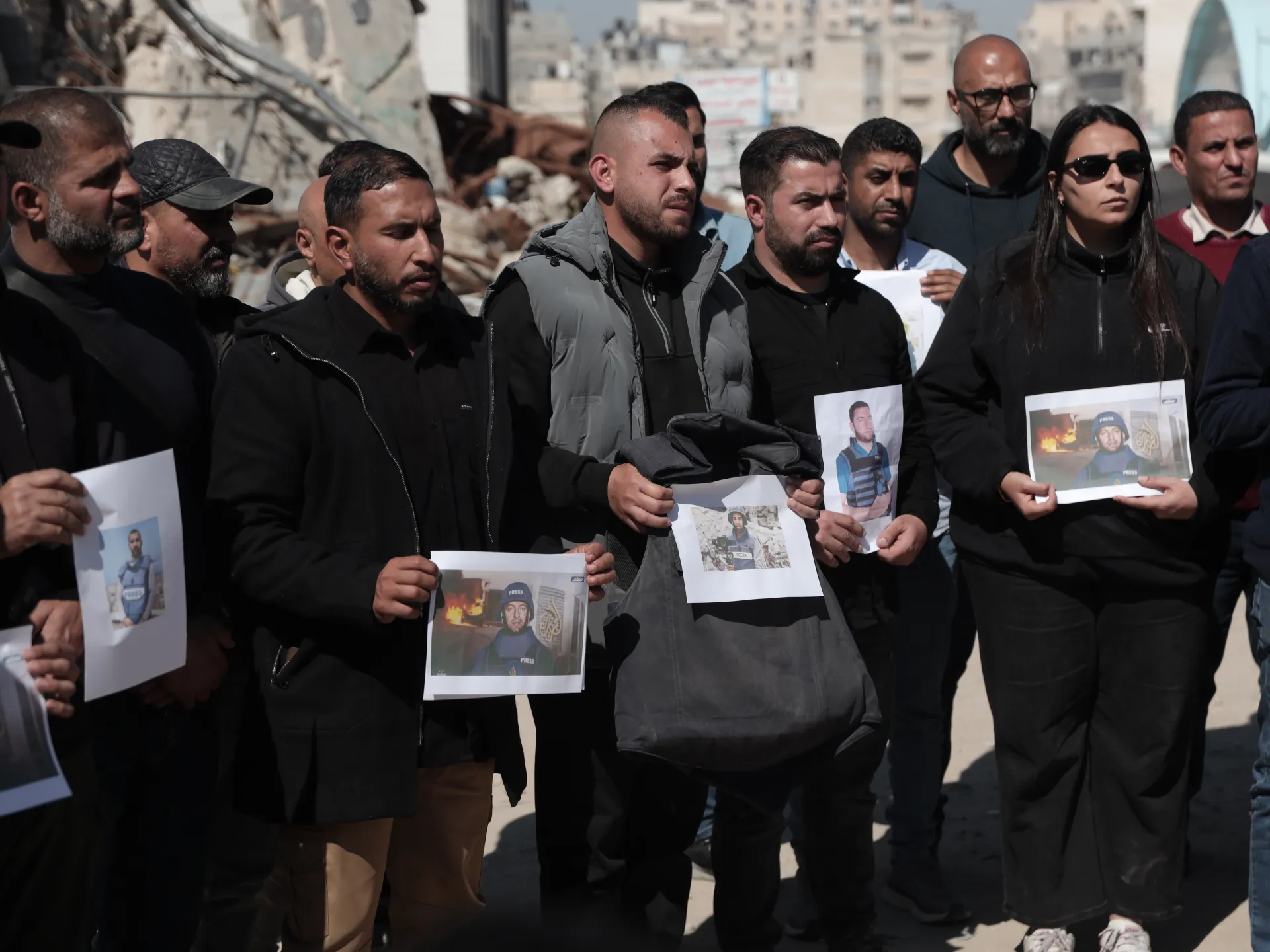
Regional conflicts continue to drive the deterioration of media safety, particularly in the Middle East. RSF noted that since October 2023, more than 220 journalists have been killed in Gaza, the West Bank, and Lebanon by the Israeli army. Israel is ranked 116th in the index. The report also cites India, Egypt, Georgia, Turkiye, and Hong Kong as prime examples of state-imposed crackdowns, where media workers face legal and physical risks.
Despite the grim findings, the report concludes that the spread of authoritarianism is not inevitable. The organisation urges global action to end the criminalisation of journalists, emphasising that inaction serves as a form of endorsement for these repressive measures. The findings underscore a critical need for stronger international responses to protect the fundamental right to information in an increasingly restrictive global environment.