Global military expenditure hits record $2.887 trillion as geopolitical tensions persist
The Stockholm International Peace Research Institute reports that defence budgets worldwide have reached an unprecedented high, driven by conflicts in Ukraine, Gaza, and Sudan, alongside a strategic shift in European security policy.
Global military expenditure has reached a record high of $2.887 trillion in 2025, marking the 11th consecutive year of increases according to new data from the Stockholm International Peace Research Institute (SIPRI). This unprecedented rise in defence spending is attributed to ongoing conflicts in Ukraine, Gaza, and Sudan, as well as heightened geopolitical tensions across the globe. The report indicates that the trend is likely to continue through 2026 and beyond, driven by long-term spending plans already locked in by various governments.
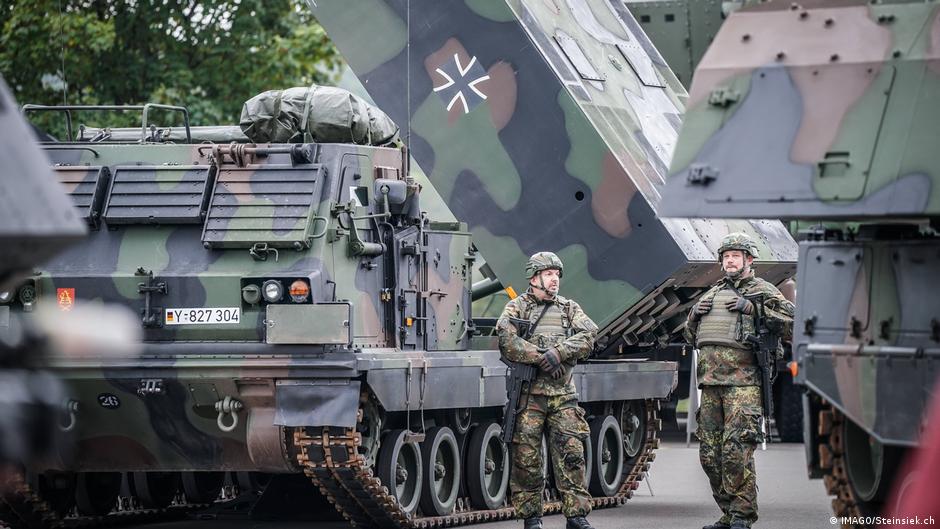
Europe emerged as the primary driver of this global surge, with regional defence spending rising by 14% to $864 billion. The conflict in Ukraine has fundamentally altered security perceptions, prompting Central and Western European nations to materialise long-held militarisation plans. Notably, Germany became the world's fourth-largest military spender in 2025, increasing its budget by 24% to $114 billion. For the first time since 1990, German military spending exceeded the NATO benchmark of 2% of GDP, reaching 2.3%, a shift facilitated by changes to its fiscal rules that exempt defence spending above 1% of GDP from strict debt brake constraints.
While European budgets expanded significantly, United States defence spending fell by 7.5% to $954 billion, remaining the largest global contributor at approximately one-third of the world total. This reduction was largely due to the absence of new military aid for Ukraine, which SIPRI counts as part of the donor country's expenditure. However, SIPRI researcher Xiao Liang notes that this slowdown is expected to be short-lived, with the new 2026 budget approved by the US Congress signalling a substantial increase amidst rising tensions in the Middle East and Asia.
Significant increases were also recorded in Asia and Oceania, where spending rose by 8.5% to $681 billion. China maintained its position as the world's second-largest spender, increasing its budget by 7.4% to support a modernisation plan targeting 2035. In the region, Japan and India recorded substantial growth, with Japanese spending reaching $62.2 billion and India's rising by 8.9% to $92.1 billion. These increases reflect regional security concerns, including tensions with China and a recent conflict between India and Pakistan, as well as a broader pressure on allies to become more self-reliant.
The aggregate impact of these fiscal shifts has resulted in a global military burden of 2.5% of GDP, the highest level recorded since 2009. This metric highlights that governments are directing a larger share of their economic output toward defence rather than other societal needs. SIPRI warns that this reallocation of resources carries deep consequences, potentially forcing cuts to social services and development aid. Furthermore, the researcher argues that a more evenly distributed military balance does not necessarily enhance safety, suggesting instead that the current trajectory fosters an arms race that reduces trust and increases the risk of miscalculation.