Glacial collapse likely triggered deadly floods on Nepal-Tibet border
Rising temperatures are destabilising mountain ice, with initial analysis suggesting a massive glacier breakaway caused the disaster that killed at least 160 people.
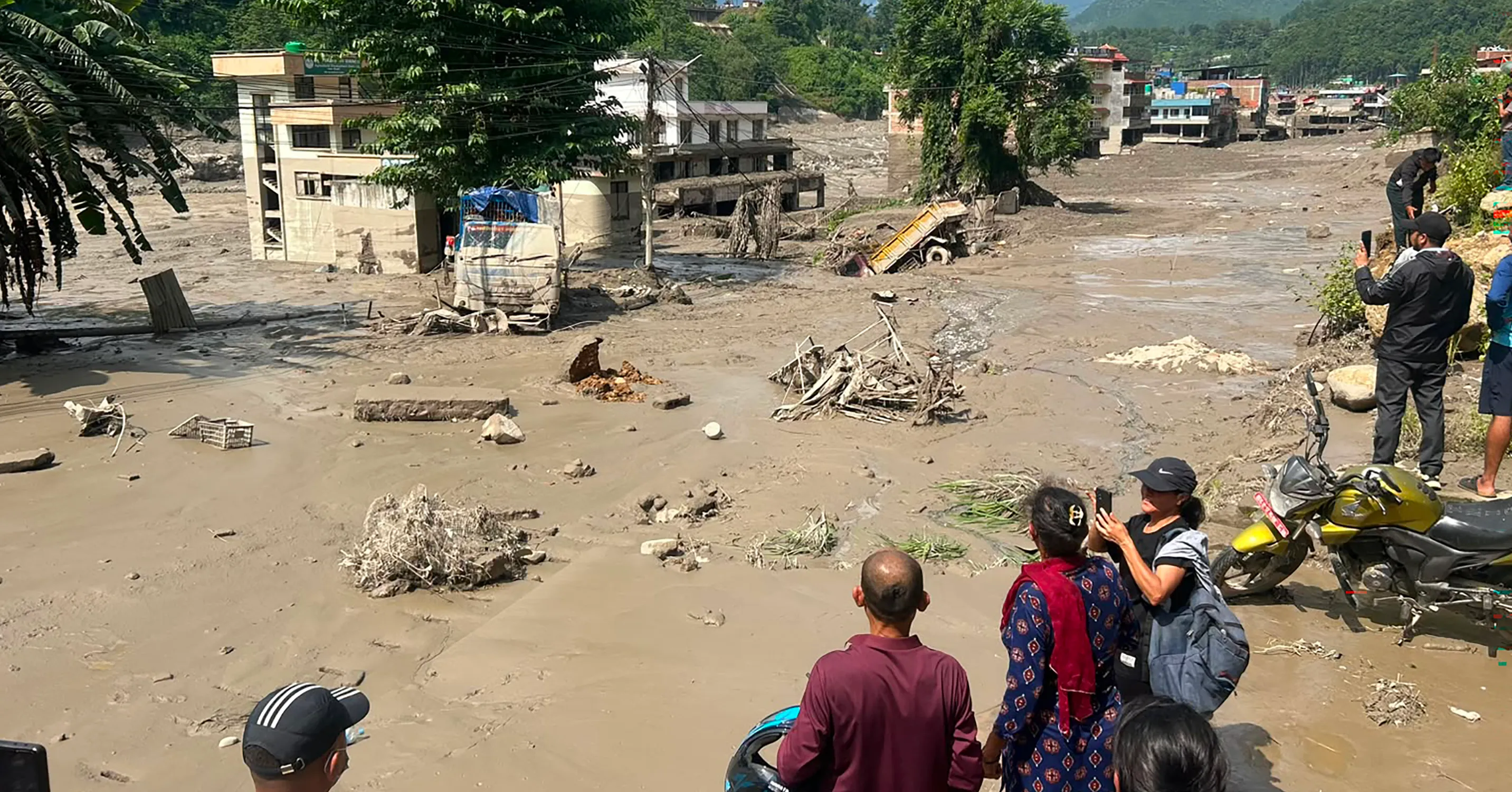
Flash floods struck the mountainous border region of Nepal and Tibet on Wednesday, killing at least 160 people and leaving hundreds, including dozens of international tourists, missing. Initial analysis of satellite imagery and reports from the Nepalese government indicates the disaster was likely triggered by a landslide caused by a large section of a glacier collapsing into the valley. The force of the collapse and the subsequent debris flow was so significant that it registered as a magnitude 5.2 seismic event, according to the US Geological Survey.
Joseph Shea, an associate professor of geography at the University of Northern British Columbia, noted that the glaciers in the region are in definite retreat. "There’s a lot of glacier mass up there, but we’re seeing thinning, we’re seeing retreating," Shea said. Since 2000, the world’s glaciers have lost five percent of their ice, with much more drastic impacts observed in specific regions. Nepal’s glaciers lost nearly a quarter of their area between 1970 and 2010, and more than 160 smaller glaciers in the country have vanished entirely.
Daniel Shugar, a geologist at the University of Calgary in Canada, told The New York Times that satellite imagery suggested a 2,000-foot-wide piece of ice may have fallen almost 4,000 feet. Shugar described the impact as pulverising the ice into water with the force of its fall. While he emphasised that it is still too early to make conclusive statements about the cause, Shugar noted to Reuters that snow present on the glacier earlier in the week may have melted due to warm temperatures, contributing to the instability.
Retreating glaciers can trigger landslides as they shrink and can no longer hold back sediment. As these glaciers retreat, they often leave large, dammed lakes at higher elevations. "If you have a landslide suddenly into a lake, you get an overtopping of the dam, and then the whole thing can collapse catastrophically," Shea explained. Known as glacial lake outburst floods, two of these events hit Nepal last year, highlighting the growing risk for millions of people living in harm’s way around the world.
A recent study finds that 40 percent of the world’s glacial ice could disappear if the world does not keep warming under 1.5 degrees Celsius. Glaciers elsewhere have already broken apart with destructive results, including the collapse of a Swiss glacier last year that buried a town, and a glacier collapse in Italy in 2022 that killed 11 mountaineers. Both events were linked with rising temperatures.
Shea noted that many factors in a warming world can play on each other to destabilise glaciers. "It’s summertime," he said. "There’s lots of warming, lots of melt happening, lots of water around. There’s also things like alpine permafrost thaws: The ground temperatures warm up, and big blocks and chunks that would have been frozen in place are now suddenly becoming mobile."