German industry bodies call for structural reform to secure space sector dominance
A joint study by Roland Berger and the Federation of German Industries highlights the strategic importance of the space industry, valued at $600 billion and projected to reach $2.32 trillion by 2040.
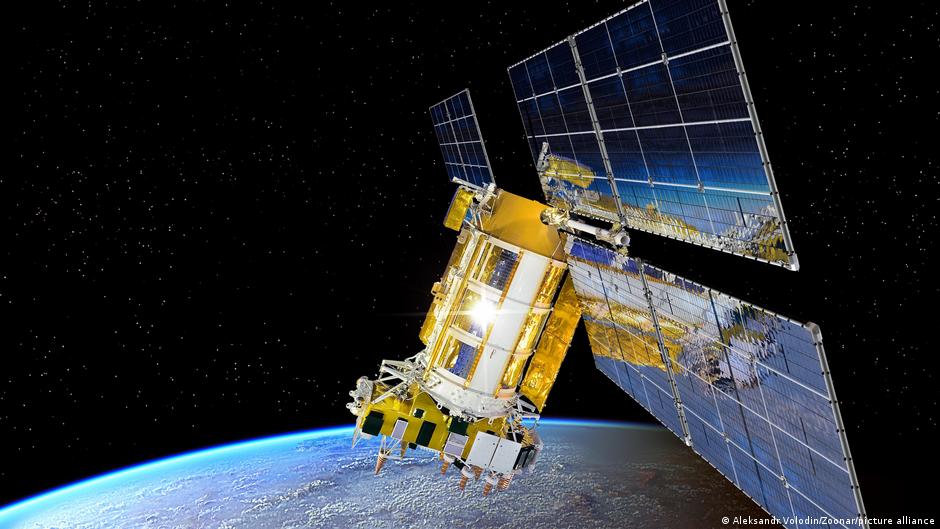
German companies are rapidly expanding their footprint in the global space sector, developing satellites and applications for both civilian and military purposes. A study conducted by the consulting firm Roland Berger and the Federation of German Industries (BDI) values the current market at approximately $600 billion, with projections indicating growth to $2.32 trillion by 2040. This figure represents roughly four times Germany’s federal budget for 2025, underscoring the economic scale of the emerging industry.
The sector is bifurcated into upstream infrastructure and downstream applications. Approximately $150 billion is currently flowing into the upstream market, which includes the production of launch pads, ground segments, and satellites. The larger share, around $450 billion, is invested in downstream applications such as positioning, navigation, timing, Earth observation, and satellite communications. Matthias Wachter, managing director of the BDI’s NewSpace Initiative, described the sector as essentially a data business, noting that services like communications and Earth observation are now indispensable to modern critical infrastructure.
Domestic firms are actively developing the technology required to capture this market share. In launch vehicle development, Isar Aerospace in Munich is building rockets, while Rocket Factory Augsburg and HyImpulse Technologies in Neuenstadt am Kocher have vehicles in the testing phase. Satellite manufacturing and data services are led by companies such as OHB in Bremen, The Exploration Company near Munich, OroraTech for wildfire monitoring, Constellr for heat pattern detection, and LiveEO for infrastructure monitoring. Approximately three-quarters of these space companies serve clients in traditional industries, utilising data for smart farming, logistics, and autonomous driving.
Despite significant private innovation, industry bodies including the BDI and the German Aerospace Industries Association (BDLI) argue that government support must evolve. They are urging the German government to reduce bureaucracy, cut regulation, and provide more structural reforms and bolder state contracts. Wachter emphasised that while Germany has nothing to be ashamed of in terms of technology, there is significant catching up to do relative to the United States. He noted that space travel is no longer a niche prestige project but a key enabler of future technologies on Earth.
Financial commitments from the state are already substantial, with Germany having committed €5.4 billion to European Space Agency programs and planning to invest €35 billion in military space capabilities over the next five years. However, the study highlights the competitive landscape, with the US holding 40% of the global market in 2024, Asia at 20%, and Europe at 17%. To maintain Europe’s current share through 2040, an additional €237 billion in investment is required. If Europe aims to increase its share to 25%, Germany would need to raise its investment from €4 billion to €10 billion.
Launch costs have fallen by 90% over the past 20 years, largely due to the development of reusable launch vehicles, according to the US consulting firm McKinsey. This reduction has opened new business opportunities and allowed private companies to provide rocket launch services and develop satellites, shifting the dynamic from state-led Cold War races to a commercial ecosystem. The BDI warns that dependence on other countries for key sectors and critical infrastructure poses significant risks, reinforcing the need for domestic capacity.