Bolivian military police deploy tear gas to end 11-day road blockade protests
Authorities in Bolivia have arrested demonstrators and used tear gas to disrupt road blockades that had persisted for 11 days, marking a significant enforcement action in the ongoing unrest.
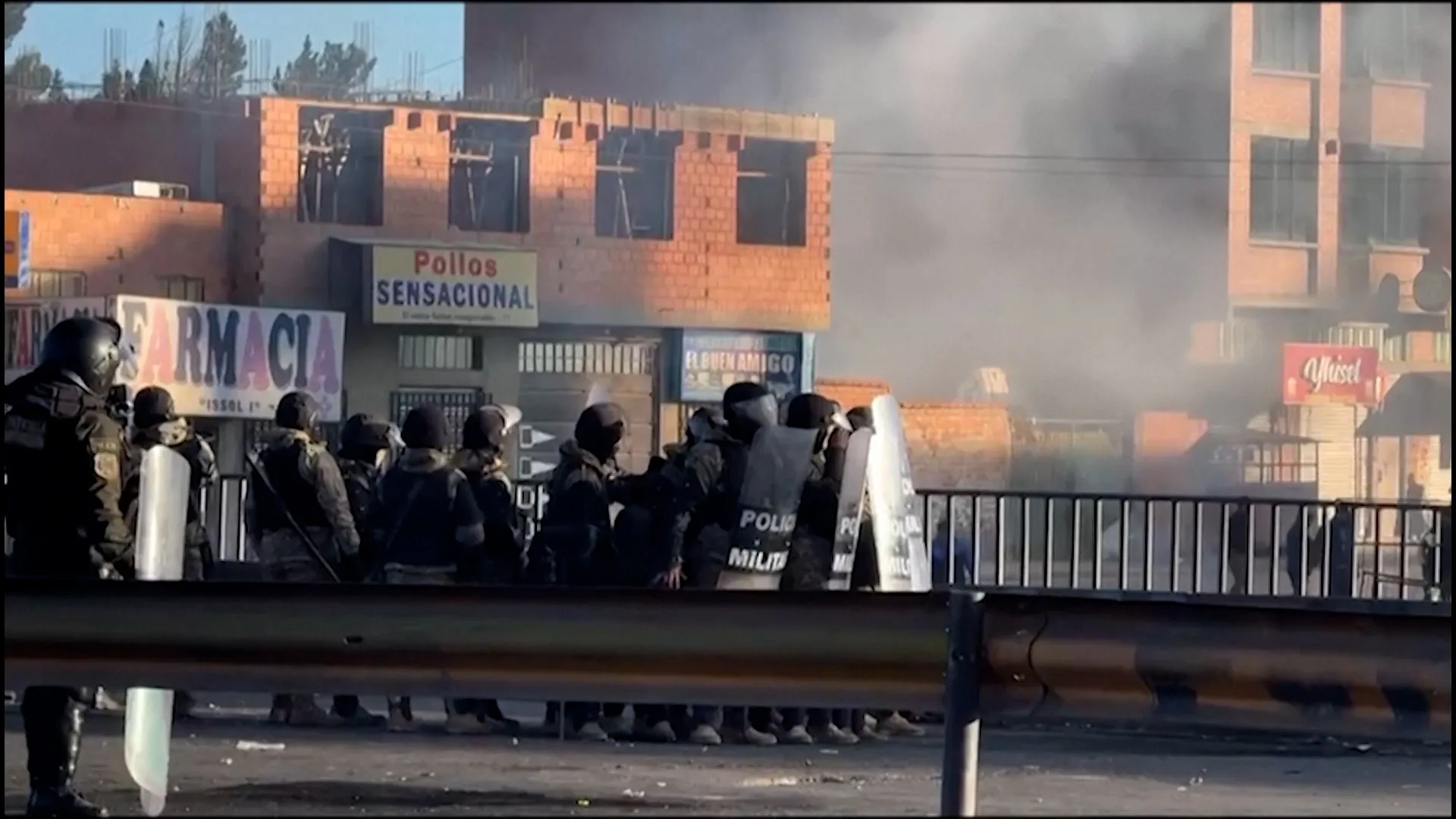
Bolivian military police have initiated operations to clear road blockades that had been maintained by demonstrators for 11 days. The intervention involved the use of tear gas to disrupt the blockades and the arrest of individuals involved in the protests, according to reports from Al Jazeera Global News.
The deployment of military police marks a direct state response to the sustained civil unrest, which had effectively halted traffic and access through key routes for nearly two weeks. The specific tactics employed, including the dispersal of tear gas, indicate a shift towards active enforcement to restore normalcy to the affected areas.
While the source material confirms the actions taken by authorities, it does not provide detailed information regarding the scale of the protests, the total number of arrests made, or the specific political demands driving the demonstrators. The repetitive nature of the initial reports suggests a focus on the immediate security response rather than the underlying causes of the unrest.
It remains unclear whether the term "army" used in some headlines refers to distinct operational units from the "military police" described in the detailed reports. The available information focuses on the actions of the military police in clearing the roads and managing the demonstrators.
The incident highlights the ongoing challenges faced by the Bolivian government in managing civil dissent. Without further official statements or independent verification, the proportionality of the police response and the full scope of the protest movement remain undefined in the current reporting.