German Foreign Minister Wadephul advances strategic African partnership amid migration and security concerns
Berlin deepens engagement with the African Union framework, focusing on counter-extremism, vocational skills, and industrial investment while addressing recent xenophobic tensions in South Africa.
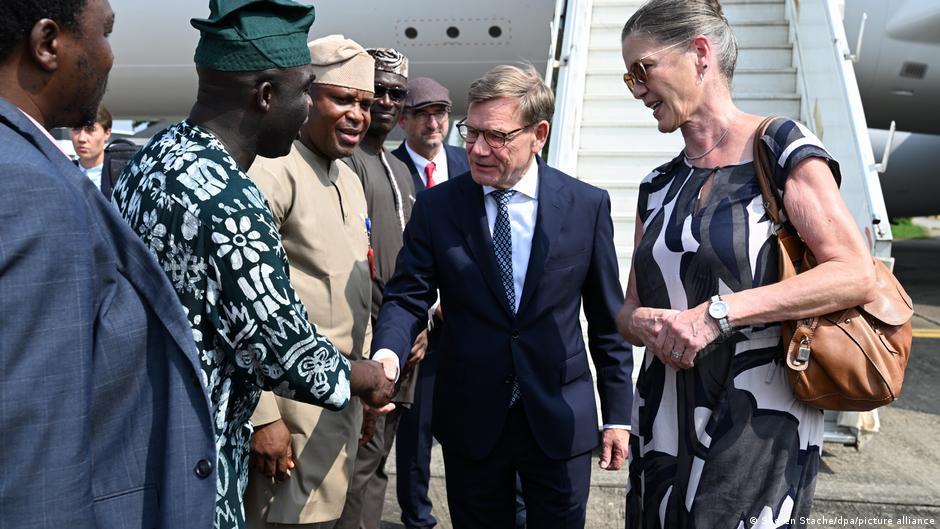
German Foreign Minister Johann Wadephul is undertaking his third diplomatic tour of Africa in 2026, a move he describes as a strategic necessity for Europe. The multi-country itinerary, which includes stops in Mauritania, Nigeria, and South Africa, aims to strengthen ties across security, migration management, skills development, and investment. Wadephul characterised the continent as a region of both destiny and opportunity, emphasising that a strong Africa is in Germany’s interest amidst global geopolitical upheaval.
The tour began in Mauritania, where discussions centred on regional stability and counter-extremism initiatives. The visit occurred shortly after a UN refugee agency report documented at least 144 deaths along Atlantic migration routes near the Mauritanian coast. During the stop, Wadephul’s delegation engaged with the Mourchidates, an all-female Islamic spiritual guide group trained by the state to prevent radicalisation. Correspondent Silja Fröhlich noted that the foreign minister was visibly moved by the women’s efforts to protect their communities in a deeply patriarchal society, highlighting Germany’s intent to bolster community-based approaches to security.
In Nigeria, Wadephul shifted focus to economic and creative partnerships, meeting with entrepreneurs, filmmakers, influencers, and students. He described Nigeria as a “powerhouse” in the creative industries and a striving nation with significant economic potential. Key areas for future cooperation identified during the visit include vocational education, science, technology, and innovation. The Nigerian Ministry of Foreign Affairs stated that the country welcomes these engagements to support inclusive economic growth and regional stability, while local content creator Shalom Onyuinye noted the significance of Wadephul’s recognition of Nigeria’s growing cultural momentum.
The final leg of the tour concludes in South Africa, Germany’s largest economic partner on the continent, where more than 600 German companies operate. According to the Federal Foreign Office, German direct investment in South Africa reached €7.99 billion ($9.1 billion) in 2023, while South African investment in Germany totalled €2.6 billion. Analyst Fidel Amakye Owusu noted that South Africa’s advanced economy and role as a manufacturing hub make it attractive to foreign investors, though the visit also addresses recent xenophobic attacks. Wadephul is expected to double down on shared democratic values and discuss industrial cooperation and energy transition partnerships with business and political leadership.
The diplomatic efforts reinforce a strategic dialogue framework established last year between Germany and the African Union (AU) in Addis Ababa, Ethiopia. Germany pledged funds exceeding €100 million to this initiative, which aims to deepen cooperation on global security crises and multilateral engagement. Wadephul stressed at the launch that Europe and Africa are closely interconnected politically, economically, and in terms of security, facing many of the same challenges that require reliable cooperation.