German engineers fortify Poland’s eastern flank as East Shield project advances
The deployment of 40 German combat engineers to install anti-tank obstacles near Budry marks a tangible step in Warsaw’s strategy to secure NATO’s eastern border.
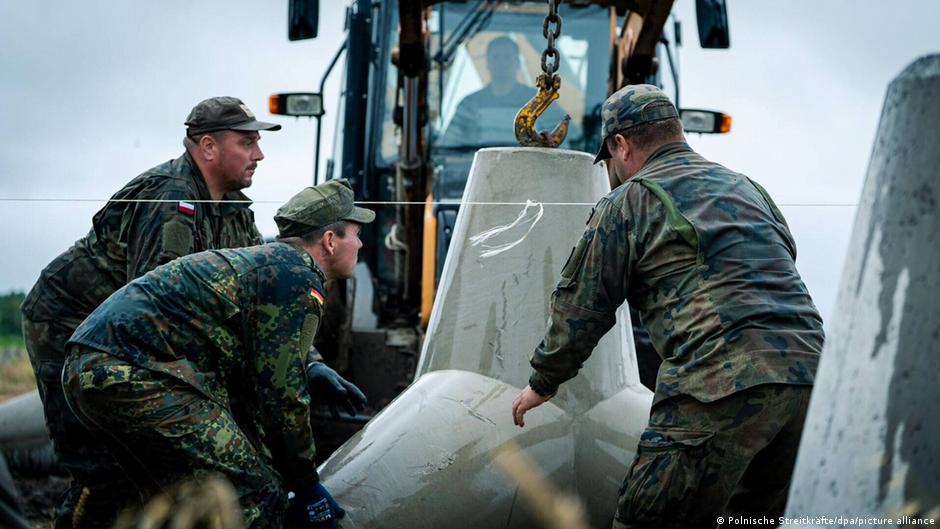
Approximately 40 German combat engineers have been assisting Poland in constructing the East Shield, a defensive barrier along its eastern border with Russia and Belarus. Since June, the German sappers have been deploying anti-tank obstacles, including concrete "Czech hedgehogs," near Budry in Masuria. The project aims to deter potential attacks from the east, with the barrier eventually spanning around 800 kilometres to protect NATO’s eastern flank.
The German contingent is scheduled to remain in Poland until October before moving to other sections of the defence line. In the six weeks since their deployment, the engineers have laid more than one kilometre of blocks. The installation, located approximately 200 metres back from the border, consists of three rows of these concrete blocks, while a deep ditch and another line of hedgehogs run along the border itself.
Polish General Stanislaw Czosnek inspected the works on Thursday and praised the German engineers' performance, stating he was "very impressed" by their output. German General Tito Gante accompanied the inspection and noted that the Bundeswehr has declared its support for the East Shield an official mission. Gante stated that the goal is to maintain peace with a credible deterrent, highlighting the comradely atmosphere between the two nations' soldiers.
The East Shield project began in 2024, following the shock of the Russian invasion of Ukraine. Polish Prime Minister Donald Tusk inspected the first completed section in November 2024, describing the project as an "investment in peace" intended to deter a potential aggressor. The construction is part of a broader increase in defence spending, with Poland’s 2026 budget reaching 200 billion zlotys, or approximately 46 billion euros, representing almost 5% of GDP.
This level of spending represents the highest relative defence expenditure within NATO. The current deployment is underpinned by the German-Polish defence agreement signed on 17 June 2026, which formalises the Bundeswehr’s support for the project. The agreement follows a long history of military cooperation between the two countries, including joint exercises and the 2003 sale of MiG-29 jets.
Lukasz Jasinski, an analyst at the Polish Institute for International Affairs, noted that the participation of German sappers holds political symbolic significance. He explained that Poland seeks to convince Germany and other partners that its eastern border is also the external border of the EU and NATO, urging Western partners to treat the border as their own.