Georgetown scholar John Esposito dies aged 86 after reshaping Western understanding of Islam
John L Esposito, a leading authority on Islam and international affairs, has died following complications from heart surgery. His career spanned a period of intense geopolitical friction, where he sought to replace prejudice with sociological analysis.
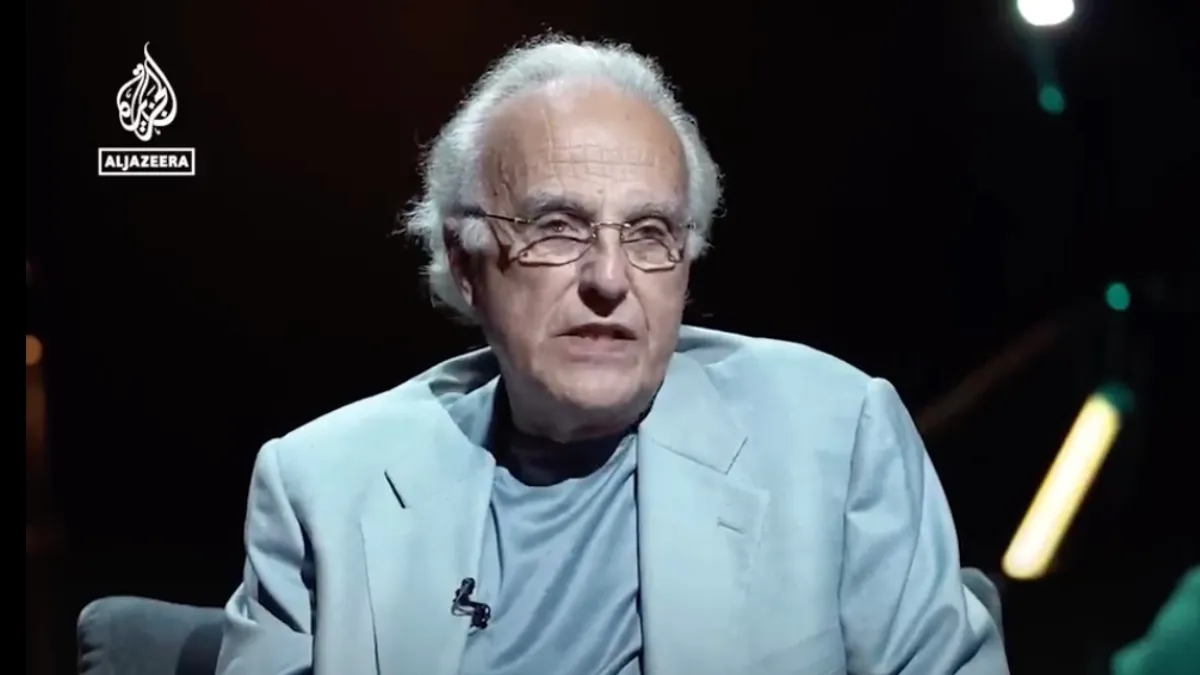
John L Esposito, a prominent scholar of religion and international affairs at Georgetown University, died on July 15, 2026, at the age of 86. His passing followed complications from heart surgery. Born in 1940 into a working-class Italian-American family in Brooklyn, New York, Esposito authored more than 55 books, primarily published by Oxford University Press, which have been translated into dozens of languages. He is widely credited with challenging Orientalist orthodoxies and reshaping Western understanding of Islam, particularly in the aftermath of the 1979 Iranian Revolution and the 9/11 attacks.
Esposito’s academic career began in 1974, a period when the study of Islam in international relations was largely absent from higher education institutions. He held a doctorate in religious studies from Temple University, earned under the supervision of Ismail al-Faruqi. Prior to his graduate studies, Esposito had joined the Capuchin Franciscan Order with the aspiration of becoming a Catholic priest, but he left before ordination to pursue secular scholarship. His entry into the academic job market was met with scepticism, as there was only one advertised position in Islamic studies at the time, and international relations programmes largely ignored the role of religion in global affairs.
The geopolitical landscape shifted dramatically following the 1979 Islamic Revolution in Iran and the 2001 attacks in the United States, creating an urgent demand for expert analysis on Islam-West relations. Esposito responded by publishing groundbreaking works on the relationship between Islam and politics, addressing the diverse political and social structures of Muslim societies. His expertise became highly sought after by governments and media outlets, although this interest was often driven by national security concerns rather than a desire for unbiased understanding.
During this era, dominant Western narratives were shaped by figures such as Bernard Lewis, who wrote about the “Roots of Muslim Rage,” and Samuel Huntington, who advanced the “Clash of Civilizations” thesis. These perspectives reinforced pre-existing biases and were often enhanced by US and Israeli national security narratives regarding an alleged Islamic threat. Esposito’s scholarship provided a critical counterpoint, offering a historically grounded and sociologically compelling analysis that refused to view Islam as the “other.”
A central component of Esposito’s intellectual work was his critique of the “secular bias” in mainstream social science theories. He argued against the assumption that religion was a relic of the past, demonstrating that modernisation theories were ideologically biased based on specific Western experiences. Instead, he interpreted the politics of the Muslim world from the perspective of the masses, focusing on their religious identity and lived experiences rather than applying a Western normative framework from the outside in.
Esposito’s research on political Islam focused on the social conditions and collective aspirations that rendered it appealing to diverse constituencies. While many mainstream scholars concentrated on the implementation of Sharia, Esposito identified core aspirations such as dignity, justice, self-determination, and opposition to external domination as the drivers of political Islam. This approach allowed him to explain the resilience of political Islam as a force rooted in universal human desires rather than solely in religious doctrine.
He is survived by his wife of 61 years, Jean Esposito. His legacy includes a significant contribution to cross-cultural understanding and international law, providing a foundation for younger generations of scholars to build upon his pioneering research.