Gaza couples marry amid displacement, loss and rising costs
Couples in Gaza are holding weddings in tents, damaged venues and mass ceremonies as war disrupts homes, incomes and traditional celebrations.
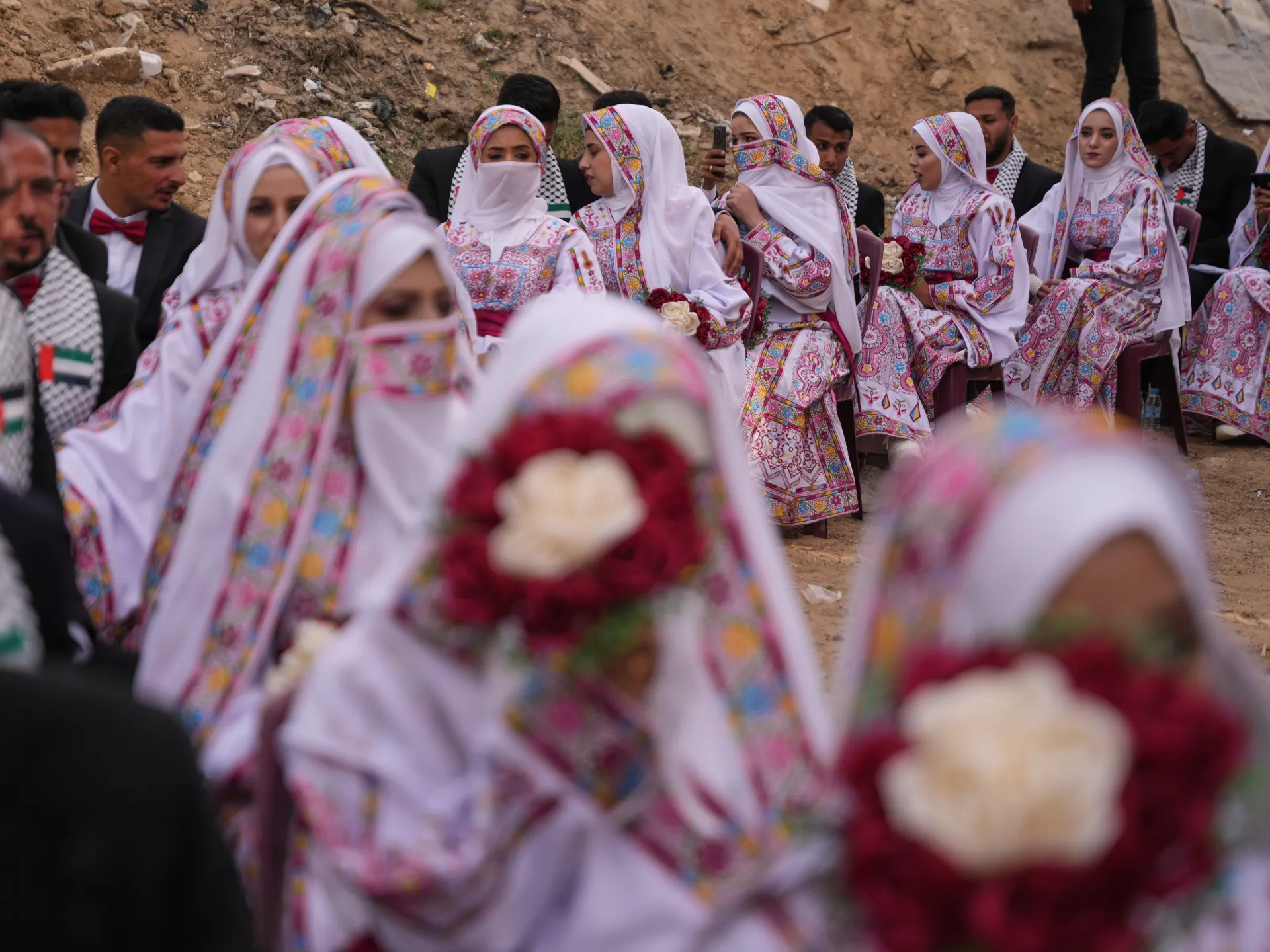
Couples in Gaza are adapting engagement and marriage to conditions of displacement, bereavement, shortages and economic hardship, according to an Al Jazeera Global News feature. Weddings once centred on large gatherings, family meals, music, flowers and rented halls; many are now being held in tents, damaged venues or shared ceremonies.
Haneen, 23, remains in Gaza while her fiancé lives in Egypt. The pair have maintained their engagement through unreliable internet and hope to marry next spring. She said calls often end because of outages or dying phone batteries, leaving the couple to sustain their relationship across borders and amid uncertainty.
For others, the pressure is the cost of establishing a household. Ahmed al-Batsh said prices for gold, clothing, housing and transport had risen while incomes and employment had been disrupted. He is also preparing to marry while grieving his mother, whom he said was killed in April 2025.
Hala al-Khatib and Muhannad married on 26 December 2025 after repeated bereavements delayed their plans. Their home was bombed weeks later, and they now live in a tent. Hala said the couple had tried to restore a damaged house and create a sense of stability before losing it.
The feature reports that wedding dresses, photography, flowers, venues and rent have become harder to afford or access. Some halls have been damaged or closed, while fresh flowers are scarce and artificial bouquets are borrowed or rented. Mass weddings have offered a lower-cost alternative, including ceremonies for 54 couples in Khan Younis in December 2025 and 300 couples in Deir el-Balah on 25 April 2026.
The author, who married at al-Tayeb Hall on 1 September 2026 before moving into a tent, described marriage as a way for couples to preserve hopes of family life despite the conflict. The weddings do not remove the risks or losses surrounding them, but they provide some couples with a way to mark a future under conditions that have made ordinary celebrations difficult.