G20 finance ministers reach consensus on final statement despite China dissent and Russia tensions
US Treasury Secretary Scott Bessent insisted that the attendance of Russian Finance Minister Anton Siluanov did not disrupt the two-day summit in Asheville, even as European allies voiced frustration and China formally dissented on key economic and security provisions.
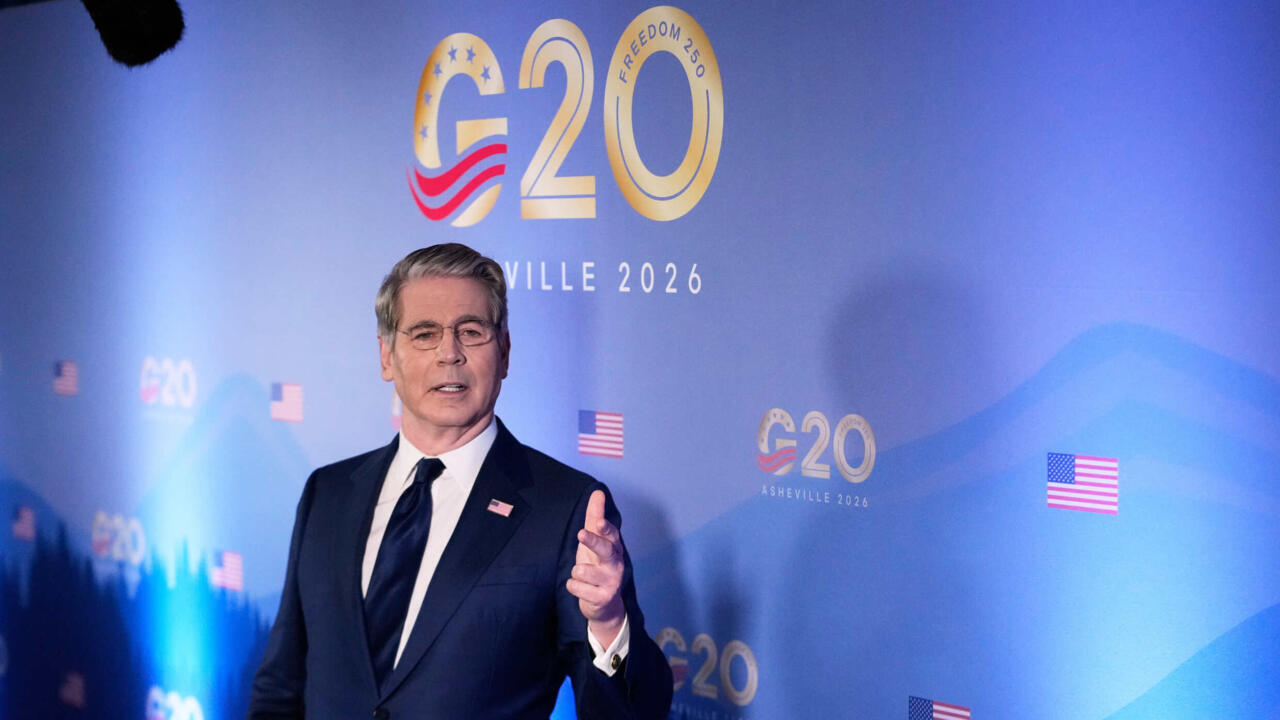
G20 finance ministers concluded a two-day meeting in Asheville, North Carolina, with broad support for a final statement, although China formally dissented on specific sections regarding the Strait of Hormuz and global trade imbalances. The gathering, which addressed the ongoing Middle East conflict, US tariffs, and continued support for Ukraine, sets the stage for a leaders’ summit to be convened by President Donald Trump in Miami in December.
US Treasury Secretary Scott Bessent stated that the attendance of Russian Finance Minister Anton Siluanov had “no impact” on the discussions, noting that Siluanov is not personally sanctioned. This assertion came despite frustration from European allies who protested the Russian minister’s presence at the US-hosted meeting. A traditional “family photo” of G20 participants was taken on Monday without Siluanov, following objections from European officials who argued that Moscow’s inclusion was premature given the conflict in Ukraine.
EU economy chief Valdis Dombrovskis told reporters that it was not the time to “normalize” Russia’s presence at such events, describing Moscow as a government “waging an aggressive war” and “killing civilians on a daily basis.” Canadian Finance Minister Francois-Philippe Champagne acknowledged that the situation “created discomfort,” though he added that the group needed to discuss collective action on global imbalances.
China’s dissent focused on the statement’s call for “free, safe, and predictable navigation through the Strait of Hormuz,” a waterway largely blocked by Tehran since the Middle East war began in late February with US-Israeli strikes on Iran. Beijing also took issue with a declaration that “excessive and persistent imbalances pose risks and can generate economic distortions,” language that echoes criticism of industrial capacity in the world’s second biggest economy.
The meeting also highlighted the frozen state of US-brokered talks on Ukraine, with the Kremlin maintaining maximalist demands to end the war. German Finance Minister Lars Klingbeil reported an “increase in brutal rocket attacks on the civilian population” in Ukraine and stated that European ministers made their position on support for Kyiv “absolutely clear.” He noted that Ukraine’s finance minister joined G7 discussions remotely on late Monday.
The G20, which comprises 19 nations plus the EU and the African Union, was established after the 1997–1998 Asian financial crisis to boost global economic and financial stability. As the US holds the rotating G20 presidency, Washington has been pushing for support on Iran sanctions and reducing trade imbalances, with Bessent indicating that some conversations with Russia regarding Iran support are “best done privately.”