Fusion startups turn to defence partnerships as climate funding slows
Xcimer has secured investment from RTX Ventures, while Pacific Fusion has signed an agreement with the US National Nuclear Security Administration.
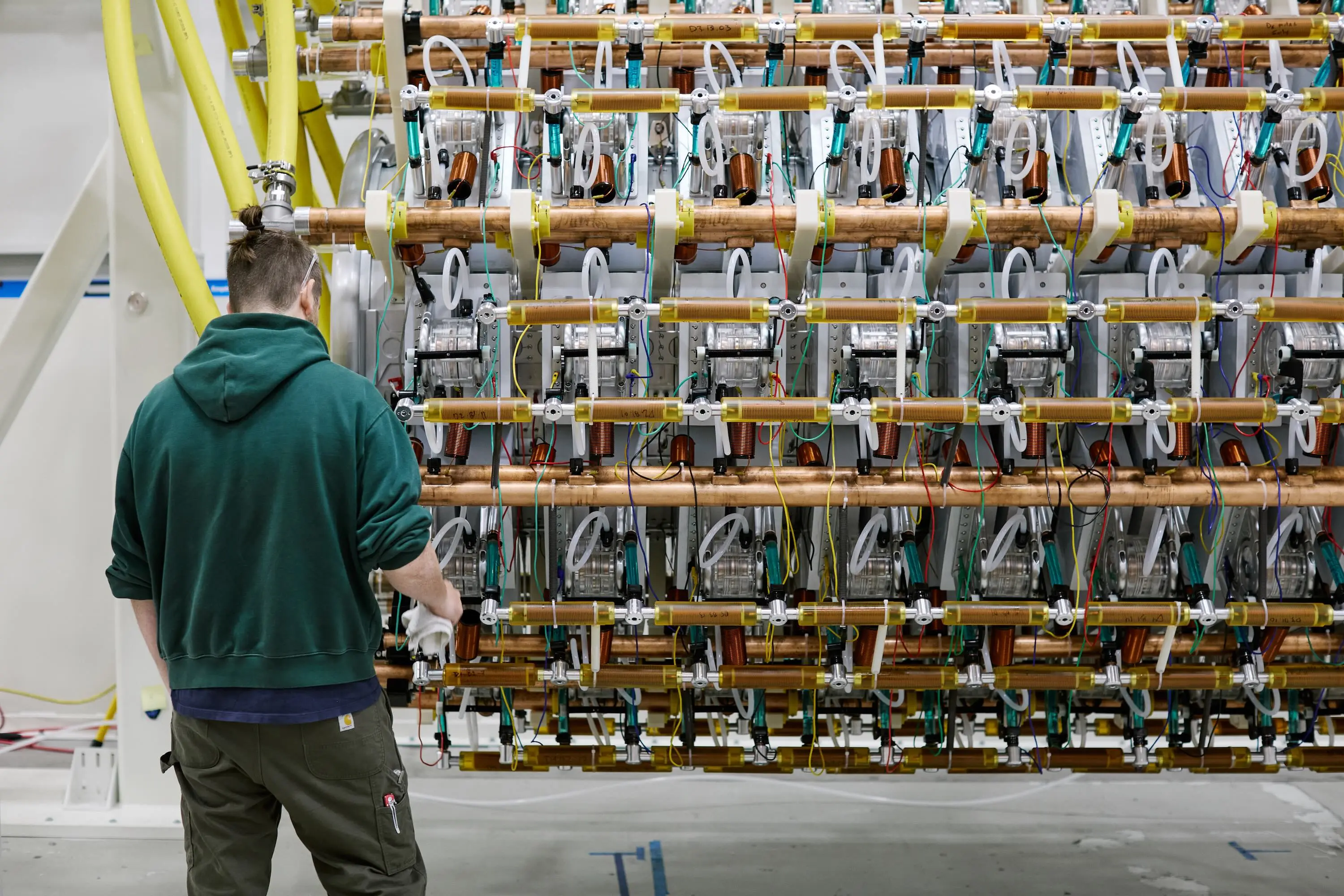
Fusion power startups are pursuing defence partnerships and funding as venture investment in climate technology slows, reviving longstanding links between fusion research and national security.
Xcimer last week announced a partnership with, and investment from, RTX Ventures, part of the aerospace and defence group RTX. The arrangement will allow RTX to explore potential defence applications for Xcimer’s high-power laser technology, although the funding and commercial terms were not disclosed.
Denver-based Xcimer operates what it describes as the world’s largest privately owned laser system. Its Phoenix system is intended to support the development of a fusion power plant, but currently operates at about one-tenth of the power the company says would be required for that facility.
Pacific Fusion announced last month that it had signed a memorandum of understanding with the US National Nuclear Security Administration covering high-energy-density fusion experiments. The company has also broken ground on a demonstration facility in New Mexico.
The facility is primarily intended to demonstrate net energy production, according to the supplied material, but may also support defence research. TechCrunch reported that the planned fusion reactions would be more powerful than those currently used by the US government in nuclear weapons experiments.
The arrangements reflect growing interest in potential defence uses for fusion technologies, including high-power lasers, as drone warfare increases demand for directed-energy systems. They do not, however, establish that fusion power is commercially viable, and the scope, funding and deliverables of both partnerships remain unclear.