Fuel costs deepen education barrier for Cambodia’s floating communities
Higher transport costs on Tonle Sap are forcing some families to borrow, row or share boats, while some children miss school.
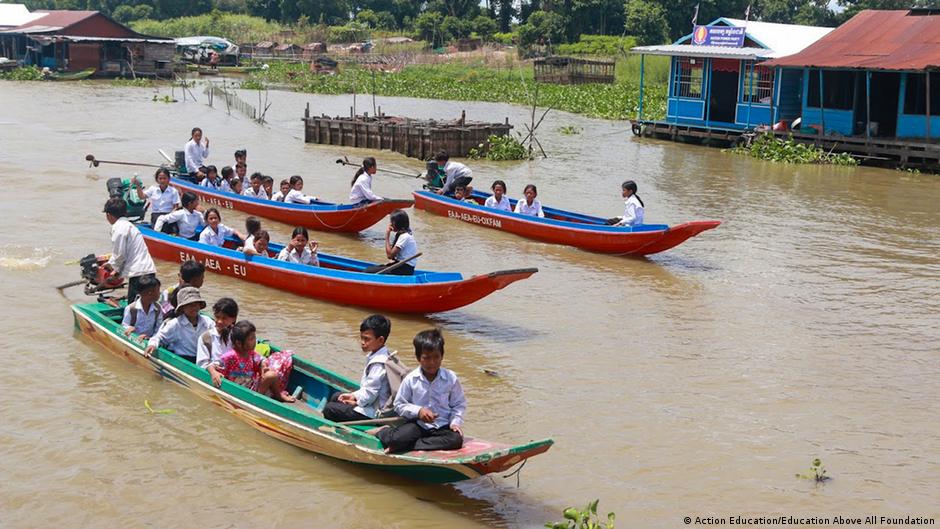
Rising fuel prices are making it harder for children in Cambodia’s floating communities to reach school, as families dependent on fishing struggle with higher transport and household costs.
Deutsche Welle reports that petrol prices rose 45 per cent and diesel prices more than 70 per cent in March, citing the World Bank. Global Petrol Prices, also cited by DW, puts current petrol prices at 5,700 riel per litre, up 26.7 per cent from a year earlier. The increases have been associated with the 2026 Iran war and wider regional supply disruptions.
On Tonle Sap, where roads may be absent, flooded or difficult to use, boats are essential for school and fishing trips. Some families have borrowed money, reduced spending on food and school supplies, or returned to rowing. Others are sharing boats and fuel costs, while some students reportedly miss school when transport becomes unaffordable.
The pressure also affects the delivery of education. Remote schools rely on boats to transport teachers, textbooks, food and maintenance supplies. Action Education in Cambodia said higher fuel costs can turn transport into a barrier to attendance for families with limited and unpredictable incomes.
Cost-saving measures can increase risks on the water. Shared boats may become crowded, while rowing lengthens journeys. Parents have also raised concerns about travel during storms and heavy rain.
The Cambodian government has introduced fuel discounts, tax reductions and zero customs duties on fuel imports. But for households whose income depends on fishing, pump-price relief may not offset the cost of travelling farther for fish or the loss of income when fuel cannot be afforded.