From ‘too frail’ to track’s headline act: The women’s 800m evolution
Switzerland’s Audrey Werro is now just 0.42 seconds away from breaking a 43-year-old world record, capping a century-long shift in how the event is governed and perceived.
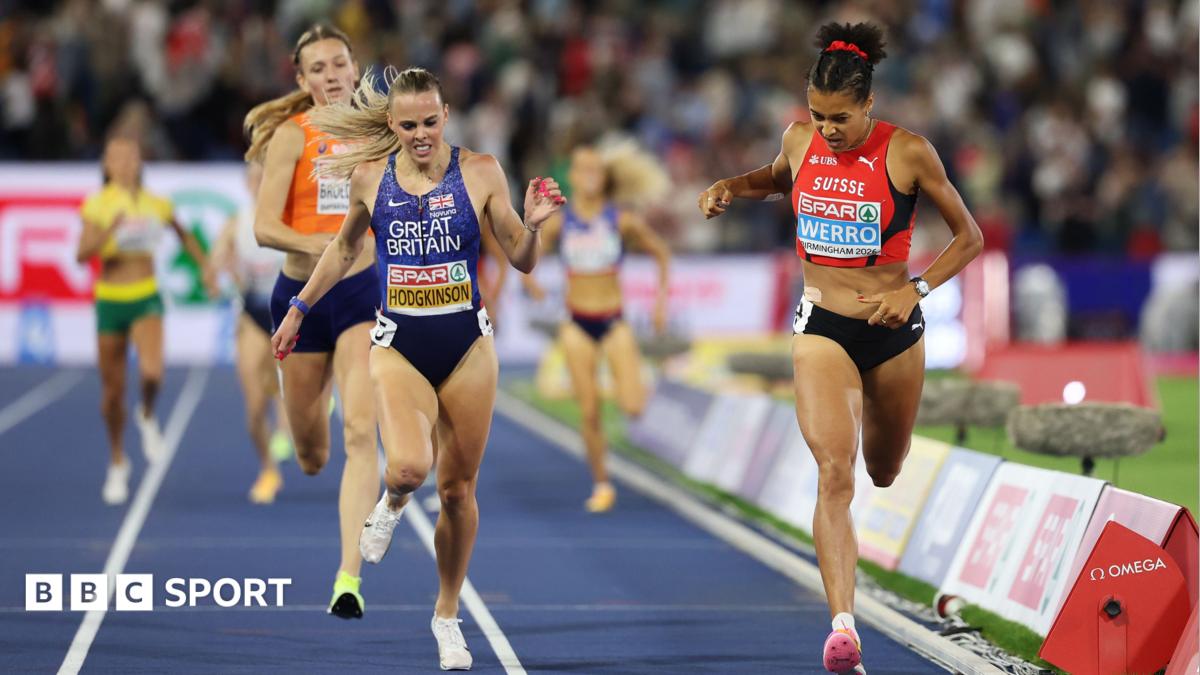
The women’s 800m has undergone a significant institutional transformation, moving from a controversial Olympic inclusion to one of the most anticipated events in modern athletics. The race’s current prominence is driven by a high-profile rivalry between Britain’s Keely Hodgkinson and Switzerland’s Audrey Werro, whose recent performance places her within striking distance of the long-standing world record.
The event’s history is marked by early institutional doubt. After debuting at the 1928 Amsterdam Olympics, where German athlete Karoline Lina Radke won gold, the 800m was removed from the programme for 32 years. The International Olympic Committee cited reports of extreme exhaustion, deeming the competitors too frail for the two-lap distance, a claim later proven false.
The race was reintroduced in 1960, setting the stage for a gradual normalisation of women’s middle-distance running. Ann Brightwell, who won gold and set a world record at the 1964 Tokyo Olympics, noted that the early years were defined by external scrutiny. Brightwell, who balanced her athletic career with a teaching job, recalled that women were often considered too delicate for such high-profile events, with critics claiming they collapsed during the race.
Subsequent decades saw the breaking of performance barriers that further legitimised the event. In 1979, Christina Boxer-Cahill became the first British woman to break the two-minute barrier, a milestone she compared to Roger Bannister’s sub-four-minute mile. Boxer-Cahill, now 69, highlighted the cultural shift in acceptance, noting that the sport had moved past the era where male dominance over women’s participation was a significant political issue.
The current world record of 1:53.28, set by Czech athlete Jarmila Kratochvilova in 1983, has stood for 43 years. While the record’s validity has occasionally been questioned due to allegations of state-sponsored doping in Czechoslovakia, it remains the benchmark for the current generation. Werro’s recent run at the Zurich Diamond League, which finished just 0.42 seconds shy of the record, has intensified speculation that the mark is vulnerable.
Hodgkinson, who holds the indoor world record, is set to compete in the 800m at the all-female athletics event Athlos in London on Friday. She has previously described a hamstring abnormality as being “built differently,” adding a layer of physiological intrigue to her campaign. Boxer-Cahill predicts the outdoor record will likely fall within the next year or two, potentially making 2026 a defining year for the discipline.