France deploys tanker trucks as drought exposes infrastructure deficits
As intense heat dries up local sources, French authorities rely on mobile water supplies while highlighting systemic leaks and broader European resilience challenges.
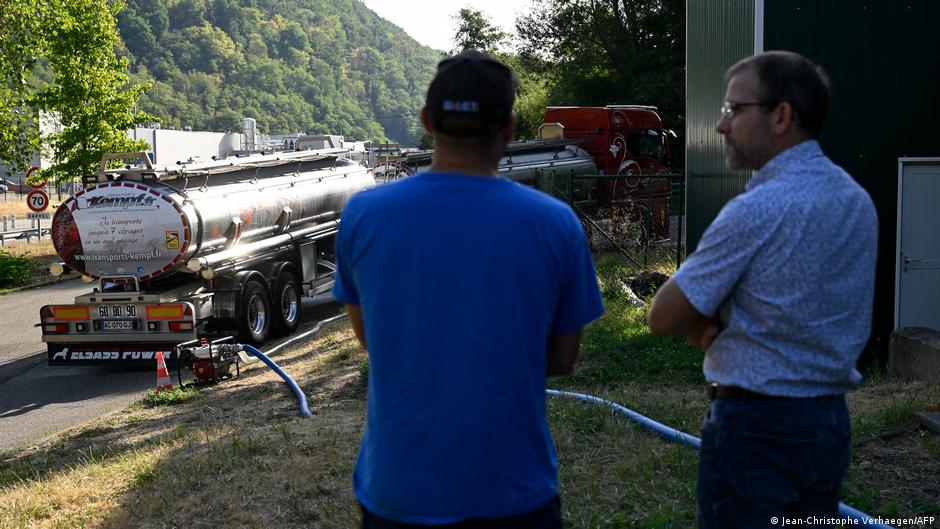
Tanker trucks have begun delivering drinking water to drought-stricken towns across France, including Sainte-Marie-aux-Mines in Alsace and Coucouron in the Massif Central, after intense heat caused local water sources to dry up. The French government reports that over 40,000 people have faced water cutoffs or supply disruptions this month, with 550,000 at higher risk of losing stable access.
In Sainte-Marie-aux-Mines, a town of 5,000 residents, silver tanker trucks visit twice a week to deliver water from the nearby town of Liepvre. The usual mountain springs have reduced flow rates due to weeks of intense heat, and because there is no permanent connection between the two systems, the trucks effectively function as a mobile pipeline. More than a dozen municipalities in the Jura Mountains are also currently being supplied by tanker trucks.
The crisis highlights significant infrastructure issues, with only 79% of water fed into rural supply networks reaching consumers. In Coucouron, repairs to major leaks reduced water consumption by about 40 cubic meters per day, and a new 6-kilometre pipeline is expected to improve stability. Nationwide, the average is around 84%, but repairs are slow, with only about 0.6% of pipes replaced every year.
Environmental Minister Monique Barbut estimates the direct and indirect economic costs of this year's heat waves could reach between €10 billion and €15 billion. This follows President Emmanuel Macron's 2023 Water Plan, which aims to reduce consumption and modernise networks. Since then, some €1.4 billion has been spent on the national plan, with over 100 municipalities having reduced their losses within three years.
Similar water stress is affecting other European nations, including Germany and the Netherlands. In Germany's Black Forest region, spring and groundwater levels are declining, with municipalities in the Dreisam Valley preparing for potential tanker truck deliveries. The Netherlands has experienced an official water shortage this summer, leading to strategic storage and distribution of additional freshwater.
The European Commission presented the first European Water Resilience Strategy in 2025, aiming to increase water efficiency by at least 10% by 2030. According to the European Environment Agency, seasonal water scarcity and water stress affect roughly 30% of the European Union's land area and almost one-third of its population.