France 24 refutes viral claim that Lake Como has dried up
Satellite imagery and local footage confirm the lake remains full, despite a 30.2cm drop in water levels attributed to drought.
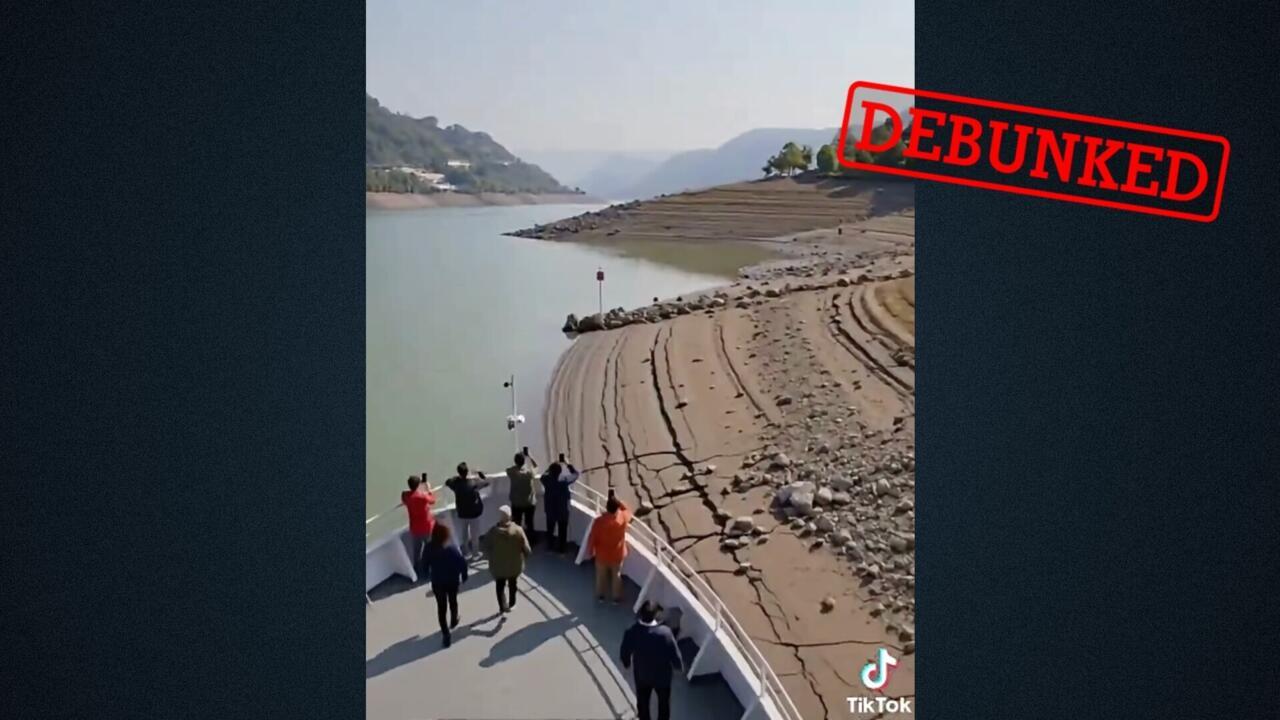
A viral report claiming that Lake Como in northern Italy has disappeared due to a "geological rupture" has been debunked by France 24. The sensationalist story, which garnered over 600,000 views on X and TikTok, relied entirely on artificial intelligence-generated footage. The claim that one of Italy’s most celebrated landscapes has turned into a field of mud and stranded boats is false.
The misinformation originated from a TikTok account named @naturevsia, a fake media outlet explicitly labelled "AI News" that produces sensational and false videos. The account includes a warning that all its content is AI-generated, yet the video convinced some viewers, including those in the Democratic Republic of the Congo and Burundi, that the lake had emptied.
Satellite imagery from the European Sentinel 2, captured on 13 August and available on the Copernicus website, confirms that Lake Como, which has a 170-kilometre perimeter, remains full of water. Additionally, webcam footage recorded in Tremezzo, a town to the west of Bellagio, on 14 August shows that the water in that area has not receded, contradicting the AI-generated narrative.
While the lake has not dried up, water levels have indeed dropped due to drought conditions. According to Italian local media outlet La Provincia di Como, by 1 August, the waters had fallen at least 30.2cm below the hydrographic zero, a base value used to measure changes in the lake. This level is close to the lowest recorded in the past four years.
The drop in water levels is a result of drought, not a geological event. With a maximum depth of 418 metres, the lake’s physical structure ensures it will not disappear despite the current reduction in volume. The incident highlights the growing challenge of distinguishing between genuine environmental reporting and AI-generated disinformation on social media platforms.