Fossilised faeces drove Cambrian animal evolution, study finds
A review of coprolite records and ocean chemistry suggests fossilised faecal pellets acted as a biological pump, transporting essential nutrients to deeper waters and fueling the Cambrian explosion.
The rapid diversification of animal life during the Cambrian explosion approximately 540 million years ago was likely catalysed by the evolution of digestive systems and the subsequent production of fossilised faeces, according to a new study. Researchers from the Karlsruhe Institute of Technology and Flinders University propose that these early faecal pellets functioned as a biological pump, transporting critical nutrients to deeper ocean layers and supporting the emergence of complex marine ecosystems.
The research, published in Trends in Ecology and Evolution, was conducted by Julien Kimming of the Karlsruhe Institute of Technology and Russell Bicknell of Flinders University. By reviewing scientific literature on fossilised digestive systems and Cambrian-period coprolites, the authors plotted the evolution of digestion and compared current ocean nutrient cycles with simulations of the ocean’s chemical composition 540 million years ago.
Prior to the advent of complex digestive tracts, early animals similar to sponges or jellyfish lacked organs and absorbed nutrients directly into their cells. These organisms released metabolic byproducts rather than usable nutrients, leaving deeper ocean waters largely devoid of life due to a lack of food sources. The evolution of simple guts allowed animals to consume larger particles and excrete waste, initiating a process that redistributed organic matter through the water column.
Kimming and Bicknell argue that faecal pellets provided an additional source of organic carbon, iron, nitrogen, and phosphorus to deeper waters. This nutrient delivery system boosted support for marine animal life and likely facilitated the diversification and increased biomass observed during the Cambrian period. The study identifies a positive feedback loop wherein larger animals produced larger faecal pellets, which in turn supported even larger and more diverse ecosystems.
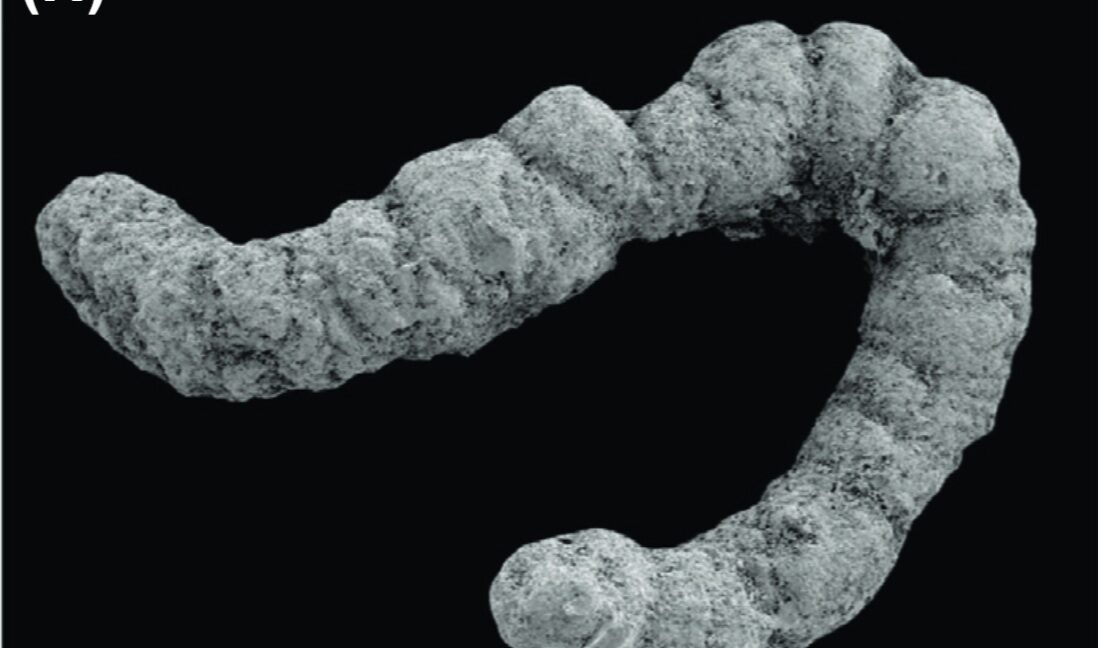
Evidence of this process is found in approximately 35 global sites containing coprolites dating from 540 to 494 million years ago. These fossilised faeces range from microscopic to several centimetres in size, with shapes including elongated, cylindrical, and ellipsoid forms. At the Raven’s Throat River site in northwestern Canada, 500-million-year-old coprolites up to five centimetres wide have been found alongside trilobites and hyoliths, suggesting some Cambrian animals grazed on the faeces or associated microbial mats.
The authors note a clear correlation between the evolution of animal guts and the characteristics of faecal matter. As digestive systems developed twists, turns, and specialised glands over 40 million years, the resulting coprolites grew larger and more varied. This physical evidence underscores the role of digestive innovation in driving the rapid acceleration of organism size and complexity during one of the most significant periods in evolutionary history.