Former SpaceX engineers launch $15m robotic steel manufacturing startup 1872
Three ex-SpaceX engineers secure seed funding to build a prototype factory by 2027, aiming to solve US skilled labour shortages through AI-driven robotic welding and partial autonomy.
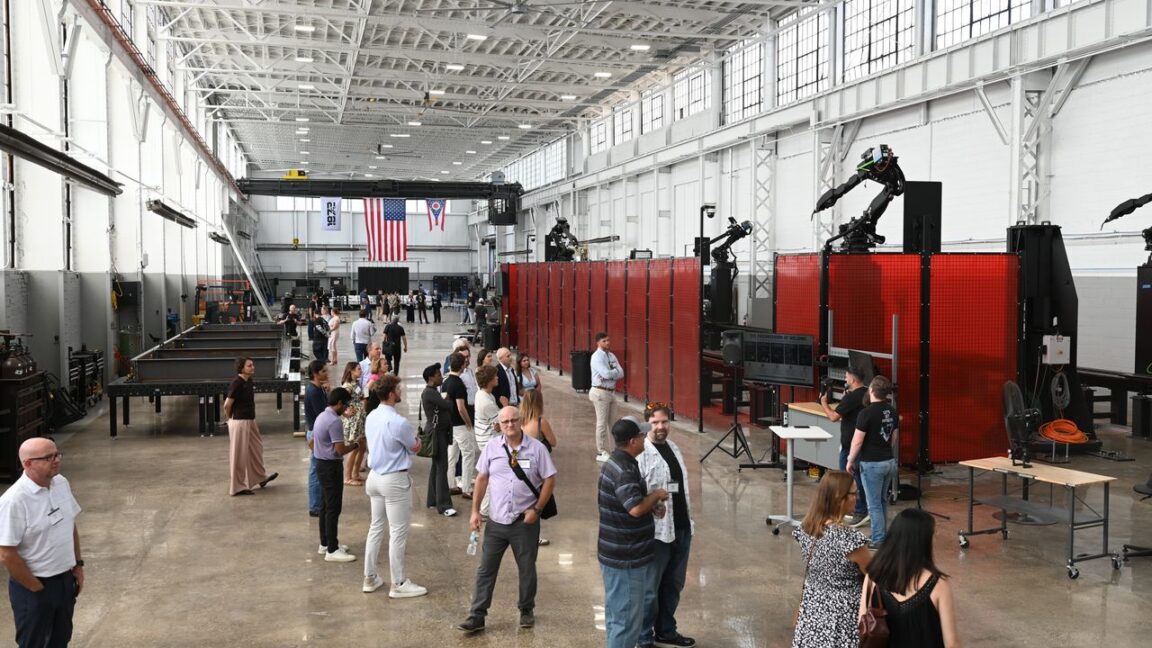
Three former SpaceX engineers have launched a new manufacturing startup in Cincinnati, Ohio, called 1872, which aims to automate the production of steel components for critical infrastructure. The company, which officially opened its Factory One facility on 22 July, has secured $15 million in seed funding from private funds advised by The O.H.I.O. Fund. The venture plans to establish a prototype factory by 2027 that utilises AI-driven software and robotic welding arms to fabricate steel skids for AI data centres and small modular nuclear reactors.
The startup’s co-founders, including CEO Dan Summers, Brian Mongilio, and Michael Grant, bring experience from developing intelligent manufacturing software for SpaceX’s Raptor rocket engines. Summers noted that the team previously managed the physical fabrication of hardware through software systems that tracked changes and ensured precision. For 1872, the founders are applying similar principles to steel skids, which serve as moveable foundations for modular buildings. They have chosen these lower-precision components to allow for greater flexibility in automation implementation compared to aerospace-grade parts.
Addressing a severe shortage of skilled labour in the US manufacturing sector is a primary driver for the company. The American Welding Society estimates a need for 320,500 new welding professionals by 2029, a gap exacerbated by an aging workforce and tightening immigration restrictions under the Trump administration. Summers stated that 1872 is not pursuing full autonomy dogmatically, potentially stopping at 80 per cent autonomous operations if diminishing returns make the final steps uneconomical.
To achieve this, 1872 is partnering with Columbus-based Path Robotics to integrate robotic arms capable of automated welding. Path Robotics claims its systems achieve 95 to 100 per cent first-pass yields and reduce welding costs by 85 per cent compared to manual labour. While manual welding costs approximately $0.78 per weld inch, robotic workstations can perform the same task for about $0.12. The robots also maintain an arc-on time of 70 per cent, significantly higher than the 10 to 12 per cent typical of human workers.
The company’s operational model relies on two core AI systems: “Architect,” which creates manufacturing plans from digital design files, and “Conductor,” which orchestrates factory floor operations including autonomous vehicles and robotic arms. 1872 is using customized off-the-shelf AI models, including large language models, and plans to integrate physics-based models to represent manufacturing processes. The initial $15 million in funding is intended to launch Factory One, build out the technology stack, and achieve profitability, with plans to expand automation to structural frames and enclosures over the next 12 months.