FIFA World Cup 2026: Structural shifts and commercial spectacle define largest tournament in history
Al Jazeera outlines the key institutional and cultural changes ahead of the June 11 kickoff, as the tournament expands to 48 teams and introduces a round of 32.
The FIFA World Cup 2026 is set to commence on 11 June, marking a significant departure from the tournament’s historical structure. For the first time in its 96-year history, the men’s competition will be co-hosted by three nations: the United States, Mexico, and Canada. This expansion follows the 2002 joint hosting by Japan and South Korea and precedes the 2030 edition in Spain, Portugal, and Morocco, but represents the largest scale of cross-border organisation to date. The event will utilise 16 stadiums across 16 cities in North America, hosting 104 matches over a 39-day period.
The tournament’s expansion to 48 teams has necessitated a structural change in the knockout phase. For the first time, teams advancing from the group stage will enter a round of 32. This addition means the eventual winners must play eight matches to claim the title, one more than the seven games played by Argentina during their 2022 victory in Qatar. The increased number of participants has also altered the geographic distribution of slots, with UEFA securing 16 direct places, followed by CAF with nine and AFC with eight.
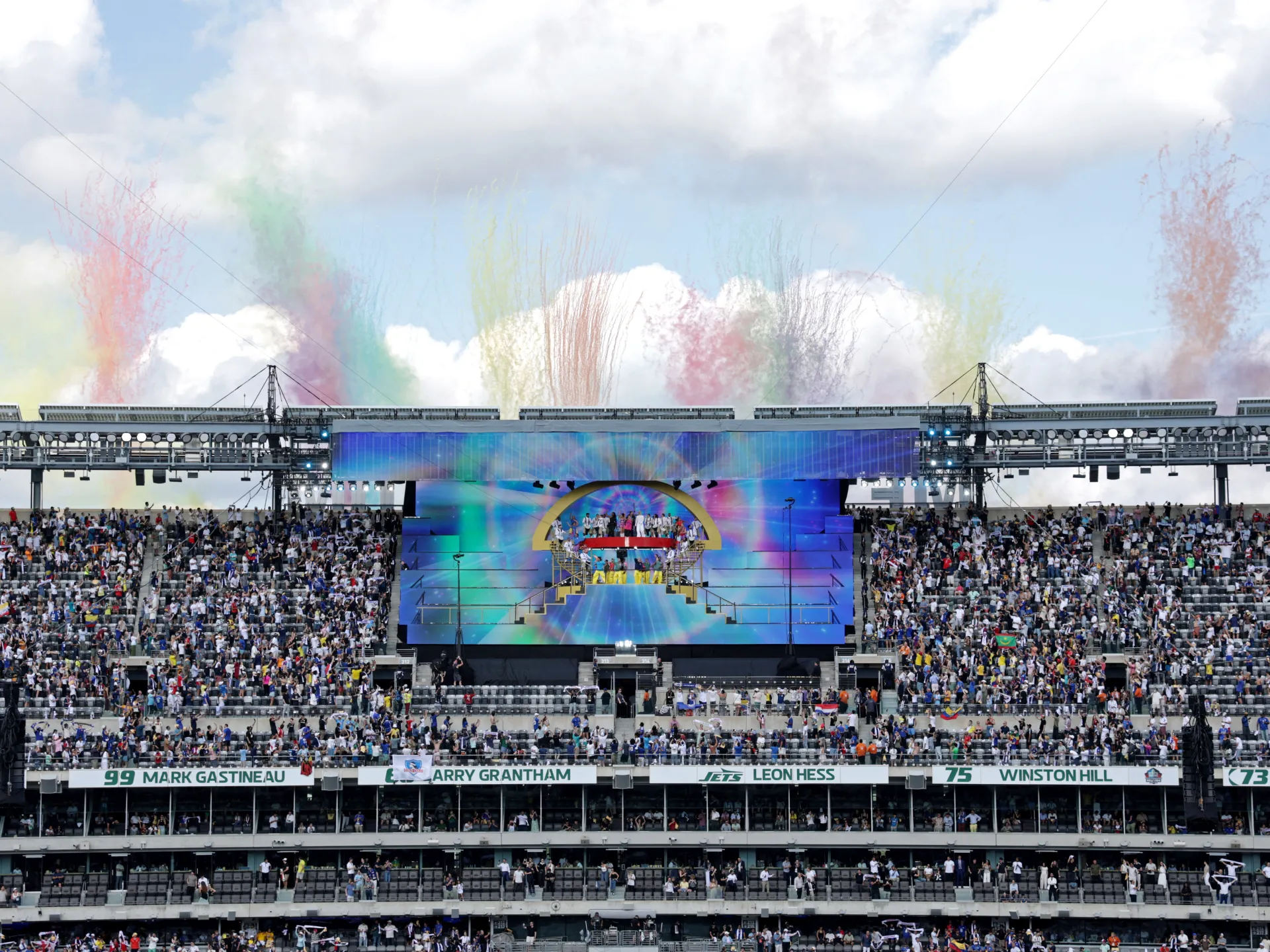
Commercial and entertainment elements have been integrated into the final’s format, reflecting the influence of North American sporting culture. The final, scheduled for 19 July at MetLife Stadium in New York, will feature the first NFL-style half-time show in World Cup history. Curated by Coldplay’s Chris Martin, the 11-minute performance will headline BTS, Madonna, and Shakira. This follows a precedent set at the 2025 FIFA Club World Cup final at the same venue, which featured performances by Doja Cat and J Balvin.
Organisational changes also extend to pre-game protocols. FIFA has introduced a new ceremony requiring all players in the matchday squad, rather than just the starting eleven, to line up around the centre circle before national anthems. The procedure involves extra-large country flag banners and a dedicated pitch entry arch, designed to engage the wider stadium audience. The opening match between Mexico and South Africa at Mexico City Stadium will serve as the debut for these protocols.
Visual identity and kit design have also become central to the tournament’s public discourse. Adidas-designed jerseys have drawn attention for their cultural motifs, including Japan’s concentric ribbed pattern, Curacao’s lemon yellow inspired by Willemstad architecture, and Argentina’s black and blue kit featuring Fileteado folk art. These designs, alongside France’s dark blue home kit and South Africa’s gold and green triangular tile patterns, have been highlighted as key talking points ahead of the tournament’s launch.