Fatal collision on Iwate Expressway claims life of student from Niigata
One person died and 20 others were injured in the crash on 6 May, prompting an investigation into the circumstances surrounding the incident on the major toll road in Fukushima.
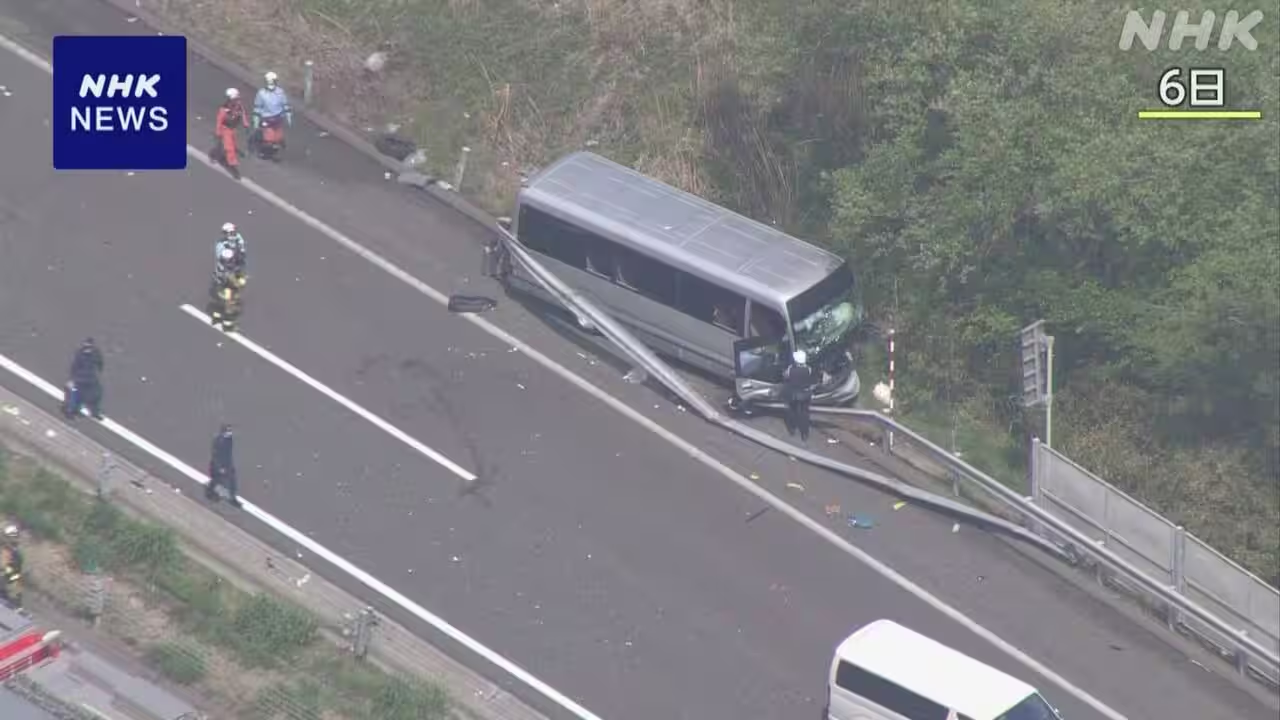
A minibus transporting high school students from Niigata prefecture collided with a guardrail on the Iwate Expressway in Fukushima on 6 May. The incident, which occurred on a major toll road connecting the two prefectures in the Tohoku region, resulted in one fatality. Twenty individuals sustained either serious or light injuries following the crash.
According to initial reports from NHK News Japan, the vehicle was travelling when it struck the safety barrier. The accident has drawn immediate attention from authorities as they begin to assess the full extent of the casualties and the conditions leading up to the collision. While the specific breakdown between serious and light injuries among the twenty victims has not been detailed, the loss of life marks a significant tragedy for the group of students involved.
Preliminary forensic observations at the scene have revealed a critical detail for investigators: there were no obvious brake marks present. This finding suggests that the vehicle may not have applied the brakes in the manner typically associated with an emergency stop, or that other factors contributed to the impact. However, the absence of such marks is currently an observational fact rather than a confirmed cause of the accident.
The Iwate Expressway serves as a vital transport link, frequently utilised for inter-prefectural travel including school trips. The use of minibuses for such groups is common practice in Japan, yet this incident underscores the risks associated with road safety on high-speed infrastructure. The geographical distinction between the passengers' origin in Niigata and the location of the crash in Fukushima highlights the cross-regional nature of the tragedy.
At this stage, the definitive cause of the collision remains undetermined. While the lack of prominent braking evidence might prompt inquiries into mechanical failure, driver incapacitation, or sudden external factors, no conclusions can be drawn without further forensic analysis. Officials are treating the preliminary data with caution to avoid speculating on the root cause before a comprehensive investigation is complete.
The focus now shifts to supporting the families of the deceased and the injured while the authorities work to establish a full timeline of events. As the inquiry progresses, the findings regarding the condition of the vehicle and the actions of the driver will be crucial in determining whether this was an isolated incident or indicative of broader safety concerns on the expressway network.