Executive dominance over Taiwan policy: Analyst warns of limited Congressional oversight during Beijing summit
As Presidents Trump and Xi Jinping convene in Beijing, experts highlight a potential shift toward unilateral executive decision-making on cross-strait relations
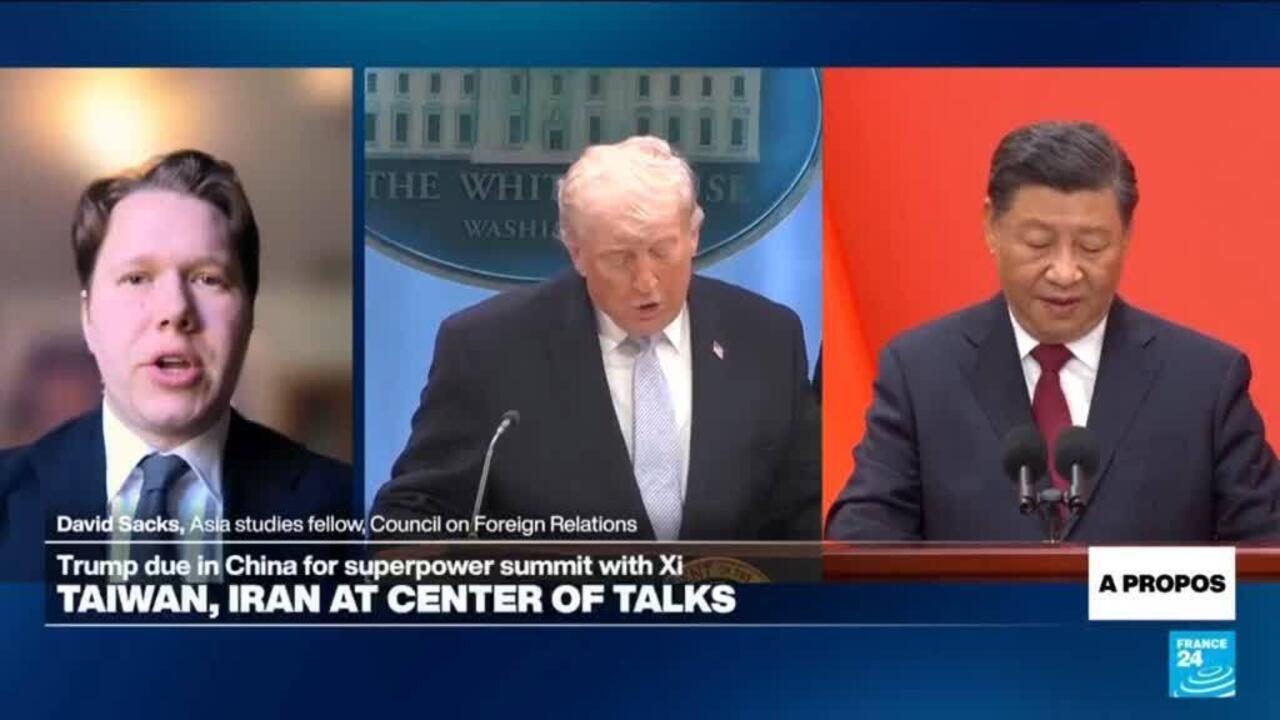
Analyst David Sacks, a Fellow for Asia studies at the Council on Foreign Relations, has raised concerns regarding the potential for unilateral shifts in United States policy towards Taiwan. Speaking with FRANCE 24's Sharon Gaffney, Sacks asserted that President Donald Trump possesses the capacity to alter the nation's approach to the island without being constrained by Congress. This assessment comes as high-level diplomatic engagements between President Trump and Chinese President Xi Jinping take place in Beijing, where the status of Taiwan is expected to be a central topic of discussion.
The core of Sacks' argument centres on the reduced ability of legislative mechanisms to rein in a potential policy pivot by the executive branch. While previous interactions between Washington and Beijing often involved complex legislative hurdles regarding Taiwan, the current analysis suggests a move toward greater executive dominance over the issue. Sacks indicated that Congress has limited tools available to prevent a change in direction if the President chooses to enact one, marking a significant departure from established norms of shared governance on this sensitive matter.
The timing of this analysis coincides with a two-day summit between the two leaders, scheduled for Thursday and Friday. During these meetings, the issue of Taiwan, which Beijing officially regards as an inalienable part of its territory, is certain to come up. The presence of this topic on the agenda underscores the urgency of the diplomatic situation, yet the underlying policy framework remains subject to the interpretation of the US administration rather than fixed legislative mandates.
It is important to note that the specific nature of any policy change remains undefined. The report confirms the potential for a shift based on expert assessment, but does not outline the direction or content of such a policy. Furthermore, the extent to which Congress can actually obstruct or influence a unilateral executive decision is a matter of legal and political interpretation rather than established fact in this specific instance.
The source of this insight is the Council on Foreign Relations, a prominent think tank where Sacks serves as a Fellow for Asia studies. His comments represent an interpretation of the situation during an interview format, rather than a direct statement of policy from the White House. Consequently, while the assertion that policy could be changed unhindered by Congress is a strong claim, it reflects an analyst's view of the current political landscape rather than a confirmed legal precedent or enacted legislation.
As the summit progresses, the focus remains on how these diplomatic talks will unfold against the backdrop of potential executive overreach. The uncertainty surrounding the specific measures the US might adopt adds a layer of complexity to the ongoing negotiations. Observers will be watching closely to see if the theoretical possibility of unchecked executive action translates into tangible shifts in the US-China relationship regarding Taiwan.