Europe’s wildfire crisis deepens as casualties mount and political backlash intensifies
From Belgium’s largest recorded fire to political unrest in France, the continent faces one of its most severe wildfire seasons on record, with authorities attributing the crisis to human-induced climate change.
Europe is grappling with one of its most severe wildfire seasons in recent history, with approximately 576,000 hectares of land burnt so far in 2026. According to data from the European Forest Fire Information System, the affected area is twice the size of Luxembourg. The blazes are currently impacting Belgium, France, Greece, Spain, Portugal, and Croatia, driven by prolonged heatwaves and drought conditions that studies attribute to human-induced climate change.
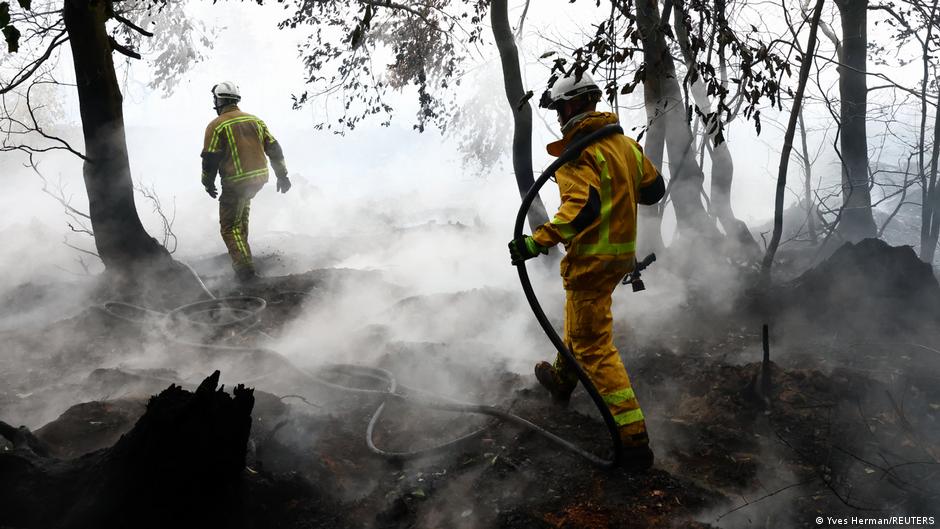
In Belgium, firefighters and military personnel are battling a historic blaze in the High Fens park on the border with Germany. The fire, which began on Friday, has destroyed 3,000 hectares, marking the largest such incident in the country’s modern history. Germany’s Defence Ministry confirmed the deployment of two military water-bombing helicopters to assist, while around 30 residents in the German town of Monschau were ordered to evacuate as the fire threatened to cross the border. Smoke from the blaze has drifted into neighbouring France and Germany, though weather forecasts indicate rain may aid suppression efforts.
The human cost of the crisis is evident across the continent. In Greece, two people died and nearly 500 were evacuated by boat from Salamina island near Athens after strong winds allowed fires to spread rapidly. Meanwhile, in Spain, a soldier was killed and hundreds evacuated during a major wildfire in Aragon that has destroyed 16,600 hectares and threatened a 1,000-year-old monastery. Croatian authorities reported one death, 40 injuries, and the arrest of four suspects suspected of starting wildfires on the Adriatic coast.
Political tensions have escalated in France, where Prime Minister Sebastian Lecornu was jeered by residents in Le Porge after 183 homes were destroyed in a recent fire. The incident has drawn criticism from locals who accuse authorities of prioritising wealthier areas, such as the upscale Cap-Ferret peninsula. While a separate fire in the Landes region has been contained, allowing evacuated residents to return, the government faces scrutiny over its handling of the disaster that forced more than 220,000 people to flee last month.
Portugal continues to battle multiple blazes, with civil protection agencies reporting minor injuries to firefighters near the Spanish border. As the fire season remains open, officials warn that the 2026 toll could surpass last year’s record of more than one million hectares burned. With authorities attributing the frequency and intensity of these heatwaves to climate change, the continent faces an ongoing challenge in managing the ecological and social fallout.