Europe’s fastest-warming continent faces red alerts as heatwave triggers emergency measures
Copernicus data reveals daily averages in western Europe are more than 12C above the 1991-2020 baseline, while scientists warn that infrastructure not built for extreme heat is struggling to cope with the crisis.
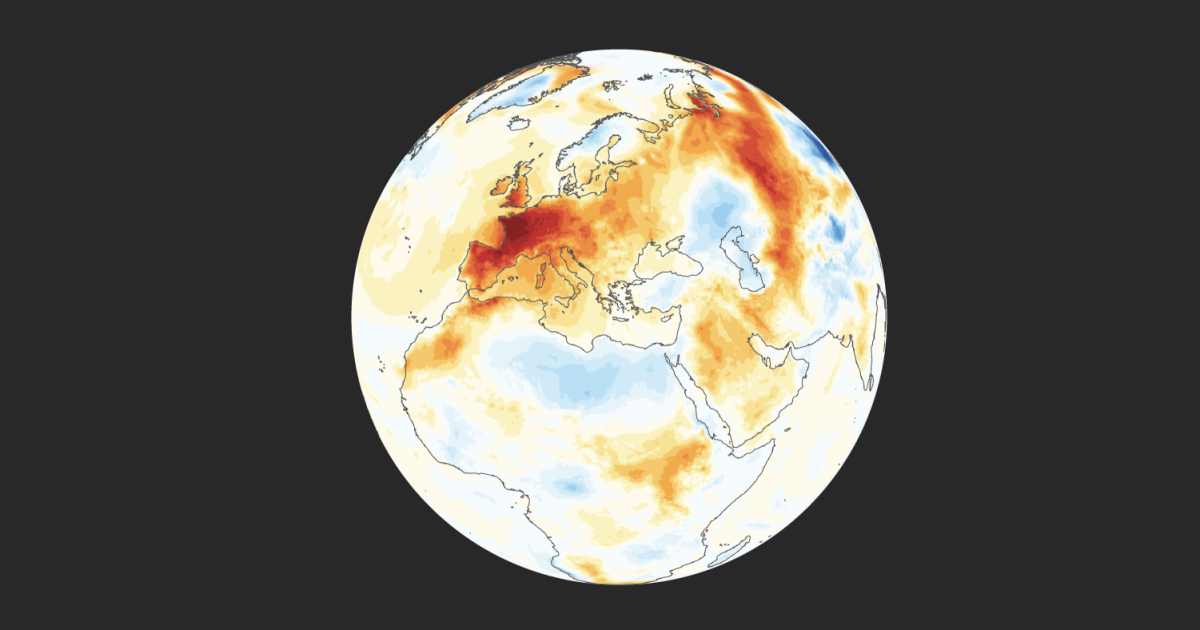
A severe heatwave has gripped much of Europe, prompting the highest-level red alerts in parts of the United Kingdom, France, Spain, and Italy. Temperatures in Paris and other major cities have exceeded 40C, with Madrid reaching 39C. Authorities have implemented emergency measures, including a localised alcohol ban in parts of France, nationwide heat warnings in Germany, and the cancellation of a World Cup fan zone screening in Madrid.
The extreme weather is attributed to a persistent heat dome, hot air from North Africa, and unusually warm seas. Coastal waters around Spain have reached record warm levels, according to Spain’s port authority. In the worst-affected areas, including western France, England, and Wales, daily average temperatures have soared more than 12C above the 1991-2020 baseline, according to Copernicus data.
Scientists note that Europe is the world’s fastest-warming continent, with temperatures rising by approximately 0.56C per decade since the mid-1990s. This rate is more than double the global average. Climate change is making heatwaves more frequent, more intense, and likely to occur earlier and later in the year.
Europe is particularly vulnerable to these conditions. Much of its housing and infrastructure was not built for prolonged extreme heat, and only about 20 percent of European homes have air conditioning. To contextualise the temperatures, Al Jazeera compared maximum temperatures in five European capitals on June 24 with cities across the Middle East, North Africa, and Asia.
The temperature readings rely on specialist platinum resistance thermometers placed inside shaded Stevenson screens at a standard height of 1.25 to 2 metres above the ground. While the Celsius scale, invented by Swedish astronomer Anders Celsius in 1742, is used by most of the world, forecasts also report a “feels like” temperature. This adjusts for humidity, wind speed, and sun exposure, which significantly impact how heat affects the human body.