ESA shelves Ariane 6 upgrades as cost pressures mount
The European Space Agency has cancelled planned enhancements for its flagship rocket, raising questions about the long-term viability of Europe’s launch infrastructure amid significant subsidy requirements.
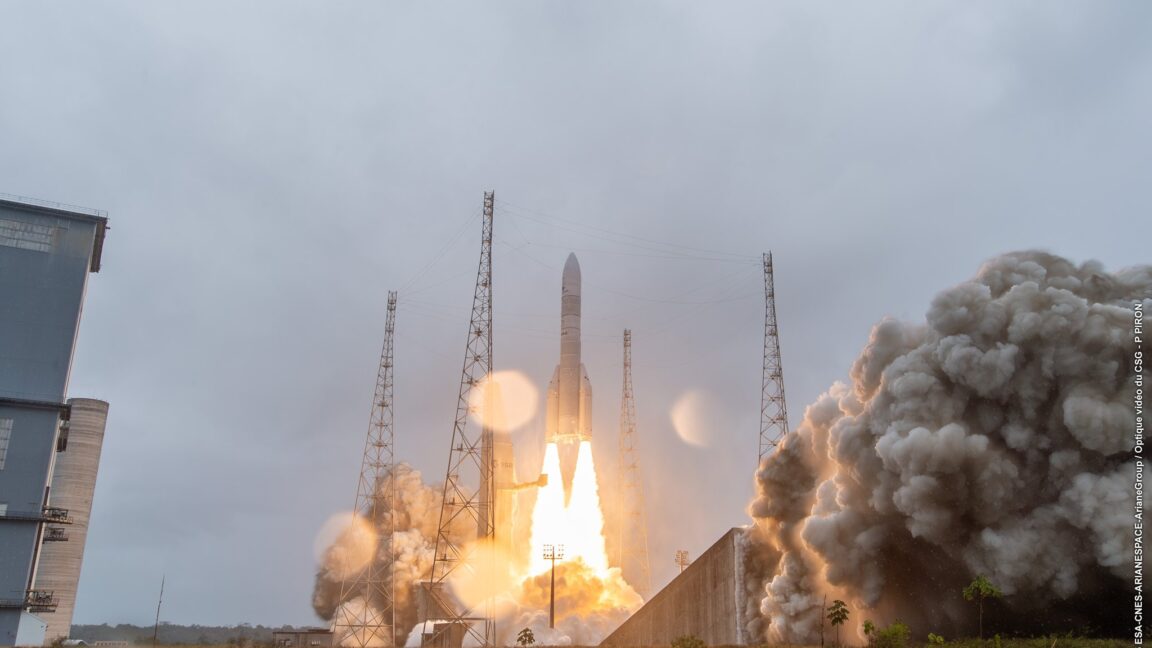
The European Space Agency (ESA) has officially shelved the planned "Block 3" upgrades for the Ariane 6 rocket, a decision driven by persistent high costs and funding concerns. The cancellation removes the lightweight ICARUS upper stage, which was designed to utilise carbon-composite structures, from the development roadmap. This move signals growing impatience among European ministers regarding the operational expenses of the vehicle, which has completed eight successful missions since its debut.
The decision has immediate implications for upcoming ESA science missions, including a probe to Saturn’s icy moon Enceladus. While the Ariane 6 has provided reliable access to orbit—particularly as Europe sought to reduce reliance on Russian and American launch providers—the financial burden remains substantial. Europe invested approximately 3.6 billion euros in the development of the rocket and its launch site in French Guiana, but ongoing subsidies are still required to make the service commercially viable.
Arianespace, the rocket’s operator, has not publicly disclosed the exact cost of an Ariane 6 launch, though estimates suggest a range of 80 million to 100 million euros. Based on a target of nine flights per year, European governments are expected to subsidise each launch with between 32 million and 38 million euros. This means that before customers pay the operator, European taxpayers have effectively contributed more than 100 million euros to each mission when development costs are amortised.
Commercial demand is not without its challenges. Amazon has contracted for 18 launches to deploy its Amazon Leo constellation, with three flights completed this year. Despite this activity, the agency is likely losing money on these private missions due to the heavy subsidy structure. The current goal is to fly the Ariane 6 nine or 10 times a year, but the agency is evaluating scenarios to increase capacity to 12, 15, or even 20 launches annually to meet growing global demand.
ESA Director General Josef Aschbacher has stated he hopes for "clarity" from European ministers by the end of the year regarding plans to scale up production. Increasing capacity would require significant investment in factories and logistics for the rocket’s expendable components, from solid-rocket motors to payload fairings. The decision will hinge on whether ministers believe it is worth investing in increased production of the current expendable vehicle or redirecting funds towards a next-generation Ariane rocket with partial reusability to compete with US and Chinese counterparts.