ECHR dismisses Russian climate case without reasoning, activists vow to appeal
The European Court of Human Rights has ruled the landmark Russian Climate Case inadmissible, dealing a significant blow to indigenous activists seeking accountability for environmental degradation in Siberia.
The European Court of Human Rights (ECHR) has dismissed the Russian Climate Case as inadmissible, delivering a procedural defeat to a group of activists who had sought to hold the Russian government accountable for its climate inaction. The court provided no reasoning for the decision, a move that has drawn sharp criticism from the legal team representing the plaintiffs.
The case, initiated by members of the Yukaghir indigenous people and other environmental advocates, alleged that the Russian state failed to meet its international climate obligations, resulting in severe ecological damage across Siberia. Although Russia formally withdrew from the ECHR in September 2022, the plaintiffs maintained that the court retained jurisdiction over violations that occurred prior to that date.
Arshak Makichyan, one of the lead plaintiffs, stated that the lack of explanation was unexpected, particularly given the court’s history of adjudicating similar matters. Makichyan, who was stripped of his Russian citizenship in 2022, suggested the dismissal may have been politically motivated, reflecting the court’s reluctance to engage with Russia on such a contentious issue.
The legal proceedings were further complicated by claims from the plaintiffs’ lawyer, Grigory Vaypan, that case paperwork was lost, causing significant delays. Vaypan described the court’s handling of the matter as arbitrary, noting that he had never encountered such disorganisation in over a decade of litigating at the ECHR.
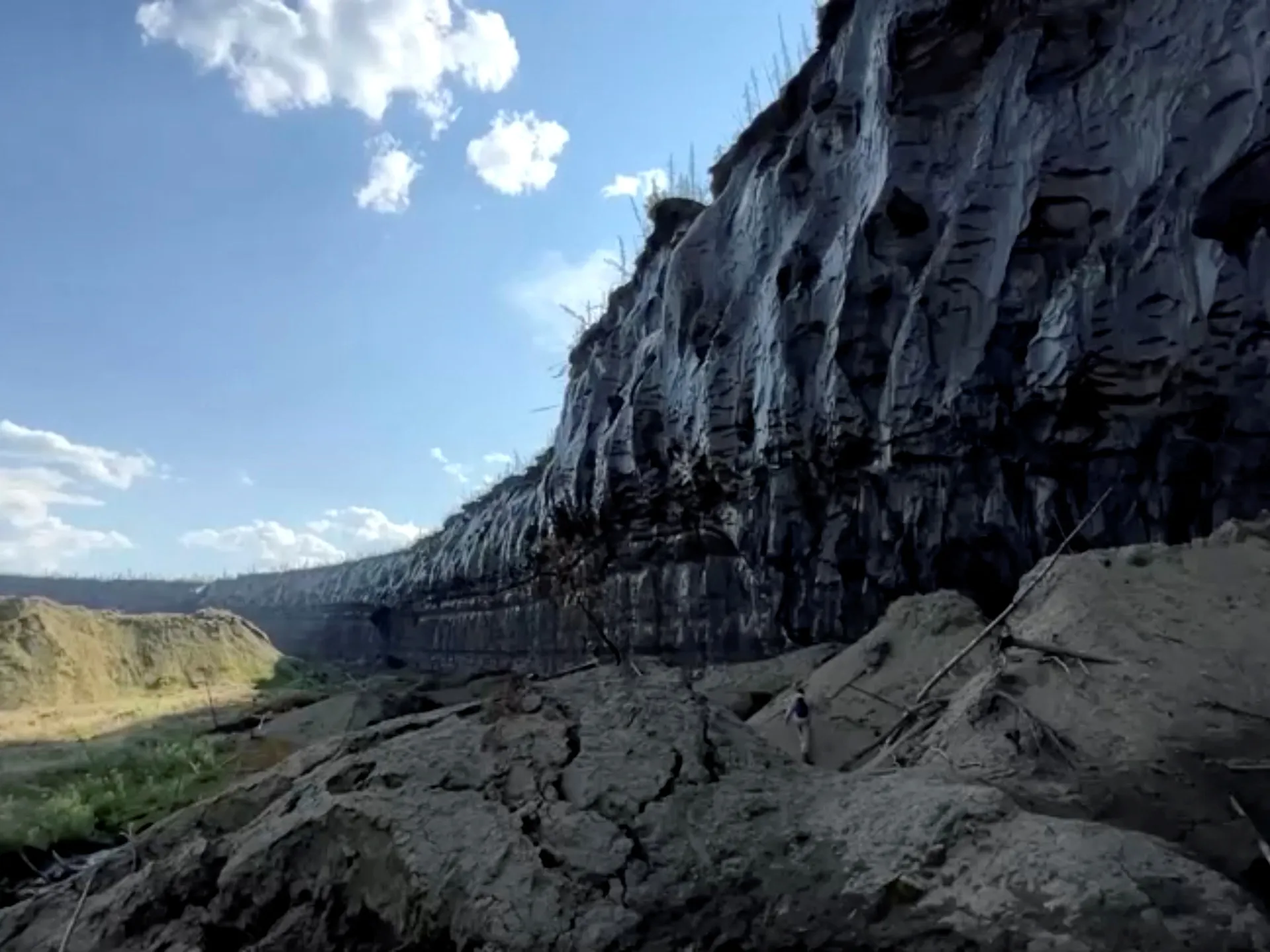
The dismissal comes against a backdrop of accelerating environmental crisis in the region. Russia, the world’s fourth-largest greenhouse gas emitter, is experiencing temperatures rising at more than twice the global average. This has led to the rapid thawing of permafrost, which covers more than half the country’s surface, and has halved the operational lifespan of vital winter roads in the Yukaghir village, isolating communities that rely on these routes for supplies.
Oleg Pluzhnikov, a former Ministry of Economic Development official, argued that the Russian government is using sanctions as a pretext for inaction on low-carbon development. He noted that while the state claims emissions have decreased since 1990, practical implementation of climate policies remains negligible, with policy largely shaped by fossil fuel industry interests.
Despite the setback, the plaintiffs intend to persist. They plan to appeal to the ECHR president and seek redress through the United Nations human rights framework. Activists argue that international attention remains crucial to applying diplomatic and economic pressure on Moscow regarding its environmental and climate policies.