Drought and heatwaves disrupt electricity supplies in Central and Southeastern Europe
As nuclear and hydroelectric output plummets due to critically low river levels, industrial production scales back and governments review energy strategies, highlighting the vulnerabilities of current infrastructure mixes.
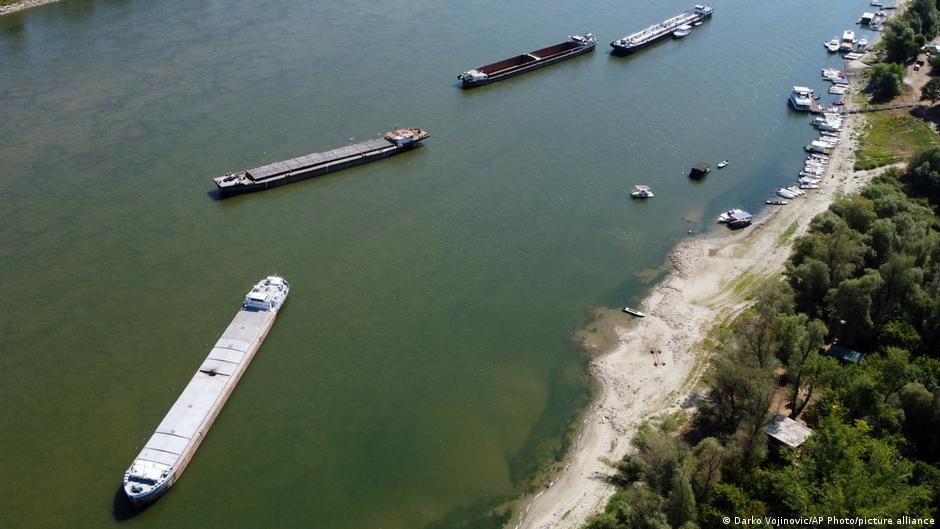
Severe drought and record heatwaves across Central and Southeastern Europe have precipitated an energy crisis, driven by critically low water levels in the Danube River. This hydrological deficit has disproportionately impacted Hungary and Romania, where nuclear facilities rely on river water for cooling. In Hungary, the Paks nuclear power plant has curtailed output to 12% capacity, prompting industrial scaling-back by major manufacturers such as Audi and MOL. Similarly, Romania’s Cernavoda nuclear plant has taken one reactor offline, necessitating emergency water diversion measures. Serbia has also experienced reduced generation at coal and hydroelectric facilities. Conversely, nations including Bulgaria, Austria, and Slovakia have maintained greater energy stability due to diversified infrastructure, including pumped-storage facilities, cooling towers, and significant renewable energy integration.
Hungary is currently the most severely affected nation, with temperatures in Budapest reaching 43 degrees Celsius and widespread rainfall deficits persisting for months. The Paks plant, which generates approximately half of the country’s electricity, has been forced to reduce operations due to insufficient and overheated cooling water. The government has urged large energy consumers to conserve power, leading to production cuts at Audi Gyor and oil and gas company MOL. The crisis is exacerbated by Hungary’s energy mix, which lacks adequate storage, modern gas-fired plants, and wind or hydropower capacity. The new government under Peter Magyar has announced a comprehensive review of the national energy development strategy, acknowledging that the current shortfall will likely persist for several weeks, requiring expensive electricity imports.
Romania faces a comparable, though slightly less acute, situation. The Cernavoda nuclear plant, responsible for roughly one-fifth of the nation’s electricity, has taken one of its two reactors offline due to low river levels. Authorities have undertaken emergency measures, including blasting rock formations and dumping tons of rock to divert water to the plant’s eastern branch. Major industrial firms, including Dacia and Ford Romania, have scaled back production, with the government considering a decree to mandate suspension of operations at large factories. Romania’s vulnerability is linked to its reliance on hydropower, particularly the Iron Gate hydroelectric plant, which is significantly impacted by the drought.
Serbia’s energy sector is also under strain, with an energy mix heavily dependent on coal and hydropower. The Kostolac A and B coal-fired power plants have cut production due to cooling water shortages, while the Iron Gate hydropower plants are generating only a fraction of their average output. The low water levels have also disrupted logistics, forcing cargo vessels carrying coal and petrochemical products to operate with significantly reduced loads. Despite these challenges, large industrial plants in Serbia have not yet been forced to scale back production to the extent seen in Hungary or Romania.
Slovakia and Austria have demonstrated greater resilience through infrastructure differences. Slovakia’s nuclear plants, Bohunice and Mochovce, utilize cooling towers rather than once-through cooling systems, reducing their dependence on river water volume. However, the Gabcikovo hydropower plant on the Danube has seen generation drop by 12% year-on-year, with only one of eight turbines currently operational. Austria, which generates 60% of its electricity from hydropower, is less affected due to its reliance on storage and pumped-storage plants rather than run-of-river facilities. Additionally, Austria benefits from 30% of its electricity coming from other renewable sources.
Bulgaria stands out as the least impacted country in the region, with its Kozloduy nuclear plant operating at nearly full capacity due to a more efficient cooling design. The country has minimised its reliance on hydropower while expanding solar and wind capacity. Crucially, Bulgaria possesses 3.4 gigawatts of battery storage capacity, equivalent to 8.6 gigawatt-hours, a figure unmatched globally. This infrastructure allows the nation to balance supply shortages and peak demand without resorting to expensive imports, positioning it as a potential regional hub for grid stabilization and price stability.