Cyborg cockroaches tested for disaster search and first aid
Researchers from the University of Queensland and UNSW remotely controlled giant burrowing cockroaches to locate simulated targets and deliver medication.
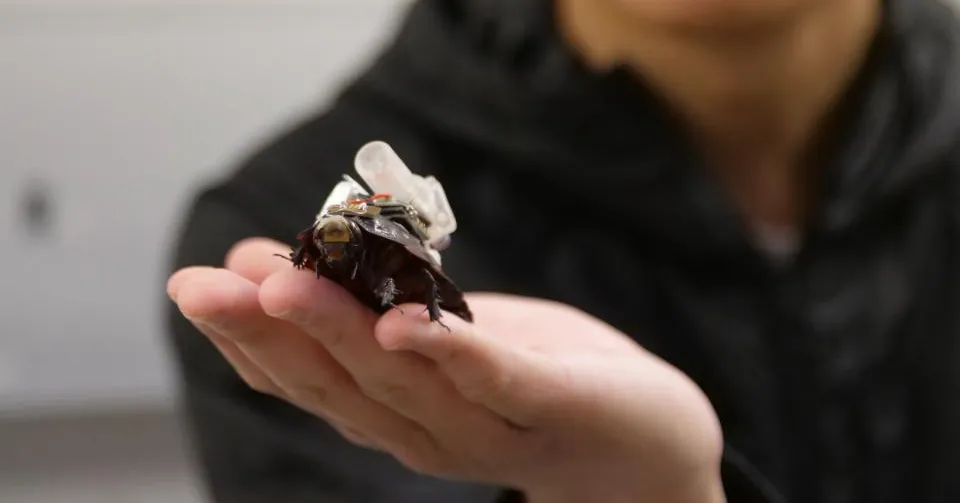
Researchers from the University of Queensland and the University of New South Wales have developed remotely controlled “Paraborg” cockroaches designed for disaster-search and first-aid tasks.
The giant burrowing cockroaches were fitted with electrodes and microchips that allowed researchers to control their direction and walking speed. Some carried cameras to locate simulated targets, while others were equipped with spring-powered injection devices.
In tests reported by WIRED and documented in a paper published in Advanced Science, injector-equipped cockroaches achieved an approximately 95 per cent success rate when administering medication within 150 millimetres of a target. The overall mission success rate, including travel through three checkpoints and completing the injection, was 72 per cent.
The researchers also demonstrated cooperation between the insects, with one camera-equipped cockroach locating a simulated target and another carrying out the injection. The larger bodies of the cockroaches made them better suited than smaller insects to carrying specialised rescue and medical equipment.
The experiments were conducted under simulated conditions and did not recreate the rubble, uneven ground or shifting debris found at real disaster sites. The system’s performance in uncontrolled environments, or with human patients, remains unclear.
The work builds on decades of research into cyborg insects and the team’s earlier development of cyborg beetles. Researcher Tan Vo Doan said a cyborg-insect rescue team could potentially be deployed within five to 10 years if resources were secured for further research and field testing.