Curiosity Rover Documents Pinstriped Bedrock Layers on Mars
The Curiosity rover traversed a geological boundary between sandy terrain and rough bedrock, utilising ChemCam, MAHLI, and APXS instruments to analyse specific rock targets and atmospheric conditions.
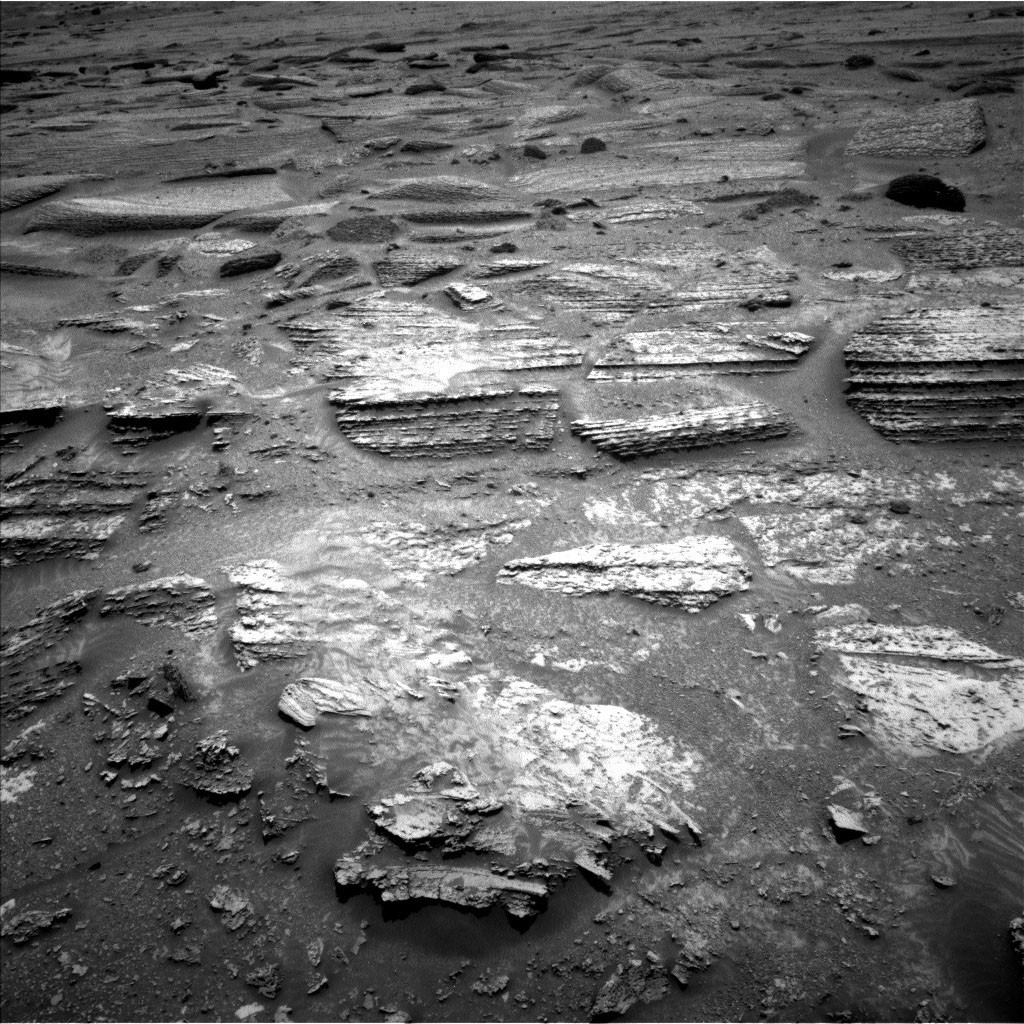
NASA’s Curiosity rover conducted extensive geological and atmospheric observations on Mars between Sols 4941 and 4947, a period coinciding with the approach of US Independence Day. The mission team, led by Deborah Padgett, MSL Operations Product Ground System Task Lead at NASA’s Jet Propulsion Laboratory, focused on investigating a distinct geologic boundary separating a smooth, sandy region from a rougher bedrock unit.
On Sol 4942, the rover drove approximately 11 metres to the edge of this geologic contact, revealing exposed bedrock outcrops characterised by pinstriped sedimentary layers. The mission utilised a suite of instruments including ChemCam, MAHLI, APXS, and Mastcam to analyse specific rock targets such as Malpartida, Cerro Castillo, and Laguna Fea. These tools helped document the composition and structure of light-coloured rock fragments and dark-toned float rocks that appear to have been transported into the area.
The rover also performed dust-devil surveys, atmospheric dust observations, and captured suprahorizon cloud movies. On Sol 4945, Curiosity drove approximately 17 metres towards a large, dark boulder in the distance, which may be a meteorite. Overnight, an APXS atmospheric observation lasted many hours, contributing to the mission’s ongoing study of Martian atmospheric conditions.
The blog post detailing these activities was written by Deborah Padgett, highlighting the rover’s systematic approach to exploring the Red Planet’s complex geological history.