Cosmic Voids Emerge as Critical Laboratories for Resolving Cosmological Tensions
Researchers from the French National Centre for Scientific Research and the University of Portsmouth argue that the low matter density in cosmic voids offers a high signal-to-noise ratio for observing fundamental physics, potentially solving long-standing discrepancies in the universe’s expansion rate.
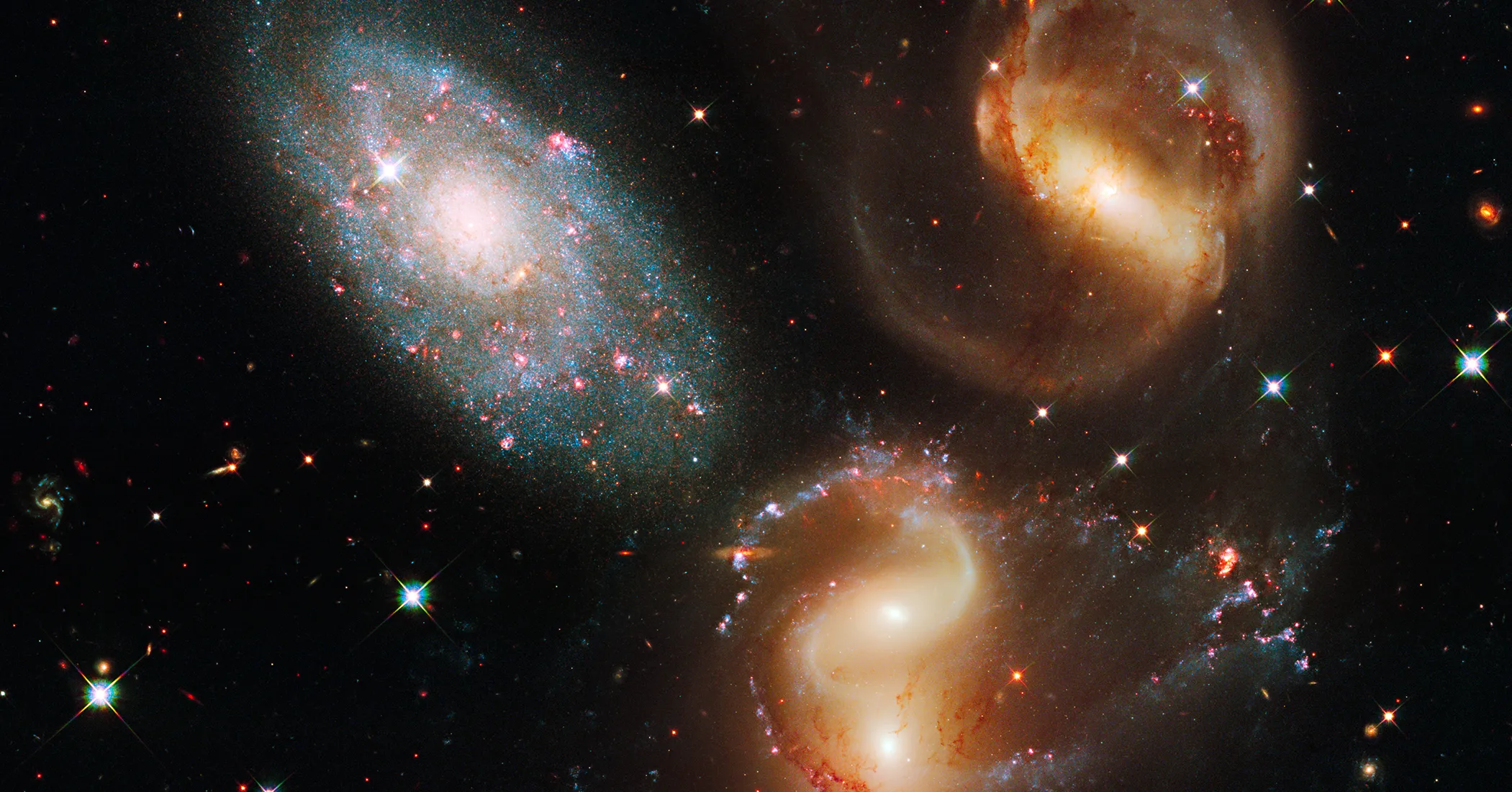
Cosmic voids, vast regions largely devoid of matter between galaxy clusters, are emerging as critical tools for addressing major cosmological questions. Researchers, including Alice Pisani of the French National Centre for Scientific Research, argue that the low interference in these areas provides a high signal-to-noise ratio for observing gravity, dark energy, and the Hubble tension. New instruments such as the Dark Energy Survey Instrument and the Euclid space telescope are expected to map over 100,000 voids, facilitating deeper study of neutrino physics and the expansion rate of the universe. Some scientists propose that Earth resides within a supervoid, potentially explaining discrepancies in cosmic expansion measurements.
The Boötes Void, also known as the "Great Nothing," stretches across more than 300 million light years and contains only a few dozen galaxies, far fewer than expected. Despite their name, these regions are not entirely empty, containing low-mass galaxies within under-dense areas. The development of three-dimensional galaxy maps in the late 1970s first revealed these contours, but recent advancements have accelerated research. Nico Schuster, a cosmologist at the Centre for Particle Physics in Marseille, notes that computational simulations have improved significantly, allowing scientists to model hundreds of thousands of voids, an order of magnitude more than a few years ago.
Voids are described as powerful cosmological laboratories because their sparseness allows for clearer observation of gravity without the complications of chaotic massive objects. This environment enhances the spectral quality of neutrinos, which barely interact with matter, revealing new insights into neutrino physics. Furthermore, voids are the first regions of the universe dominated by dark energy, making them ideal for studying the force causing the universe's expansion to accelerate. In dense regions, the impact of dark energy is obscured, but in voids, it can be clocked more clearly.
A notable hypothesis, proposed by cosmologist Indranil Banik of the University of Portsmouth, suggests that Earth resides within a supervoid known as the Keenan, Barger, and Cowie Void. This "void hypothesis" posits that our position within a huge under-dense region distorts supernovae measurements, causing objects to appear to move faster due to gravitational attraction toward local structures. This could explain the Hubble tension, the discrepancy between measurements of the universe’s expansion rate from the early universe versus nearby supernovae.
While Pisani and Schuster consider the void hypothesis worth further exploration, they remain unconvinced. Banik, however, is confident that upcoming observations will confirm we live in an under-density region. A comprehensive overview of void science published in April in The Astronomy & Astrophysics Review underscores the potential of voids to resolve major cosmological mysteries, marking what Schuster describes as the golden era of cosmology for these sparse regions.
