US seeks sanctions on Chinese seafood imports over shark finning allegations
If the National Marine Fisheries Service confirms breaches, President Trump could ban $1.5 billion in Chinese seafood.
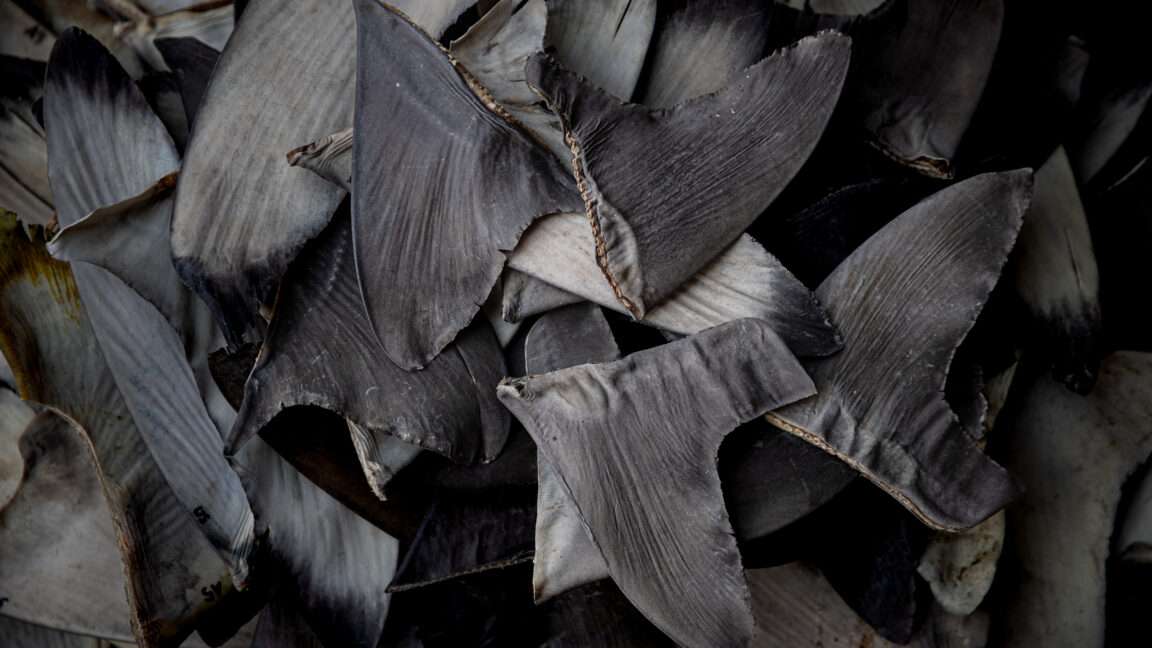
The Center for Biological Diversity has lodged a formal petition with the US government, urging the imposition of sanctions on Chinese seafood imports. The filing argues that China’s distant-water fishing fleets engage in shark finning, a practice that contravenes the US Moratorium Protection Act. The petition highlights China’s absence of a “fins naturally attached” landing policy, which conservationists say undermines enforcement and allows for the widespread discarding of shark carcasses.
Should the National Marine Fisheries Service determine that China has violated the act, President Trump holds the authority to ban the import of $1.5 billion worth of Chinese seafood. The petition contends that the Chinese fleet, the largest in the world, fails to meet American conservation standards, thereby triggering the potential for trade restrictions under existing US law.
Evidence supporting the allegations includes interviews conducted by the Environmental Justice Foundation in 2024 and 2026 with crew members on Chinese vessels in the Southwest Indian Ocean and Southeast Pacific. The interviews revealed that 80 per cent of crew in the Southwest Indian Ocean reported engaging in shark finning, while 60 per cent of crew on squid jiggers in the Southeast Pacific witnessed sharks returned to the ocean without fins.
Further data cited in the petition includes Chinese official statistics showing that in 2023, crews discarded more than 10,000 blue sharks and nearly 1,700 shortfin mako sharks in the western and central Pacific. Additionally, DNA analysis of fins imported into Hong Kong between 2014 and 2021 identified four species listed under the Convention on International Trade of Endangered Species: scalloped hammerhead, smooth hammerhead, great hammerhead, and oceanic whitetip sharks.
The petition criticises China’s current regulatory framework, which allows fin removal provided fins do not exceed a certain percentage of the shark’s bodyweight. Alex Olivera, a senior scientist at the Center for Biological Diversity, stated that once fins are separated, enforcement becomes a “math game” rather than a secure chain of custody. He emphasised that without a “fins naturally attached” policy, inspectors cannot determine if protected species are mixed in or if bodies were dumped overboard.
In response to the petition, a spokesperson for the Chinese Embassy in Washington told Inside Climate News that Beijing was “not familiar with the specific situation.” The spokesperson asserted that China is committed to science-based conservation and follows international law, but did not reference sharks, finning, or the threat of seafood sanctions in its statement.
The Center for Biological Diversity argues that the US should utilise tools provided by Congress, including import restrictions, if China refuses to adopt comparable protections. Olivera noted that the petition aims to make shark conservation standards “real, not optional,” highlighting that shark populations have declined by more than 70 per cent since 1970.
