Congo Ebola Outbreak Surges to Sixth Province as Kinshasa Braces for Crisis
Health authorities in the Democratic Republic of the Congo are scrambling to contain the Bundiyugyo strain as cases climb past 4,300 and insecurity in the east hampers containment efforts.
The Ebola epidemic in the Democratic Republic of the Congo has expanded to a sixth province, with the World Health Organization warning that the crisis could surpass the death toll of the 2014–2016 West African outbreak. Driven by the rare Bundiyugyo strain for which no approved vaccine or treatment exists, the outbreak has recorded more than 4,300 cases and claimed 2,000 lives since its official announcement on 15 May. Initial infections have been traced back to February, with the epicentre identified in the northeastern province of Ituri.
The rapid transmission is being fuelled by large-scale population movements and persistent insecurity in the eastern provinces. In North and South Kivu, authorities have effectively lost control over significant areas due to ongoing conflict with M23 rebels and affiliated groups. This instability has severely hampered public health infrastructure, with contact-tracing rates estimated at only 80 per cent, falling well short of the 95 per cent threshold required to break transmission chains.
Fears are mounting that the virus could reach Kinshasa, the capital with a population of 19 million. Jean-Jacques Muyembe, Director General of the National Institute for Biomedical Research, confirmed that the Ministry of Health has prepared isolation facilities at Cinquantenaire Hospital. Christian Ngandu, the hospital’s coordinator, stated that twenty beds have been set up initially, with capacity expandable to 200 or 250 beds, and over 120 health professionals trained to manage potential cases.
However, critics argue that current preparations are inadequate for a city of Kinshasa’s size. Carlos Mupili, president of the Supreme Council of Civil Society, described the twenty-bed capacity as insignificant and urged authorities to mobilise multiple health facilities to prevent an overwhelming surge. The World Health Organization has noted that several thousand beds would be required in a worst-case scenario, highlighting a significant gap between current readiness and projected needs.
The threat to the capital intensified recently when a boat carrying a symptomatic passenger was intercepted at the port of Maluku, approximately 65 kilometres upstream from Kinshasa. The passenger, who had previously disembarked in Mongala Province, died shortly after, leading to the isolation of more than 200 passengers. While subsequent tests returned negative results, the incident underscored the risks posed by daily travel between provinces.
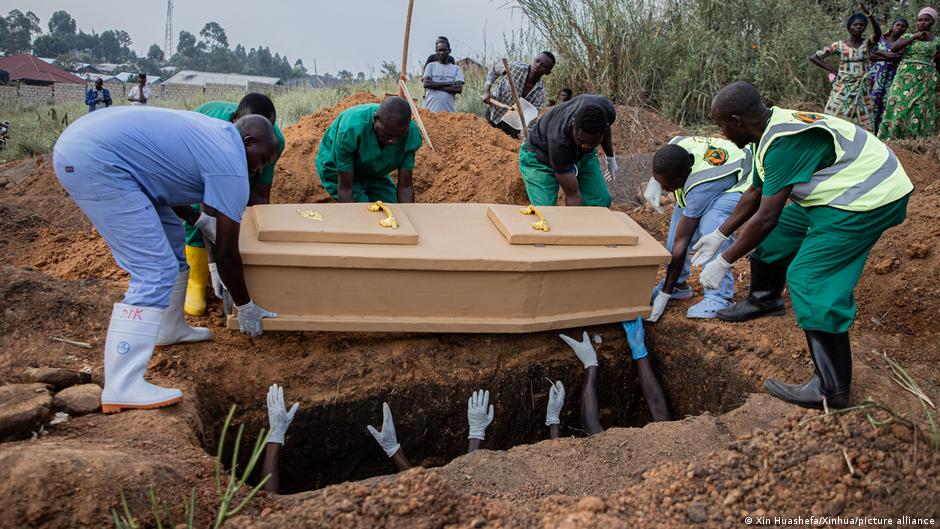
Tedros Adhanom Ghebreyesus, WHO Director-General, expressed concern that many infections originate from unregistered funerals, where deceased individuals are not captured on official contact lists. He cautioned that an unexpected surge in infections could occur anywhere, as the current outbreak is only expected to peak in six months. Meanwhile, clinical trials for two anti-viral treatments are underway, and scientists have observed no mutations in the virus so far, offering a limited source of hope amid the escalating crisis.