Colombia enters final rescue phase as earthquake death toll hits 265
Rescue operations in Pereira and Cali approach critical 72-hour window as nearly 500 remain missing and infrastructure damage exceeds 9,550 homes.
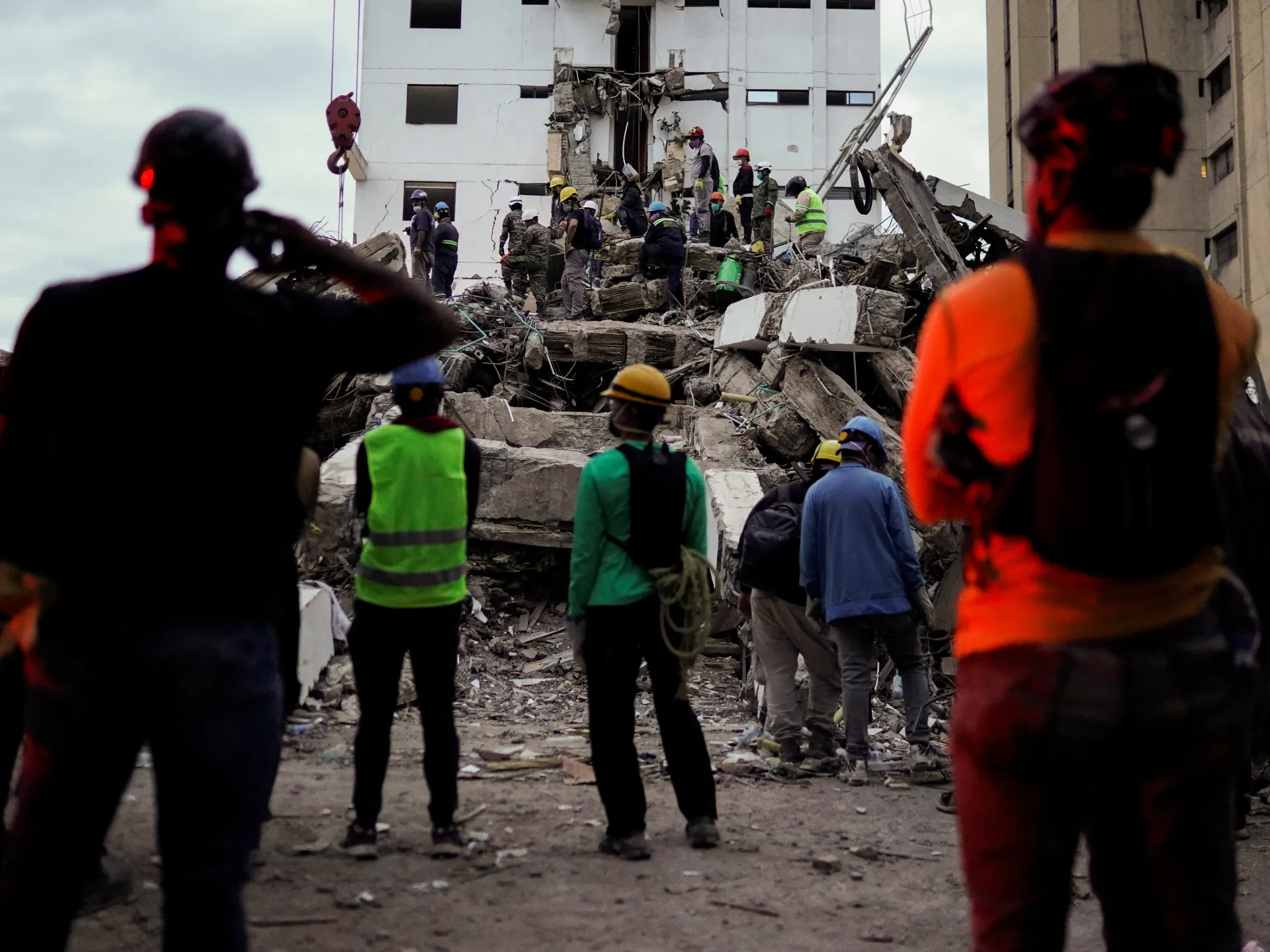
Rescue operations in Colombia have entered what officials describe as the "final phase" following a magnitude 7.4 earthquake that has killed 265 people and left more than 3,500 wounded. The disaster, the strongest to strike the country this century, has destroyed over 9,550 homes, with nearly 500 individuals still unaccounted for. Significant casualties have been concentrated in Pereira, where 83 deaths were recorded, and Cali, which reported 74 fatalities.
President Abelardo de La Espriella, who was inaugurated just three days prior to the seismic event, declared an economic emergency to address the widespread destruction. He pledged the establishment of an emergency fund to reconstruct hospitals, schools, and other critical infrastructure. The president described the situation as a tragedy of immense proportions, stating that government efforts are currently focused on locating those who remain missing.
In Cali, Mayor Alejandro Eder confirmed the shift in operational strategy, noting that while the likelihood of finding survivors diminishes, the search continues. Crews are working through a third night using cranes, sniffer dogs, and manual labour to locate survivors beneath collapsed structures. Volunteer rescuer Johana Sanchez reported that three people had been pulled from the rubble alive and three dead as of Wednesday, with teams enforcing periods of silence every half hour to detect faint sounds.
The situation in Pereira has drawn intense local attention, particularly around a collapsed bakery where rescuers detected possible signs of life from Pablo Loaiza, a street vendor trapped since Monday. Using vibration-detection equipment, crews identified potential responses from Loaiza, prompting relatives to gather at the site. His niece, Sara Loaiza, told the AFP news agency that the trapped man appeared to respond to requests for knocks from beneath the debris.
The disaster presents a complex governance challenge for the new administration, which campaigned on reducing public spending and defunding the state’s risk management unit. Tiziano Breda, a senior analyst at the conflict monitoring group ACLED, noted that the earthquake serves as the first major test for President de La Espriella. Despite the administration’s fiscal platform, the risk management unit remains at the forefront of the emergency response. To improve operational efficiency, police in Cali have restricted volunteer access to reduce noise and vibrations, allowing sensors to better detect movement under the debris.
As long lines form outside blood donation centres and citizens mobilise to deliver supplies to affected neighbourhoods, the state’s capacity to manage the crisis is being closely observed. The convergence of humanitarian relief and political scrutiny marks a pivotal moment for the newly elected government as it navigates the immediate aftermath of the nation’s most significant natural disaster in recent history.