Colombia and Venezuela formalise military pact to dismantle border criminal networks
The agreement focuses on the Catatumbo region, aiming to disrupt illicit trade routes while simultaneously advancing energy interconnection projects between the two nations.
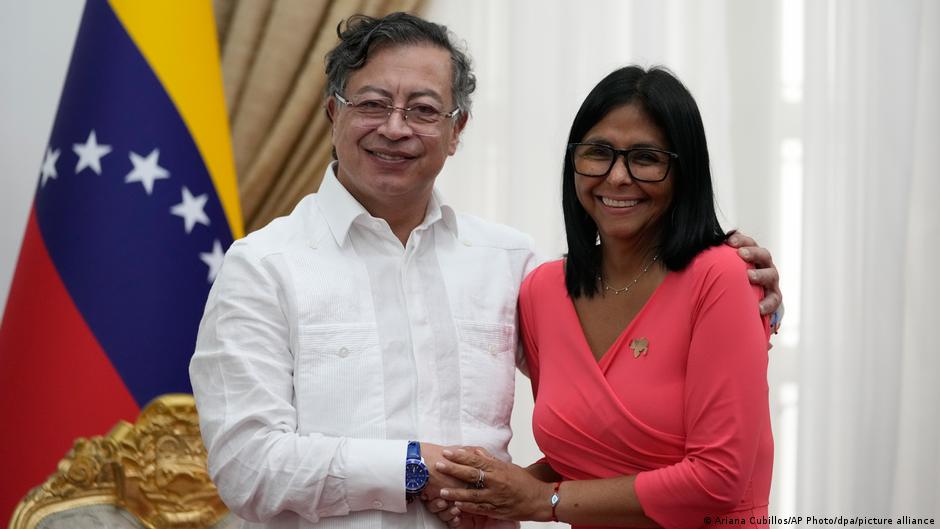
Colombian President Gustavo Petro and Venezuelan Acting President Delcy Rodriguez have announced a formal agreement to coordinate military efforts against criminal organisations operating along their shared frontier. This diplomatic breakthrough was reached during Petro's first visit to Caracas since the US-led removal of Nicolás Maduro, marking a significant shift in bilateral relations under the current interim administration.
The core of the accord centres on dismantling the "mafias" that have entrenched themselves in the Catatumbo region of northern Colombia. This area has emerged as a critical transit point for illicit goods, including cocaine, rare minerals, and human trafficking networks. Both leaders confirmed that joint military plans are being drafted, supported by the immediate establishment of mechanisms for intelligence sharing to target these cross-border criminal enterprises.
Beyond security, the two heads of state pledged to accelerate trade and energy interconnection to address persistent infrastructure deficits in western Venezuela. Rodriguez emphasised that regional cooperation should prioritise internal resources over external dependencies, noting that existing electrical interconnection projects would be expanded to supply power to blackout-prone areas. Furthermore, gas interconnection initiatives will allow for the supply of fuel to Colombia and the potential for joint gas exports to other markets.
The visit carries complex diplomatic weight, as Petro does not recognise Maduro as a legitimate leader following the disputed 2024 re-election. Nevertheless, he has maintained diplomatic channels with the interim government led by Rodriguez, despite previously condemning the US military operation that ousted the former strongman. This nuanced stance allows Petro to pursue pragmatic security cooperation without fully legitimising the ousted regime.
Historically, ties between the neighbours were severed in 2019 by former Colombian President Iván Duque before being restored in 2022 under Petro's administration. The current agreement builds on this restored dialogue, aiming to stabilise a 2,200-kilometre border that serves as both a vital trade hub and a flashpoint for violence involving rival extremist groups fighting for control of trafficking routes.
While the leaders expressed optimism about the new frameworks, specific operational timelines and the extent of coordination between the Colombian military and the interim Venezuelan government remain undefined. The success of these initiatives will depend on the interim administration's capacity to coordinate effectively amidst ongoing political instability and international sanctions.