Chuwi Unibook review: A $449 Intel Wildcat Lake laptop with big battery life and rough edges
The budget laptop offers nearly 15 hours of battery life and extensive ports, but suffers from a poor trackpad, inaccurate screen, and limited software support.
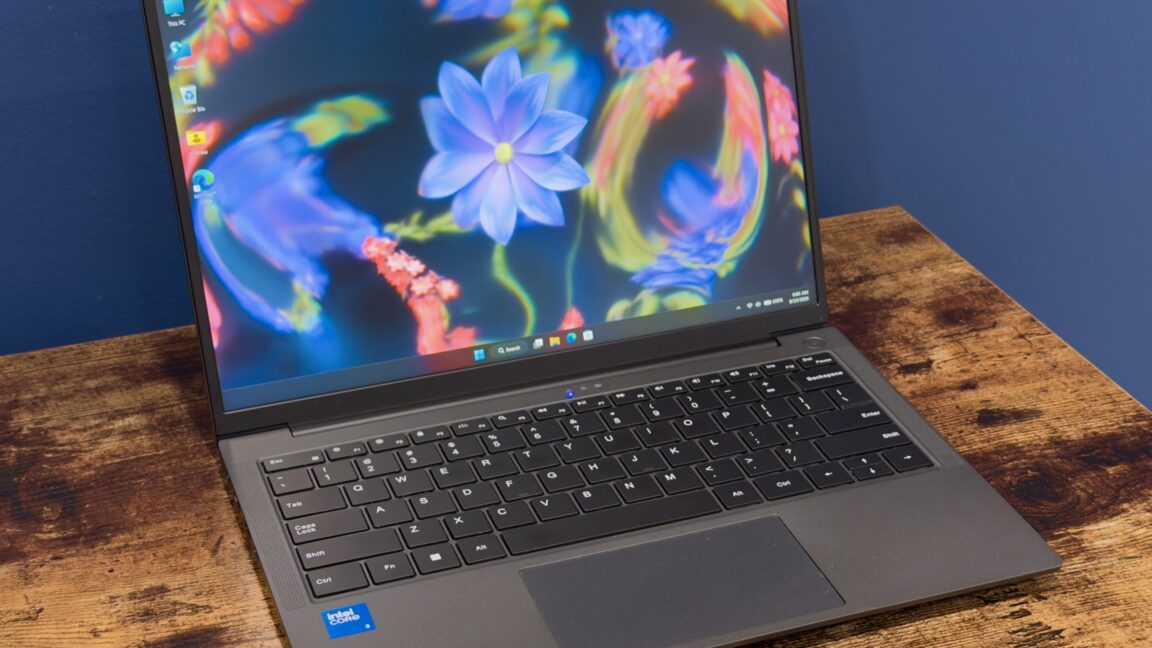
Chinese PC maker Chuwi has entered the low-end laptop market with the Unibook, an entry-level device priced at an introductory $449. The laptop is powered by Intel’s new Core Series 3 “Wildcat Lake” processor, a chip designed to offer modern architecture at a lower cost. While the device undercuts competitors like the MacBook Neo and Dell XPS 13, a review by Ars Technica suggests that the low price comes with significant trade-offs in hardware quality and software support.
The Unibook features 8GB of RAM, 256GB of storage, and a 13-inch IPS display with a 1920 x 1200 resolution. One of the device’s strongest attributes is its connectivity, offering a pair of USB-C ports, HDMI, USB 3.0, USB 2.0, a micro-SD slot, and an Ethernet port. This extensive port selection contrasts sharply with the minimal connectivity found in many modern thin-and-light laptops. Additionally, the internal M.2 drive is easily accessible for upgrades, a feature that may appeal to enthusiasts looking to customise their hardware.
Battery life is a standout feature, with the 53 WHr battery lasting nearly 15 hours during standard office workloads. This endurance is attributed to the efficiency of the Wildcat Lake processor, which is built on the same manufacturing process as Intel’s higher-end chips. However, raw performance is modest, with the single P-core and four E-cores sufficient for browsing and streaming but limited for heavier tasks. The 8GB of RAM also restricts the types of applications that can run effectively, preventing some benchmarks from completing entirely.
Despite these strengths, the review highlights several hardware shortcomings. The trackpad is described as stiff, loud, and difficult to click, making it one of the weakest components of the device. The screen, while offering a higher resolution than some ultra-budget alternatives, falls short of its advertised 100 percent sRGB colour gamut coverage. Actual testing showed only around 59 percent coverage, resulting in visibly faded colours, particularly in reds and purples. Chuwi has since clarified that only a higher-spec version of the Unibook, which is not yet widely available, meets the full colour accuracy claims.
Software support presents another challenge for buyers. The review noted that Chuwi’s driver support page was frequently non-functional, complicating updates and troubleshooting. The pre-installed Windows 11 environment included various third-party applications and a pre-activated copy of Microsoft Office 2024, which was not advertised. Users attempting to perform a clean installation of the operating system may find the process complicated by the lack of readily available drivers, as Windows Update has not yet fully caught up with the new Wildcat Lake hardware.
Ars Technica concludes that the Unibook is a viable option for enthusiasts or as a secondary device for those who value battery life and port selection over build quality. However, for most users seeking a primary laptop, the combination of a poor trackpad, mediocre display, and limited after-sales support makes it a risky choice. While the $449 price point is attractive, the review suggests that the “you get what you pay for” adage holds true in multiple respects.