China’s Moonshot and Alibaba unveil frontier AI models challenging US dominance
Chinese firms claim their latest systems rival leading US labs, raising questions about the durability of America’s technological lead despite export controls.
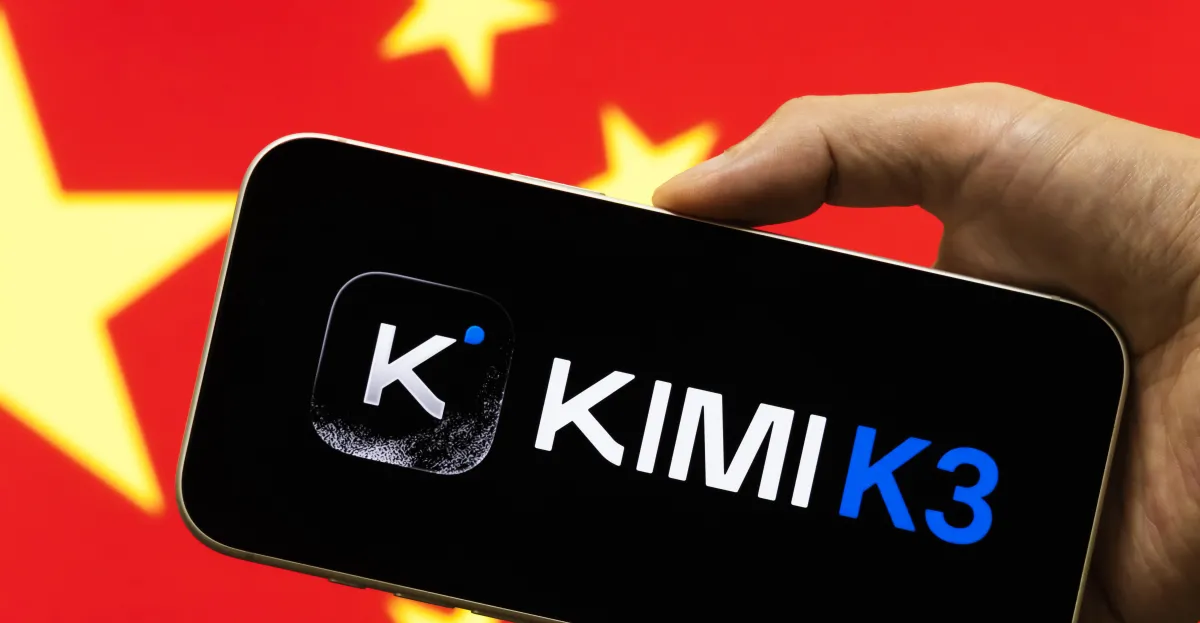
Chinese artificial intelligence firms Moonshot AI and Alibaba have unveiled new frontier models, Kimi K3 and Qwen3.8, claiming performance that rivals or approaches the capabilities of leading US systems from OpenAI and Anthropic. The rapid-fire releases mark a strategic shift towards open-source and open-weight models, contrasting with the proprietary approach of major US labs and intensifying the technological rivalry between the two nations.
The opening salvo came from Beijing-based Moonshot AI, which unveiled Kimi K3 on Friday. The company describes the model as the world’s largest open-source AI system, featuring 2.8 trillion parameters. In its own testing, Moonshot claims Kimi K3 trails only OpenAI’s GPT-5.6 Sol and Anthropic’s Claude Fable 5, while outperforming them on certain benchmarks. The firm plans to release full model weights on 27 July.
Over the weekend, Chinese tech behemoth Alibaba followed with a preview of Qwen3.8. Alibaba states the model, which has 2.4 trillion parameters, is “continuously evolving” and ranks second only to Fable 5 among available systems. The company indicated that Qwen3.8 will become open-weight soon, allowing developers to download, modify, and build upon the model.
These releases follow a precedent set by DeepSeek last year, which unveiled a low-cost model that rivaled leading US systems. The move by Moonshot and Alibaba suggests that America’s lead at the AI frontier is increasingly tight, just as the technology becomes central to national security, economic power, and geopolitical influence. It raises questions about whether the vast sums invested in US chips and data centres can secure a durable advantage if Chinese rivals can approach the frontier with fewer resources.
The openness of these Chinese models contrasts sharply with the guarded approach of US labs, whose most advanced systems remain proprietary. This divergence emerges even as the US government has implemented export controls to restrict China’s access to advanced chips and pressured companies like Anthropic to restrict access to their most capable systems. While actual performance remains unverified until independent testing occurs, the releases have already sharpened competition in what is widely characterised as the defining technological race of the era.