China’s LineShine supercomputer overtakes US to claim top global ranking
The National Supercomputing Centre in Shenzhen hosts the new record-holder, marking the first time a Chinese system has topped the biannual list since 2017.
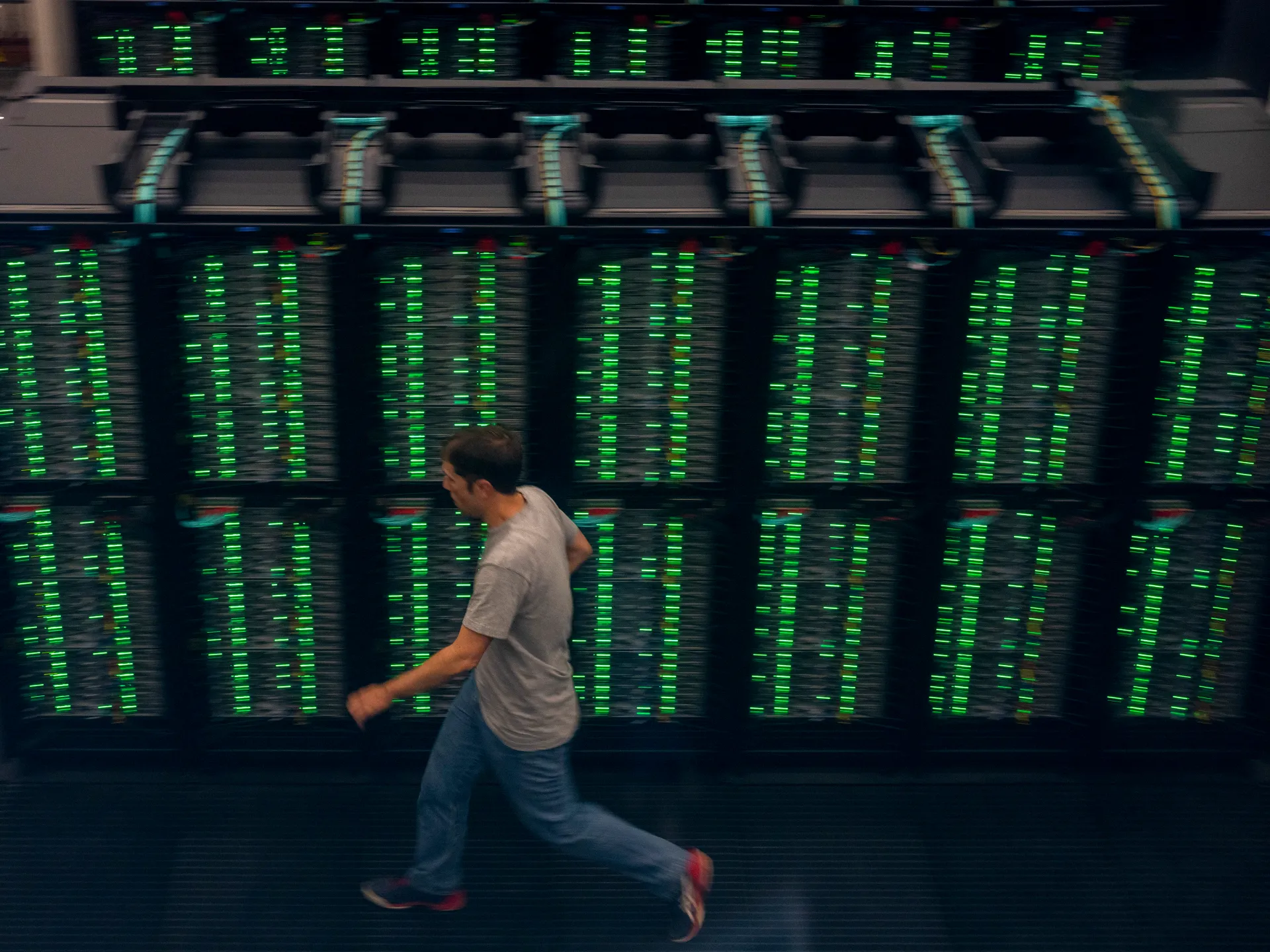
China has displaced the United States at the summit of the world’s fastest supercomputers, according to the latest TOP500 ranking announced in Hamburg on Tuesday. LineShine, located at the National Supercomputing Centre in Shenzhen, achieved a performance of 2.198 exaflops, delivering more than 2 quintillion calculations per second. This result represents a 20 percent lead over the previous leader, the US-based El Capitan.
The achievement marks the first time a Chinese system has topped the list since Sunway TaihuLight held the title in 2017. El Capitan, based at Lawrence Livermore National Laboratory in California, had ranked as the top-performing system since November 2024. The new ranking underscores Beijing’s growing capability to compete with the United States in cutting-edge technology, a sector where both nations are engaged in a fierce battle for global supremacy.
LineShine is distinct in its architecture, running entirely on general-purpose central processing units (CPUs). It is the first and only system to exceed 2 exaflops using a CPU-only design. This contrasts sharply with the graphics processing units (GPUs) typically required for artificial intelligence workloads, which generally offer higher processing cores but are less efficient for the specific benchmarks used in this ranking.
The TOP500 list, published biannually since 1993, ranks systems using the LINPACK Benchmark, which measures the time taken to solve a dense system of linear equations. While the list has historically been influential, experts note its relevance has diminished with the advent of AI. The ranking is largely comprised of government and academic initiatives, whereas corporate tech giants such as Microsoft and Amazon are now at the forefront of AI advances.
A 2015 paper from Cornell University estimated that El Capitan achieved only 22 percent of the computational performance of xAI’s Colossus facility in Memphis, Tennessee. Furthermore, the 2026 AI Index Report, released in April by Stanford University, found that China had “effectively closed” the AI model performance gap with the US, although the US retains an advantage in producing top-tier models while China leads in industrial robot installations and patents.
Other systems in the top five include Frontier at Oak Ridge National Laboratory in Tennessee, Aurora at Argonne National Laboratory in Illinois, and Jupiter at the Jülich Supercomputing Centre in Germany. The top 20 also features contributions from the UK, Japan, South Korea, Italy, the Netherlands, and Switzerland, reflecting the global distribution of high-performance computing resources.