China pushes Chang’e 7 lunar mission to 2027 as weather and orbital constraints tighten
Beijing has postponed its bid to reach the Moon’s South Pole, citing a need for absolute success and inclement weather, in a move that intensifies the race with NASA’s Blue Moon lander.
China’s Manned Space Agency has announced that the Chang’e 7 lunar exploration mission will not launch within the current window, pushing the timeline into 2027. The agency issued a terse statement on Sunday, stating that in keeping with the principle of proceeding prudently and reliably to ensure “absolute success,” a comprehensive assessment determined the mission did not meet the necessary launch conditions. The announcement confirmed that the mission cannot be carried out during the planned window this year, though it offered no specific explanation for the cause of the delay from the Wenchang Space Launch Site.
The delay is widely attributed to Typhoon Narra, which has been meandering near Hainan island with winds of 45 mph. According to the Joint Typhoon Warning Center, the storm is expected to continue tracking in the general area for the next few days, likely providing inclement weather at the launch site. Chinese forecasters likely determined that the weather would not break before the current launch window to reach the lunar pole from Wenchang closes.
The Chang’e 7 mission, consisting of a lunar orbiter, lander, rover, and a mini-hopper probe, was scheduled to launch as early as Sunday on a Long March 5 rocket. Social media chatter suggests the next suitable launch window may not open until February or March 2027. This extended gap is likely driven by a combination of factors, including sunlight conditions in polar landing zones and the mission’s requirement for a 90-day lunar orbit reconnaissance before landing.
While a technical issue with the payload or rocket remains a lesser possibility, it is considered unlikely. The Long March 5 rocket shares the YF-100 engine with the Long March 7A vehicle, which was lost during ascent two weeks ago. However, China had been proceeding toward launch in recent days, suggesting the weather was the primary impediment.
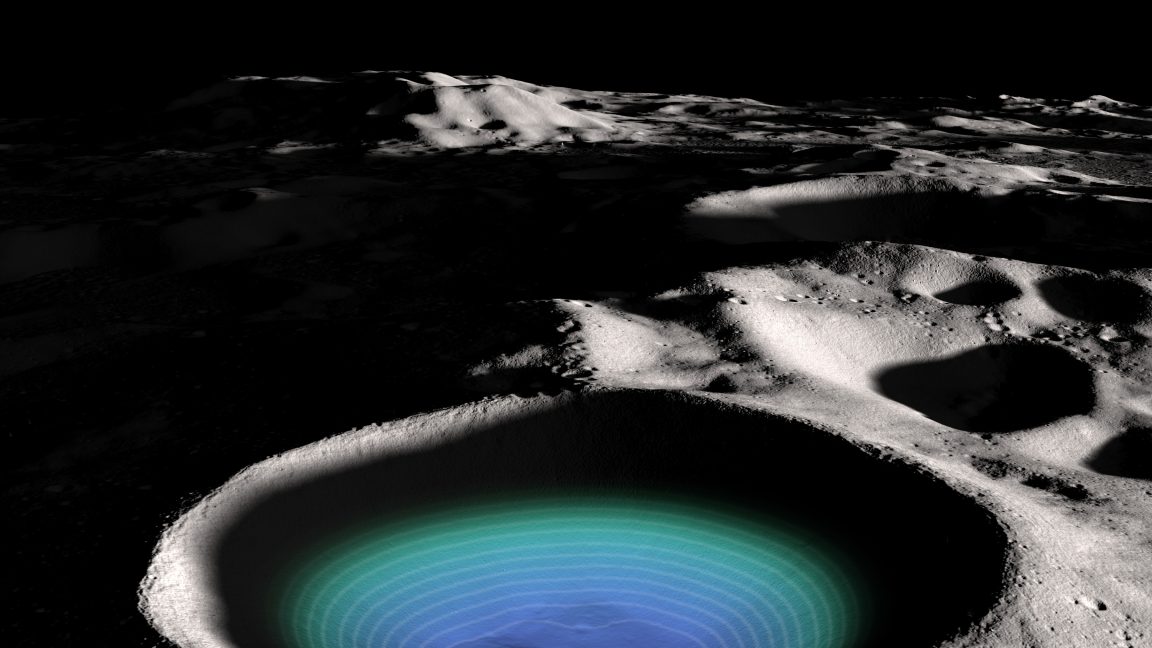
The mission aims to land near Shackleton Crater at the Moon’s South Pole, a region of high scientific interest due to “cold traps” where water ice may have accumulated over billions of years. No country has previously achieved a soft landing at the lunar poles, making this a significant milestone in the broader China-US space race. Robotic missions such as Chang’e 7 are considered precursor flights for human missions that could follow in the next two to four years.
The delay creates a tight contest with NASA’s Blue Moon Mark 1 vehicle, which aims to launch in the first half of 2027. Blue Origin is currently rebuilding its Launch Complex 36A facility in Florida after the loss of the New Glenn rocket in May, with the goal of returning the vehicle to flight before the end of this year. If Chang’e 7 launches in February 2027, it will spend three months in lunar orbit before landing, making the race to establish a meaningful presence at the South Pole particularly close.