China issues red alert as Typhoon Dolphin triggers million-person evacuation
The strongest typhoon to hit China this year has forced mass evacuations across eastern provinces, disrupting transport and prompting detention of misinformation spreaders.
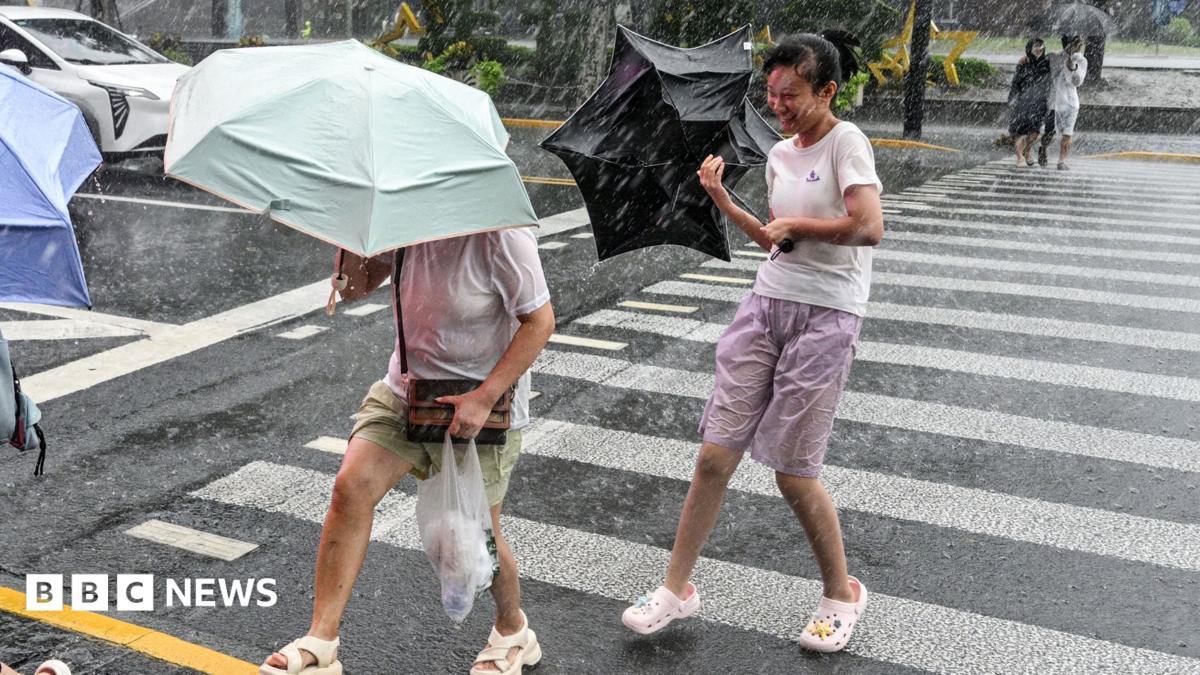
Chinese authorities have evacuated more than one million residents from eastern China, including Shanghai, as Typhoon Dolphin made landfall. The storm, which carried maximum wind speeds of 150km/h, prompted the highest-level red alert issued by Beijing for the year. Meteorological officials confirmed the system first struck Yuhuan in Zhejiang province at 17:30 local time on Sunday, followed by a second landfall in Wenzhou approximately an hour later.
The scale of the response has been significant, with Wenzhou authorities relocating 900,000 people and opening over 1,000 emergency shelters. In the nearby city of Taizhou, 390,000 residents were moved from their homes. Further south, maritime authorities in Fujian province suspended dozens of passenger ferry routes and halted more than 100 offshore construction projects. In Hangzhou, local officials waived parking fees in all public spaces to encourage drivers to seek shelter.
Transport networks have faced severe disruption, with nearly 1,000 flights cancelled in Shanghai alone. Heavy rain is forecast to continue through Wednesday, affecting provinces including Shandong, Henan, Hubei, Anhui, Jiangsu, and Zhejiang. Forecasters predict parts of Zhejiang could receive between 250mm and 500mm of rain, raising concerns about severe flooding and landslides. While Dolphin has been downgraded to a tropical storm, warnings remain in effect as the system moves north.
The storm’s impact extends beyond China’s borders, having previously affected the Philippines, northern Taiwan, and Japan’s Okinawa island. In the Philippines, eight deaths have been attributed to heavy monsoon rains associated with Dolphin and earlier storms, with over 7,000 people sheltering in evacuation centres. In Okinawa, five elderly people suffered non-life-threatening injuries, three of whom fell due to strong winds.
Domestically, officials have moved to control the information environment surrounding the disaster. Two individuals were detained for distributing misinformation, including a 60-year-old man who used artificial intelligence to create a fake video claiming a person had fallen from a building in Shanghai. State media reported that a 32-year-old man was also detained for re-editing storm footage in a misleading manner. Meanwhile, CCTV noted the storm’s unusual longevity, having travelled 6,000km with a lifespan more than three times that of an average typhoon.
This year’s typhoon season, which typically runs from May to October, is occurring during a strong El Niño event, which experts say can lead to more intense storms. In Hong Kong, the system swept warm air over the city, resulting in a record high temperature of 36.9C on Sunday. While Chinese officials have not reported other casualties, state media confirmed that a nine-year-old boy from Wenling is missing after being swept into the sea.