China establishes WAICO to reshape global AI governance amid US rivalry
President Xi Jinping positions Beijing as leader of new AI order, challenging Washington’s influence on international norms and regulation.
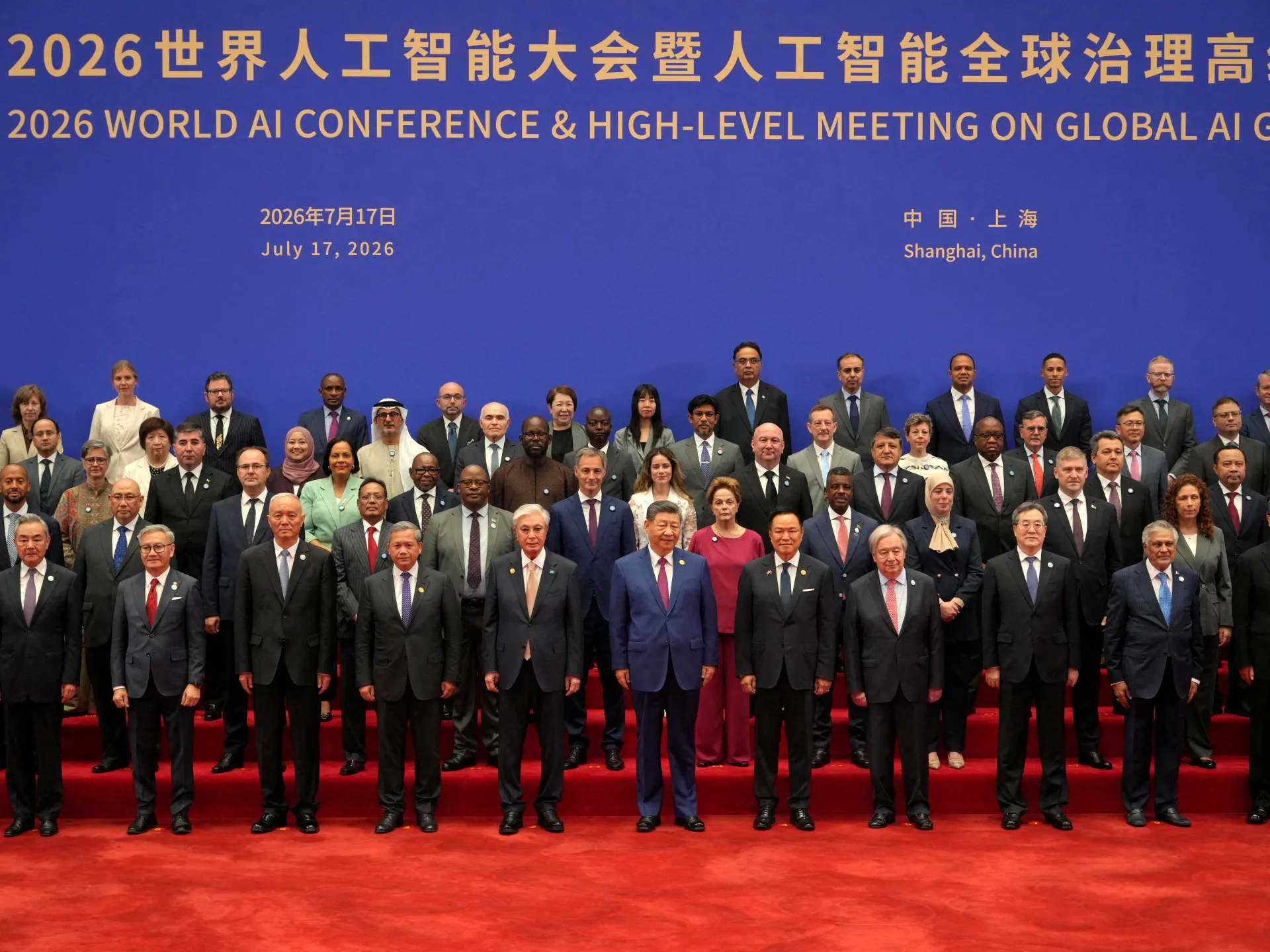
Chinese President Xi Jinping has formally announced the establishment of the World Artificial Intelligence Cooperation Organisation (WAICO), a new inter-governmental body designed to coordinate international policy on artificial intelligence. The alliance, headquartered in Shanghai, was launched at the World Artificial Intelligence Conference on Friday, with UN Secretary-General Antonio Guterres in attendance. The organisation comprises 29 founding member nations, including Indonesia, Brazil, Russia, South Africa, Malaysia, Senegal, and Pakistan.
The formation of WAICO, which was formally established on 16 July 2026 after being proposed in July 2025, marks a significant escalation in Beijing’s efforts to influence the global technological landscape. Xi Jinping used the platform to urge member states to embrace open-source AI and ensure equitable access to capacity-building, particularly for developing nations across Africa, Latin America, and Asia. He described AI development as a “symphony of international cooperation” rather than a “solo performance by a single country,” explicitly calling for safeguards to keep the technology under human control.
Analysts suggest the initiative is a strategic move to fill a vacuum left by the United States, which has recently retreated from global cyber and AI norms-setting processes. By capitalising on this shift, Beijing aims to shape how AI policies are framed at the United Nations and promote its state-centric governance model. The alliance seeks to prevent any single nation from dominating the technology, a stance that serves as a direct challenge to US influence in the sector.
The geopolitical context of the announcement is defined by intensifying competition between Washington and Beijing. While the US maintains an edge in access to cutting-edge semiconductors, China leverages its dominance in rare earth minerals, data centre infrastructure, and energy production. The two nations are currently engaged in a broader technology rivalry, with the US imposing restrictions on critical semiconductor shipments to Chinese firms and Beijing retaliating with export bans on dual-use technologies and minerals.
WAICO’s stated goals include developing AI regulations that ensure the technology remains beneficial and safe for humans. This includes implementing technological monitoring, early warning systems, and emergency response mechanisms. Governance experts note that Beijing is attempting to reverse historical trends of US-led decentralised internet models by establishing institutional frameworks that reflect Chinese interests, seeking buy-in from Global South allies who hold significant weight in international forums.