China advances space ambitions with Shenzhou 23 mission to Tiangong station
The Shenzhou 23 crew docks with the Tiangong Space Station, initiating a mission focused on lunar landing preparations and extended-duration research.
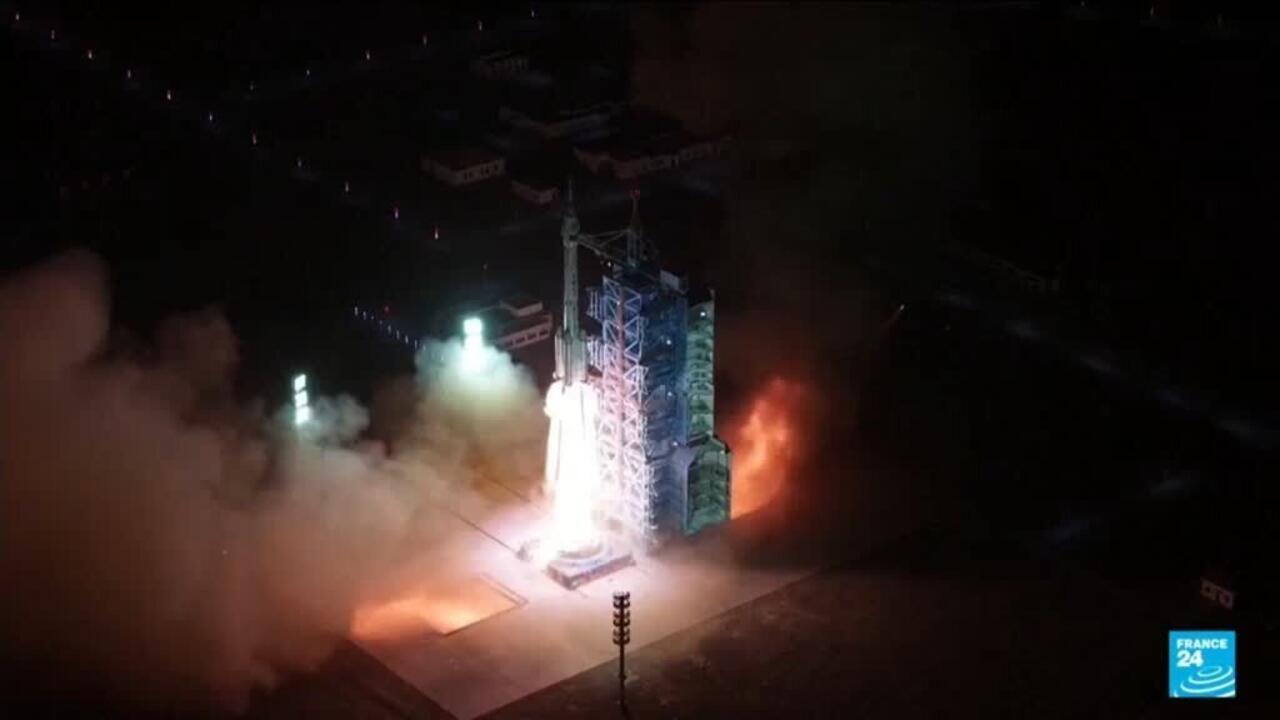
China has successfully launched and docked the Shenzhou 23 spacecraft with its Tiangong Space Station, a move that underscores the nation’s accelerating pace in orbital infrastructure development. According to reporting from France 24 International, the mission represents a significant milestone in Beijing’s broader strategic space ambitions, transitioning from short-term visits to sustained presence in low-Earth orbit.
The primary objective of the Shenzhou 23 deployment is to establish China’s first planned year-long stay in orbit. This extended duration marks a departure from previous mission profiles and signals a maturation of the country’s crewed space capabilities. The prolonged residency will allow for more comprehensive operational testing and scientific data collection than was possible under shorter mission timelines.
Beyond the logistical achievement of extended habitation, the mission is heavily oriented towards future strategic goals. The crew is tasked with conducting preparations for future lunar landings, a critical component of China’s long-term plan to return humans to the Moon. This focus aligns with international trends where space stations serve as proving grounds for deep-space exploration technologies and operational protocols.
The mission also includes a mandate for advanced scientific experiments. While the specific nature of these experiments has not been detailed in the available reporting, the inclusion of such a broad scientific agenda suggests a diversification of the station’s utility beyond mere infrastructure testing. These activities are likely to contribute to the station’s role as a permanent platform for microgravity research.
The successful docking of Shenzhou 23 consolidates China’s position as a major player in the global space sector. By integrating a year-long crew rotation and linking these efforts to lunar ambitions, Beijing is demonstrating a cohesive approach to space governance and exploration. The mission proceeds without specific details on crew identities or exact launch timing, focusing instead on the structural and strategic implications of the deployment.