Chimpanzee adults model tool use and pass techniques to infants
Observations in Senegal suggest adults, particularly females and mothers, help young chimpanzees acquire foraging skills through demonstration, tool transfers and supervised practice.
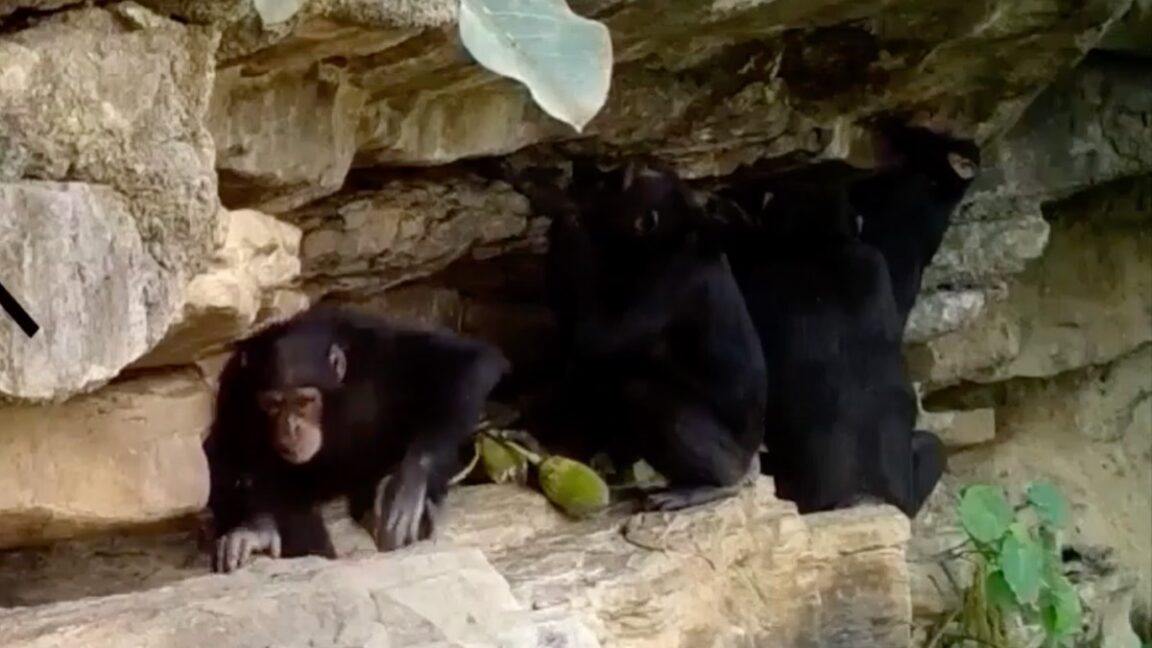
Chimpanzee adults appear to support the spread of tool-use skills among younger animals by modelling techniques and transferring tools, according to a study published in Frontiers in Psychology.
Researchers analysed nearly 15 hours of camera-trap footage collected between 2017 and 2025 at 14 locations in Senegal’s Dindefelo Community Nature Reserve. The footage contained 33 tool-transfer instances and three unsuccessful attempts.
Adults were the original holders of 58 per cent of transferred tools, while infants were the most common recipients. About 30 per cent of transfers involved mothers and their offspring. The behaviour was recorded during ant-dipping, algae fishing and termite fishing.
In one case, an adult female left a twig accessible to her infant at an ant nest. The infant used it to collect ants, and a later recording showed the young chimp copying its mother’s technique. In another, a juvenile guided an infant’s hand as it learned to break baobab fruit against a rocky surface.
The researchers, associated with the University of Barcelona and the Jane Goodall Institute Spain, said the observations were consistent with teaching through tool transfer, observation and supervised practice. However, most recipients initiated the voluntary transfers, while some tools were stolen or reclaimed, meaning the footage does not establish that every transfer was intentional teaching.
The study offers evidence that social learning may help chimpanzees acquire techniques for extracting difficult-to-access food, although its observations came from a single reserve and may not represent all chimpanzee populations.