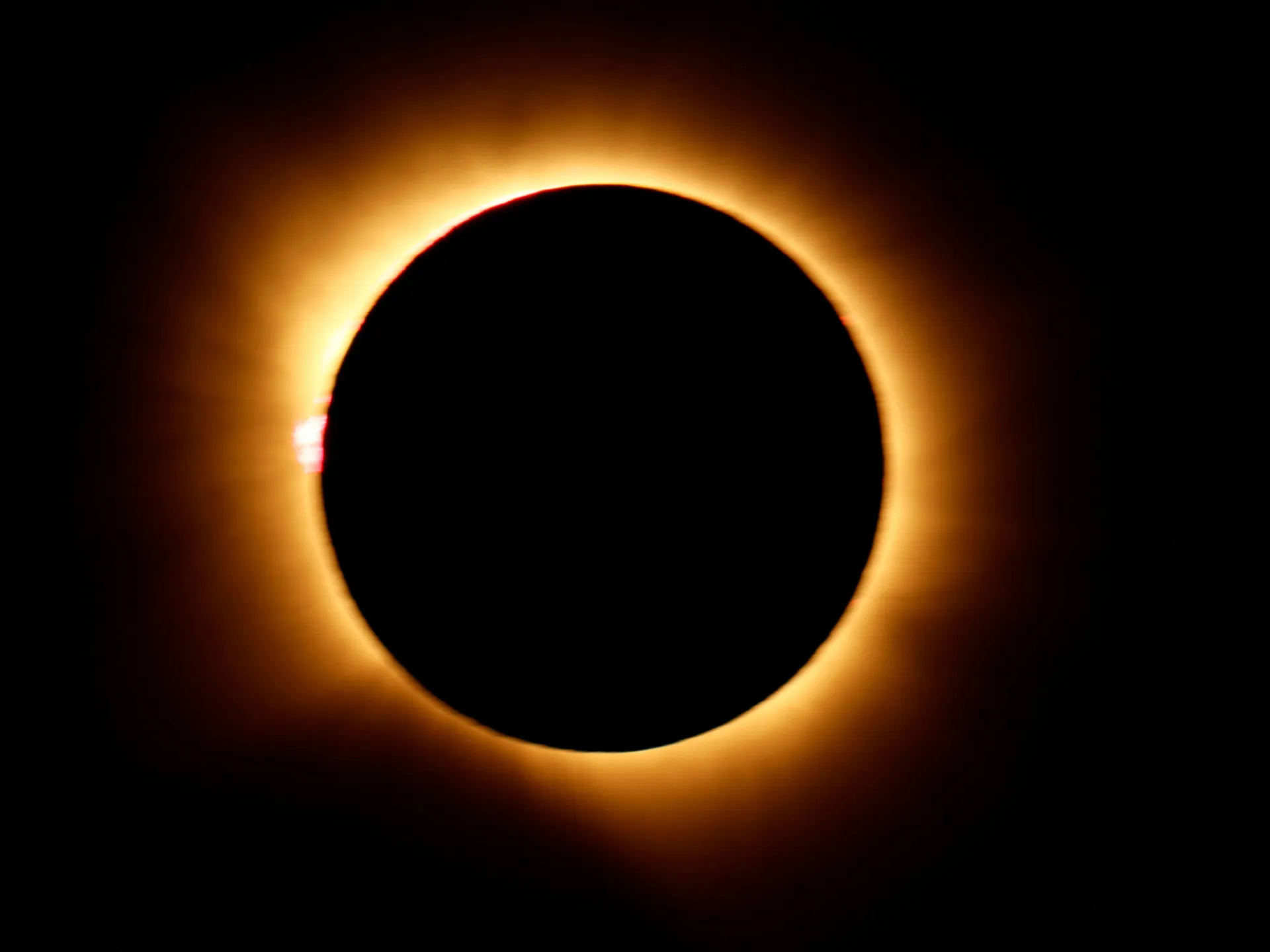
Celestial alignment draws crowds as solar eclipse sweeps Europe
Spectators from St. Petersburg to Birmingham witnessed the Moon passing between the Sun and Earth, marking the first total eclipse in the region since 2006.
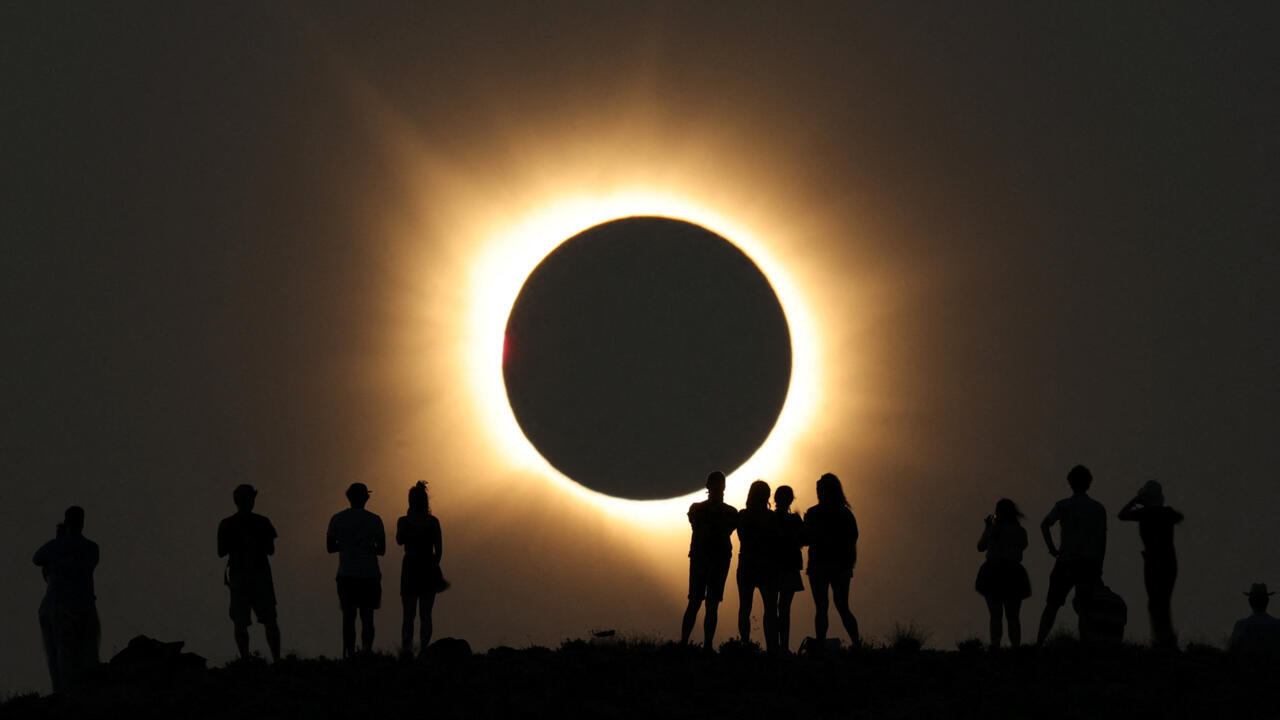
A total solar eclipse was observed in Spain on 12 August 2026, while a partial eclipse was visible across much of Europe, generating extensive photographic documentation of the celestial event. According to France 24 International, the alignment saw the Moon completely cover the Sun in specific regions, while partially obscuring it in others.
The path of totality traversed the Northern Hemisphere, sweeping across Greenland, Iceland, northern Russia, the Atlantic Ocean, Spain, and a small corner of Portugal. During the total eclipse, the Moon passes directly between the Sun and Earth, completely blocking the solar face. This event marks the first total solar eclipse visible in the region since 2006.
In Spain, the total eclipse was captured at the Javalambre Astrophysical Observatory in Arcos de las Salinas, near Teruel, and from Arija. Images showed the Moon completely covering the Sun, providing a stark visual of the astronomical phenomenon.
Across the rest of Europe, spectators observed the partial eclipse in various urban and coastal settings. In St. Petersburg, Russia, images captured a bird flying and a thermal power plant silhouetted against the dimming sky. In Munich, Germany, people watched the event at Olympic Park, while in London, observers gathered at Northala Fields.
Further south, beachgoers along the coast of Fregene, near Rome, watched as the moon partially covered the sun and briefly dimmed the afternoon light. In Birmingham, the eclipse was viewed from the sidelines of the European Athletics Championships at Alexander Stadium, where the Moon partially covered the Sun against the backdrop of the sporting event.