California Special Election: Wahab Accuses AIPAC of Interference as Outside Spending Surges
Wahab plans Federal Election Commission complaint amid allegations of coordinated digital interference, as super PACs spend millions to influence the outcome of the special election replacing Eric Swalwell.
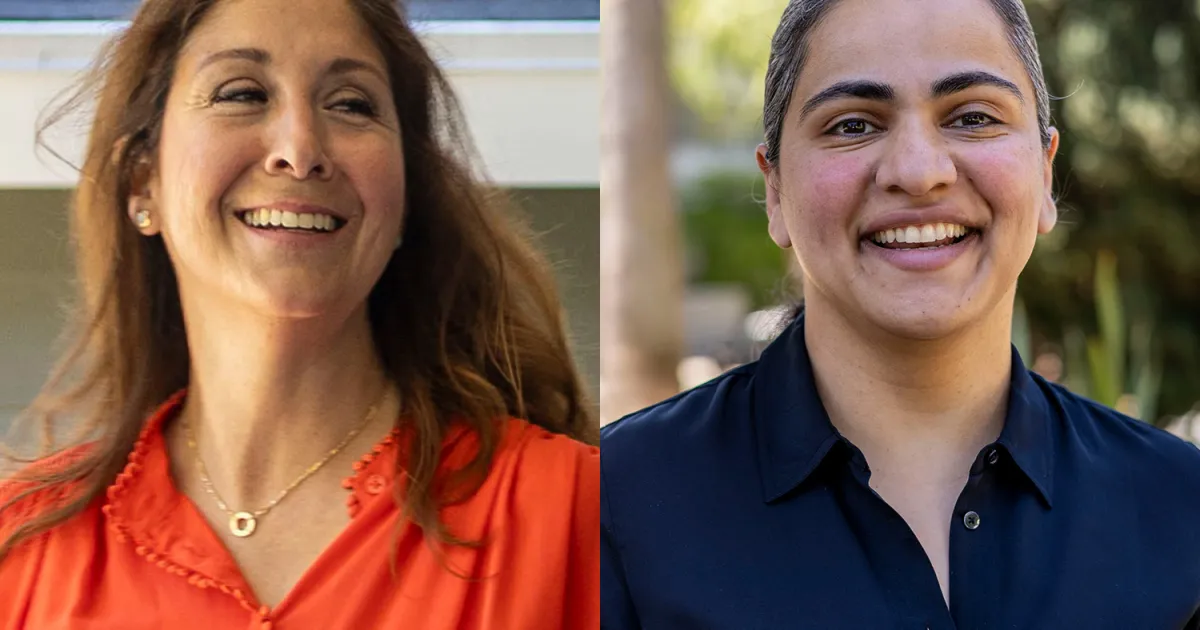
Voters in California’s Bay Area are heading to the polls on Tuesday for a special election to determine the Democrat who will replace former Representative Eric Swalwell in the state’s 14th Congressional District. State Senator Aisha Wahab and local transit official Melissa Hernandez are facing off in the race, which has become increasingly expensive and combative. Wahab has contended against a flood of outside money, with super PACs including those affiliated with the American Israel Public Affairs Committee (AIPAC) spending millions to support Hernandez and oppose Wahab. Wahab has called out what she describes as unprecedented election interference and plans to file a complaint with the Federal Election Commission. The winner will serve out the remainder of Swalwell’s term, which ends in January, following his resignation in April amid allegations of sexual assault which he has denied.
The contest has drawn significant financial attention, with outside groups spending approximately $4.1 million since mid-July. According to Federal Election Commission records, about $3.7 million has been spent to benefit Hernandez’s campaign, compared with just shy of $400,000 to benefit Wahab’s. One AIPAC-affiliated group, the United Democracy Project, spent $1.2 million in August alone in support of Hernandez and in opposition to Wahab, while another group spent $1.7 million on the race.
Wahab, an Afghan American and the first Muslim woman elected to California’s state Senate, has called out Israel’s genocidal war in Gaza and pushed legislation condemning alleged human rights abuses against Palestinians and captives held by Hamas. She has accused outside groups of orchestrating a surge of suspicious accounts and bot-like activity to spread misleading narratives. “What we are seeing is a surge of suspicious accounts, bot-like activity, and very much coordinated to say the same vile, misleading narratives,” Wahab said at a news conference.
The race follows a nonpartisan primary in June where Wahab garnered roughly 38 percent support and Hernandez received 17 percent. Under California’s “jungle primary” system, the two candidates with the most votes advance if neither receives more than 50 percent of the vote. The winner will serve under the current district boundaries, which were redrawn as part of Proposition 50, a 2025 statewide ballot measure approved by voters in response to mid-decade redistricting efforts led by US President Donald Trump.
Hernandez’s campaign has been attacking Wahab for her legislative record on criminal penalties. Meanwhile, a supporter of Hernandez’s campaign has filed a separate FEC complaint against Wahab, alleging the lawmaker received an illegal and unreported in-kind contribution from a local Democratic Party. Wahab, who has received the California Democratic Party’s endorsement, described the complaint as deliberately misrepresenting the party’s support. The candidate who wins this special election will also face Hernandez again in November for the congressional seat’s full two-year term.