Burnham confirmed as UK Labour leader, set to become prime minister
Andy Burnham pledges to shift power from Westminster to local areas and govern through a broad-church cabinet as he prepares to take office.
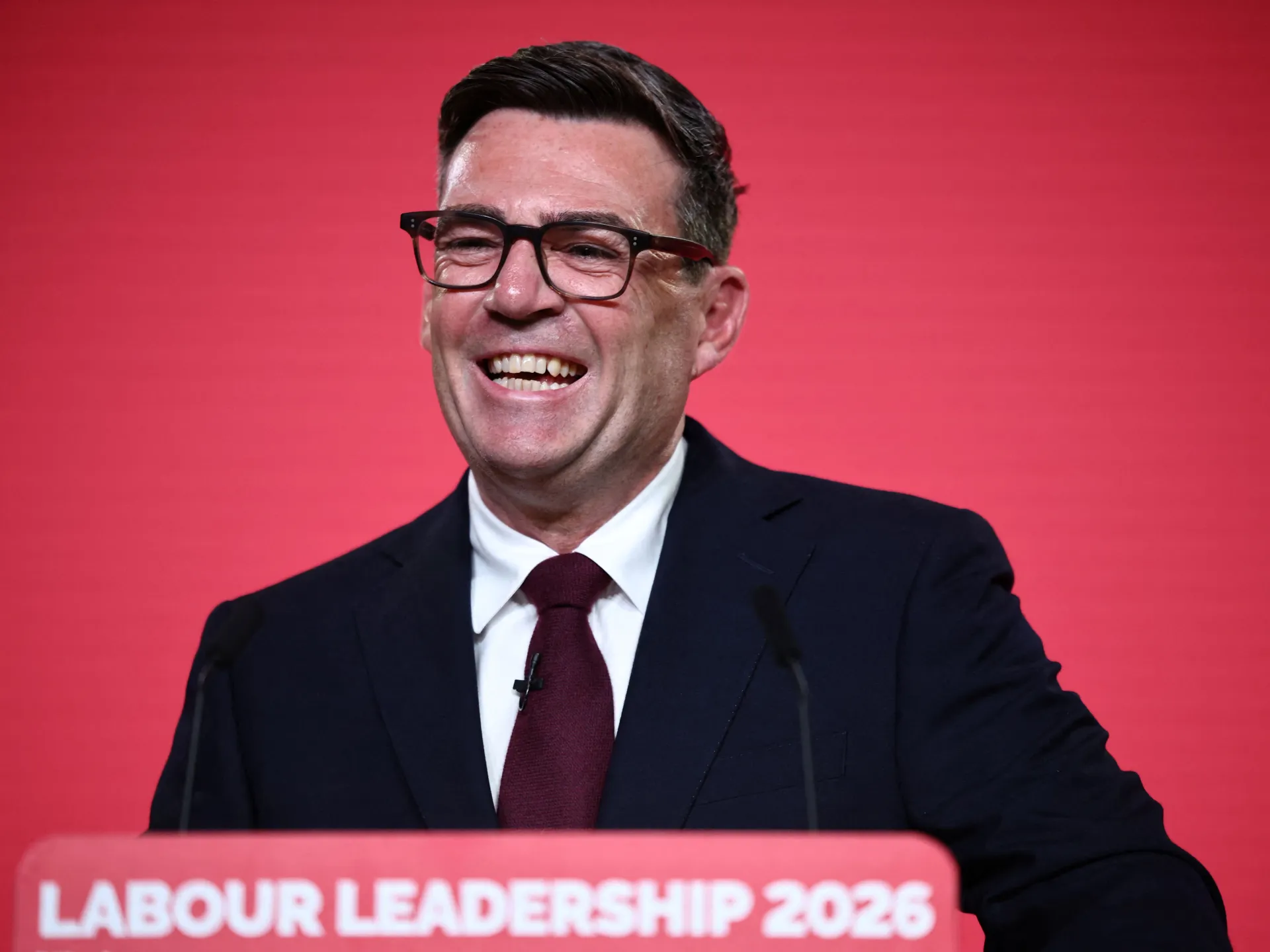
Andy Burnham, the former mayor of Manchester, has been elected leader of the UK’s governing Labour Party, positioning him to assume the role of prime minister on Monday, 20 July 2026. The confirmation occurred at a special party conference on Friday, 17 July 2026, following Burnham’s victory in the Makerfield parliamentary by-election last month. He succeeds outgoing premier Keir Starmer, whose tenure concluded after a period marked by significant domestic and international pressures.
Burnham’s ascent to the premiership follows a leadership transition that has seen support for Starmer decline sharply. The outgoing premier secured a landslide general election victory just two years prior, but his administration faced a relentless cost of living crisis, ongoing wars in the Middle East and Ukraine, and rising polling numbers for the far-right Reform UK party. Burnham paid tribute to Starmer, despite the latter being unseated amid accusations of a lack of leadership.
In his acceptance speech, Burnham pledged to restore hope to the nation, specifically targeting what he described as “forgotten places everywhere.” He emphasised the need to unite the country and address the populist challenge from Reform UK directly. However, he explicitly stated he would not attempt to “out-Green the Greens or out-Reform Reform,” nor would he adopt policies traditionally associated with the opposition. Instead, he vowed to win by being “boldly, confidently, authentically us – Labour.”
To mend internal party fractures following Starmer’s exit, Burnham promised to govern through a “broad-church” cabinet that respects all factions of the Labour movement. He committed to establishing a culture where all colleagues are valued and listened to, assuring party officials that front bench appointments would be based on contribution, experience, and commitment. This approach aims to stabilise the governing party after a turbulent period of leadership change.
Reflecting his tenure as mayor of Greater Manchester, where he fought centralised control to build integrated local transit and housing systems, Burnham pledged to implement a significant shift of power away from central government. He described this as the “biggest rebalancing” in modern British history, promising to take power back from Westminster and Whitehall and give it to local areas. He also positioned himself as a “pro-business” prime minister while placing the cost of living crisis at the forefront of government policy.