Book review examines the evolving role and purpose of human spaceflight
A new book review highlights how the Artemis II mission and the rise of commercial space tourism are redefining why humans travel beyond Earth.
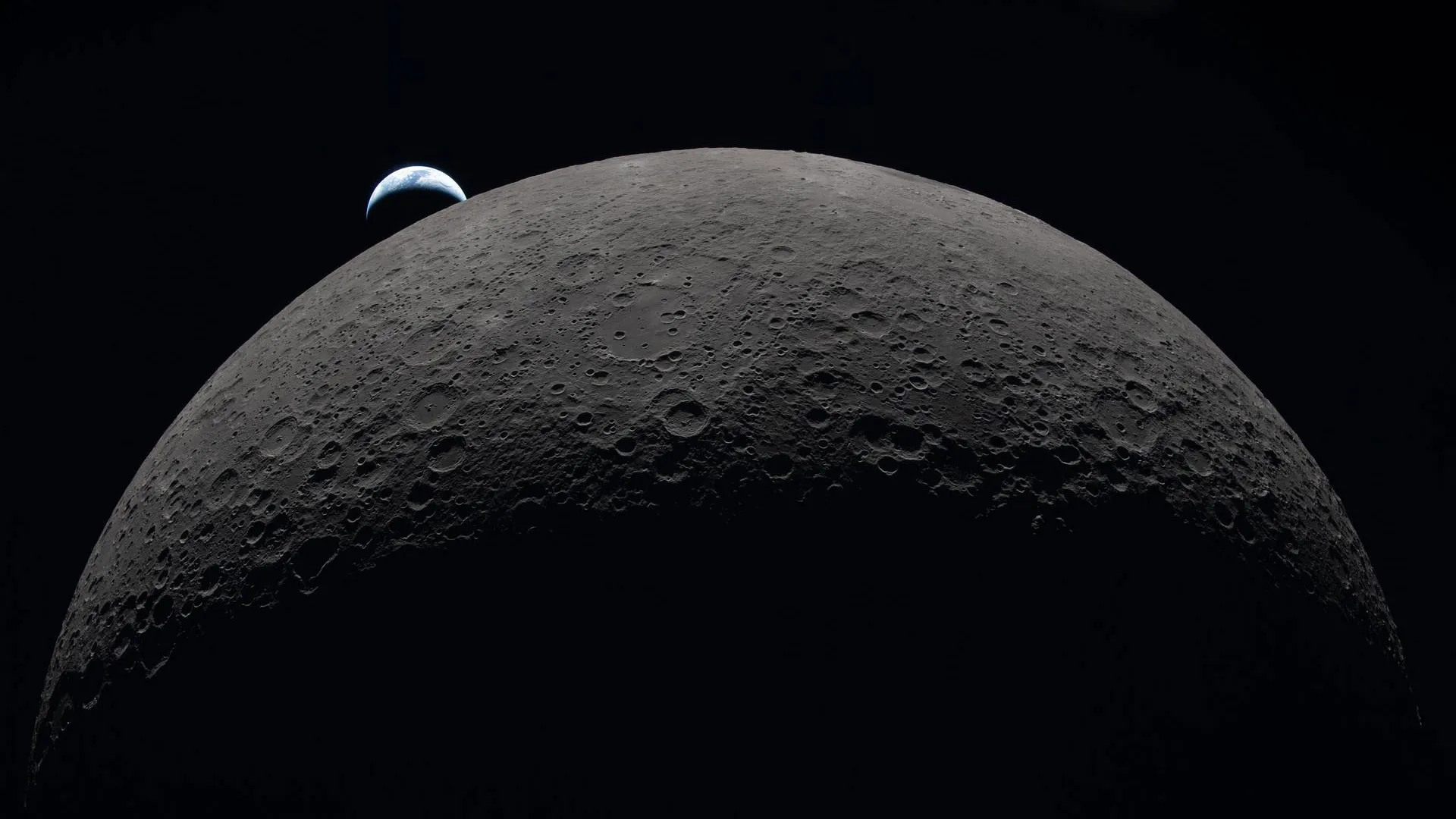
A book review published in MIT Technology Review on 18 August 2026 examines the shifting rationale for human spaceflight, citing new works by Deana L. Weibel, Eiman Jahangir, and Leroy Chiao. The review highlights the Artemis II mission, which recently set a new record for the farthest humans have travelled from Earth, surpassing the Apollo 13 distance by approximately 4,000 miles. The article discusses the transition from geopolitical prestige to evolutionary curiosity and commercial interests, noting the rise of space tourism by companies such as SpaceX and Blue Origin, and the emerging competition between the US and China for lunar resources. It also explores concepts such as the "ultraview effect" and concerns over the commercialisation of space and legal frameworks governing lunar bases.
The Artemis II expedition attracted tens of millions of viewers and inspired a viral sensation known as "moon joy," marking a significant shift from the Cold War era where spaceflight was primarily a tool for geopolitical brinkmanship. While the Apollo 11 landing was watched by 20% of the global population, modern missions are driven by a complex mix of scientific curiosity, commercial opportunity, and what Weibel describes as an ancient compulsion to embark on perilous pilgrimages. This evolutionary drive to expand and adapt is presented as the unifying fact behind the new era of space exploration, superseding earlier justifications based on national pride or technological dominance.
Commercial interests are increasingly prominent, with companies like Blue Origin and SpaceX aiming to capitalise on the burgeoning extraterrestrial tourism market. Cardiologist Eiman Jahangir, who flew on Blue Origin’s New Shepard–26 mission in August 2024, reached an altitude of 65 miles in a 10-minute suborbital flight after winning a raffle. His journey, detailed in his memoir A Heart for Space, is described as the ultimate pilgrimage for a civilian who spent decades dreaming of leaving Earth. However, the commodification of spaceflight has sparked public discomfort, evidenced by the intense online backlash to a Blue Origin mission in April 2025 featuring celebrity passengers, including Katy Perry and Lauren Sánchez Bezos, which was mocked for its branding as a feminist milestone.
The review also addresses the legal and strategic implications of establishing lunar bases, with the US and China both planning to set up outposts on the moon’s south pole in the 2030s. These bases will likely be powered by nuclear reactors, necessitating exclusion zones and raising questions about resource access under current space law, which prohibits nations from owning parts of the moon. While some visionaries like Elon Musk dream of permanent settlements on Mars, others, such as former NASA astronaut Leroy Chiao, argue that human extinction is a natural part of the universe’s order and that robotic probes may ultimately outlive human explorers.
Despite the dangers and expenses of human spaceflight, the review argues that the "ultraview effect"—a concept Weibel uses to describe the awe and alienation felt when gazing into the vastness of space—provides a compelling reason for human presence. This effect, similar to the overview effect but focused on the immensity of the universe rather than the view of Earth, offers a transformative experience that robotic missions cannot replicate. As the role of the astronaut evolves, the review suggests that the fundamental human need to witness and return with testimony remains a powerful driver for venturing into the cosmos.