BJP expands political dominance in West Bengal with decisive election victory
Prime Minister Narendra Modi's party secures 206 of 294 seats, ending the long-standing rule of Mamata Banerjee's TMC on allegations of corruption and economic stagnation.
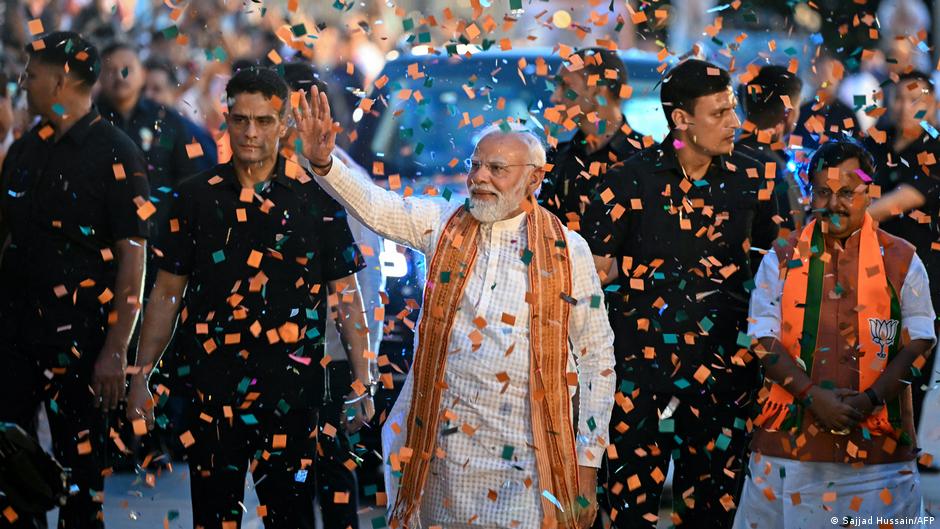
The Bharatiya Janata Party has secured a decisive victory in the West Bengal assembly election, winning 206 of the 294 seats available. This outcome represents a dramatic political shift for the party, extending its dominance beyond its traditional northern and central India heartlands into a key eastern state with a population exceeding 100 million. The result effectively ends the long-standing rule of the All India Trinamool Congress (TMC), which had governed the state since 2011 under the leadership of Mamata Banerjee.
The incumbent leader, Mamata Banerjee, lost her own seat alongside her party's hold on power. Experts attribute this downfall largely to anti-incumbency sentiments regarding corruption allegations and a perceived lack of economic opportunities under the TMC administration. The victory is viewed by observers as a major consolidation of Hindu voters across caste and class lines, despite the state having a substantial Muslim minority comprising over a quarter of the population.
BJP spokesperson Shazia Ilmi stated that the party has "crossed the Rubicon" following the result. She noted that the core formula of combining religious identity, welfare delivery, nationalism, and grassroots organisation can now travel further than previously assumed. The win is seen as strengthening the BJP-led National Democratic Alliance (NDA) coalition and signals that the party's approach can succeed in regions previously resistant to its rise.
Political scientist Gilles Verniers observed that the victory demonstrates that a targeted communal polarisation strategy pays off in the long run. He noted that the outcome strengthens the NDA coalition and suggests that the BJP's march to the south will be incremental, dependent on the capacity of regional parties to reinvent themselves. The result leaves opponents weakened, even in southern India, according to Verniers.
The election was overshadowed by debates over the revision of electoral rolls, an exercise intended to remove duplicate or ineligible voters. Opposition parties and critics alleged that the process disproportionately affected minority voters, leading to the removal of millions of names from the rolls. Transparency activist Amrita Johri claimed that Muslim names were deleted in disproportionately large numbers, potentially impacting the election results.
The Election Commission rejected these claims as baseless, with West Bengal's Chief Electoral Officer Manoj Kumar Agarwal dismissing the allegations. Despite the official defeat, Mamata Banerjee refused to resign, claiming she did not lose morally and alleging that 100 seats were forcibly taken from her party without evidence. She maintained that while the BJP could defeat them officially, the TMC had won the election in the eyes of the people.