Berlin campaigners seek referendum on strict car-reduced zone within circular railway
A citizen movement argues that current traffic policy prioritises vehicles over public health, citing precedents from Oslo and Paris.
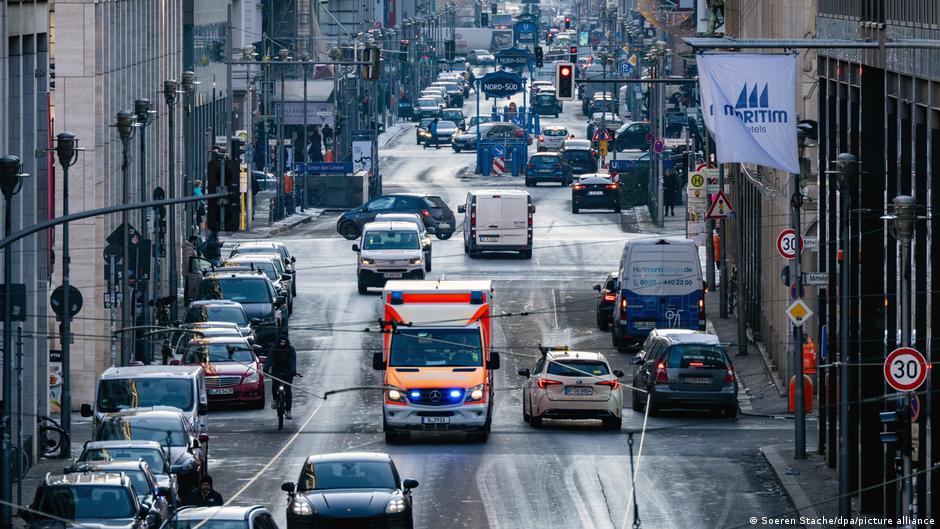
A citizen-led campaign in Berlin is gathering signatures to establish a car-reduced zone within the city centre, bounded by the 37-kilometre circular railway. The initiative, spearheaded by engineer Oliver Collmann, seeks to reclassify streets inside this perimeter to drastically limit private motorised vehicle access. Under the proposed model, residents would be permitted to drive their private cars into the zone no more than twelve times per year.
Access would be restricted to specific instances, including emergency services, essential deliveries, and transport for individuals with restricted mobility. Collmann, who previously worked on software for self-driving cars, argues that the current policy is too car-centric, noting that vehicles currently occupy between 75 per cent and 80 per cent of available urban space within the city. The campaign aims to challenge this dominance by shifting the focus towards the general interest of humankind rather than vehicle throughput.
The primary objectives of the reform are to alleviate traffic congestion, improve air quality, and create space for greenery to mitigate urban heat. Campaigners contend that increasing the density of trees will lower surface and air temperatures through shade and evapotranspiration. This approach aligns with broader European trends where cities are experimenting with urban mobility reforms ranging from automated tolls to limited traffic zones to prioritise pedestrians and cyclists.
If the campaign meets the threshold of securing signatures from at least seven per cent of eligible voters by 8 May, a referendum will be held later this year. The proposal is not framed as an outright ban but rather as a measure against the overuse of cars and the presence of oversized vehicles in the city area. The movement argues that the current situation forces Berliners to lose significant time to traffic, with estimates suggesting a loss of sixty hours per year to congestion.
The initiative draws inspiration from similar reforms implemented in other European capitals, including Oslo, Paris, Vienna, Copenhagen, and Barcelona. Oslo's 2017 program, which utilises an automated ring toll system with lower fees for electric vehicles, resulted in a twenty-eight per cent decline in traffic and a rise in pedestrian activity. Similarly, Paris introduced limited traffic zones at the end of 2024, prohibiting through-traffic in major central areas without imposing fines to allow for driver adaptation.
While the Berlin campaign pushes for strict restrictions, some experts caution that prohibition alone may not be the solution. An adjunct professor in spatial planning suggests that providing what people actually want and finding consensus on what is sensible for businesses and residents is crucial. Nevertheless, the Berlin initiative represents a significant attempt to reshape the heart of the capital, potentially altering the city's governance and urban planning priorities if the signature threshold is successfully met.