Berlin attributes Leipzig airport drone strike to Russian hybrid operations
Germany has formally linked a drone attack at Leipzig/Halle Airport to Moscow, triggering diplomatic retaliation including the closure of the Russian consulate in Bonn and the termination of the Russian House contract in Berlin.
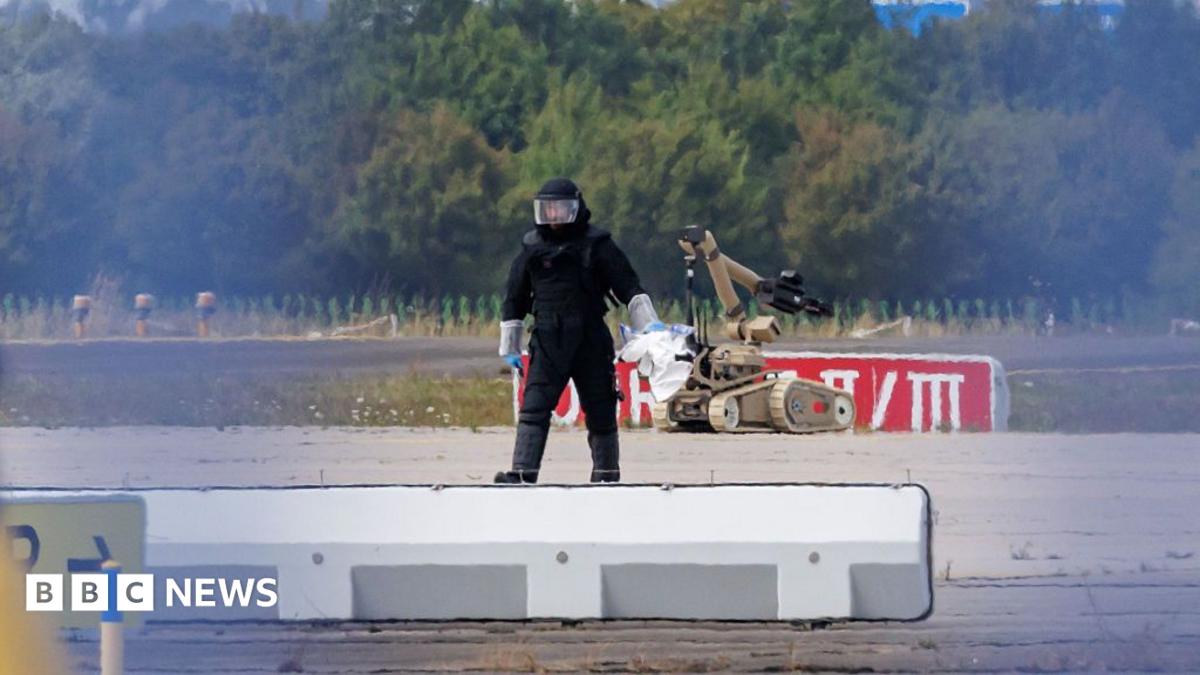
Germany has officially attributed a drone attack at Leipzig/Halle Airport to Russia, marking a significant escalation in diplomatic relations between the two nations. The incident, which occurred on 4 August, involved a drone carrying an explosive device discovered near Ukrainian cargo planes. Investigators noted that the device failed to detonate due to an apparently faulty mechanism, while a second drone reportedly collided with a cargo aircraft nearby. A third drone was located in the vicinity of the airport ten days after the initial incident.
Interior Minister Alexander Dobrindt stated that the attack followed a "well-established pattern of Russian hybrid operations in Europe." He cited the examination of the equipment used and specific intelligence findings as proof of Russian involvement. The German government has long described itself as a daily target of such hybrid warfare, with Chancellor Friedrich Merz recently warning that those carrying out hostile acts against Germany would "pay a price."
In response, Foreign Minister Johann Wadephul announced a series of retaliatory measures, including the closure of the Russian consulate in Bonn and the termination of the contract for the Russian House in Berlin. The Russian House, which many observers have characterised as a venue for espionage and propaganda, is a significant diplomatic presence. Wadephul also ordered tighter entry controls for Russian nationals and vowed to increase pressure on Moscow's "shadow fleet" of tankers, which are used to circumvent Western sanctions.
Russia’s reaction was swift and dismissive. The Russian embassy in Berlin described the German allegations as "absurd" and characterised the measures as an "unprecedented escalation in Russian-German relations." Maria Zakharova, spokesperson for the Russian foreign ministry, stated that Moscow would respond in a "mirror-image" fashion. She accused Berlin of "sponsoring terrorism" through its military and economic support of Ukraine. Russia’s ambassador to Germany, Sergei Nechayev, was summoned to the foreign ministry shortly after the announcements.
The strategic importance of Leipzig/Halle Airport underpins the severity of the response. The facility serves as a critical logistics hub for Germany’s military, NATO allies, and Ukraine’s Antonov Airlines, which handles the majority of the country’s aerial cargo. NATO Secretary General Mark Rutte expressed full solidarity with Germany, stating that the evidence was clear and welcoming the measures announced by Berlin.
The incident has prompted broader European discussion, with EU foreign ministers scheduled to meet in Ireland to address the situation. EU Commission President Ursula von der Leyen stated that the bloc was preparing additional sanctions against Russia. Meanwhile, domestic political tensions in Germany persist, as a state election in Saxony-Anhalt could potentially bring the far-right Alternative für Deutschland (AfD) to power for the first time at a state level. The AfD has advocated for a halt in support for Ukraine and a reopening of ties with Moscow.