Belgrade clashes mark escalation in student-led challenge to Vucic
Clashes between riot police and demonstrators in Serbia’s capital highlight deepening governance crisis and international scrutiny over human rights and electoral integrity.
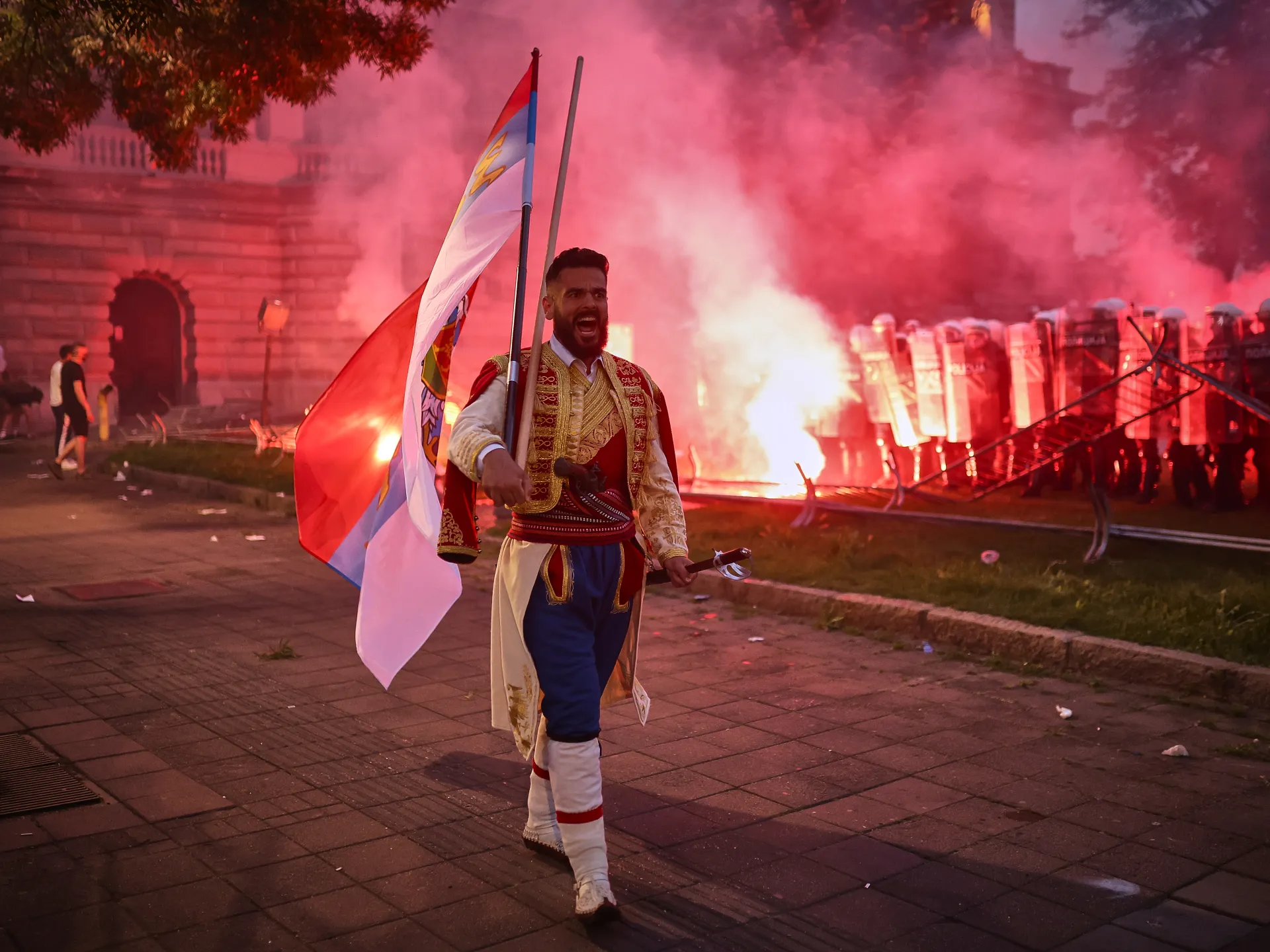
Clashes erupted in central Belgrade on Saturday as a large antigovernment rally, organised by a student movement, drew thousands of demonstrators demanding early elections, justice, and the rule of law. The confrontation with riot police underscores the resilience of a protest movement that has challenged President Aleksandar Vucic’s administration for more than a year, despite significant state efforts to restrict access to the capital and suppress dissent.
The gathering, characterised by banners bearing the "Students win" motto, saw participants accusing the government of corruption and criminality. Demonstrators indicated an intention to challenge Vucic’s right-wing populist government in upcoming parliamentary elections, which the president suggested could be held between September and November. The unrest began near a park camp established by Vucic loyalists outside the presidential building, serving as a physical barrier surrounded by rows of riot police in full gear.
In response to the scale of the turnout, Serbia’s state railway company cancelled all train services to and from Belgrade on Saturday, a move widely interpreted as an attempt to prevent citizens from other regions from travelling to the capital. The logistical disruption comes as the government seeks to rein in mass demonstrations that have persisted since the resignation of former Prime Minister Milos Vucic in January 2025, following sustained anticorruption pressure.
President Vucic, who was en route to China for a state visit at the time of the clashes, posted a video on Instagram accusing protesters of possessing a "violent nature" and an inability to tolerate political opposition. He asserted that the state remains functional and would continue to operate in accordance with the law, seeking to frame the unrest as a disruption of order rather than a legitimate political grievance.
International scrutiny of Serbia’s governance has intensified, with the Council of Europe’s commissioner for human rights, Michael O’Flaherty, criticising the government’s record in a report following a visit last week. O’Flaherty cited a deterioration in the human rights situation since April 2025 and reported that police have been protecting unidentified and often masked attackers of journalists and protesters. The bloc’s top enlargement official has warned that such democratic backsliding could cost Serbia approximately 1.5 billion euros in European Union funding.
The protests originated over accountability for a November 2024 train station tragedy in northern Serbia that killed 16 people, with many citizens attributing the collapse of a concrete canopy to corruption-fuelled negligence involving Chinese contractors. As Serbia seeks to join the European Union while maintaining ties with Russia and China, the ongoing instability presents a significant challenge to its institutional stability and international standing.