Belfast riots expose deep fault lines as ministers blame far-right agitators
Following violent unrest sparked by a stabbing involving a Sudanese refugee, officials in Belfast have condemned the actions of online agitators, while experts highlight the convergence of global far-right narratives with local identity politics.
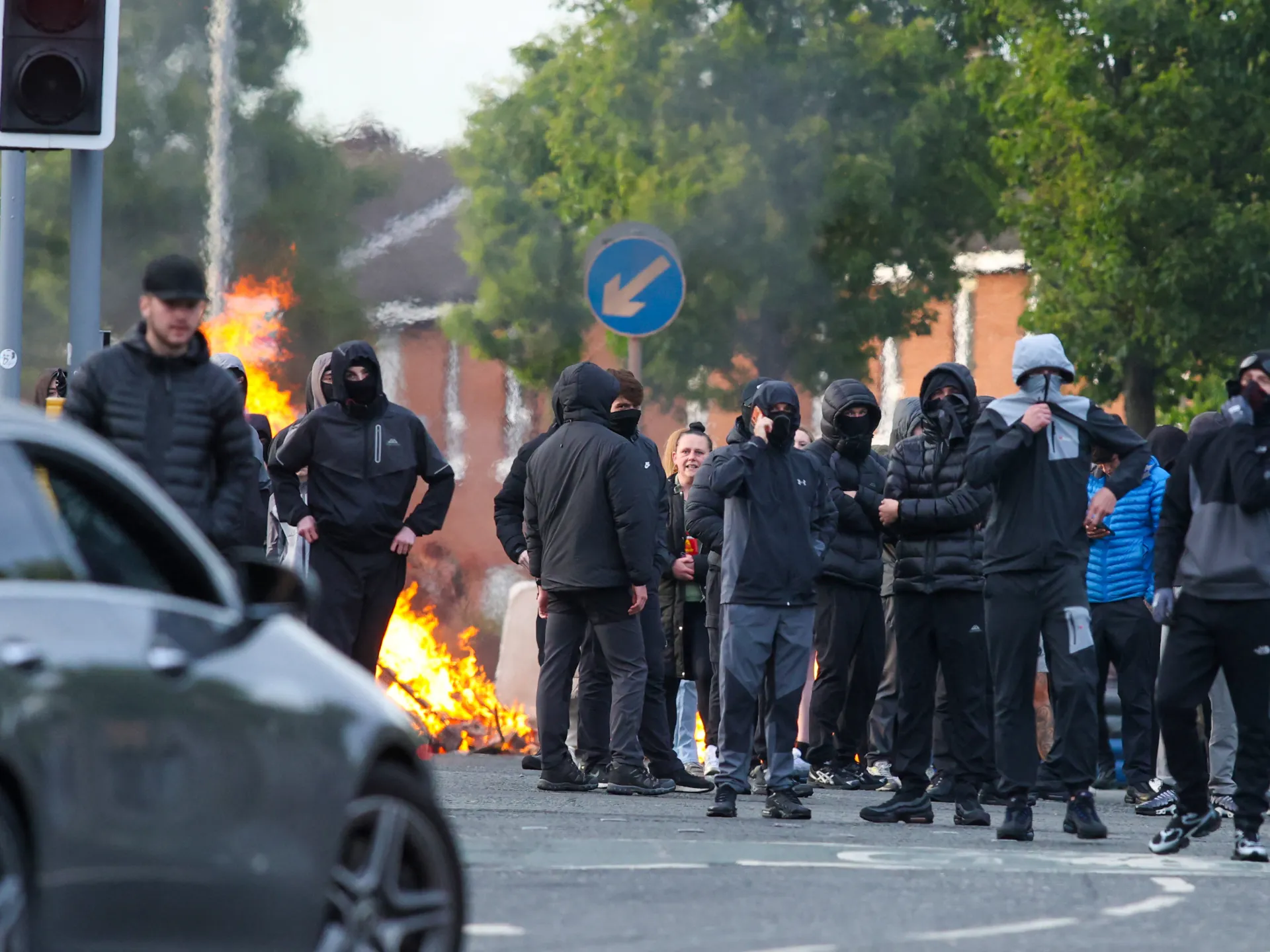
Anti-immigrant riots have erupted across Belfast, Northern Ireland, following the charging of a 30-year-old Sudanese refugee with attempted murder after a knife attack on Monday night. The unrest, characterised by masked protesters blocking roads and setting fire to vehicles and buildings, has prompted evacuations and drawn sharp condemnation from senior political figures who attribute the violence to external agitators exploiting local tensions.
Northern Ireland First Minister Michelle O’Neill and Justice Minister Naomi Long have described the violence as racist intimidation, blaming far-right online networks for stoking tensions. Long stated that bad faith actors from the UK and further afield were deliberately encouraging people to take to the streets, calling this the absolute definition of racism. O’Neill labelled the riots nothing less than disgusting cowardice, emphasising that racism and violence are wrong wherever they occur.
The suspect, a Sudanese national with a legal residence permit valid until 2028, arrived in the UK in 2023 via Paris and Dublin. Police Service of Northern Ireland Chief Constable Jon Boutcher confirmed the suspect had no prior major criminal history with the force. Initial reports suggesting the suspect was Somali were corrected as more detailed information became available, highlighting the rapid flow of unverified information that often precedes such incidents.
The unrest reflects broader political divisions and historical sectarian tensions in the region. Evi Chatzipanagiotidou, a lecturer in anthropology at Queen’s University Belfast, noted that the anti-migration narrative is reigniting identity tensions between Catholic nationalist and Protestant unionist communities. She warned that the Irish border is being framed as a migrant passage corridor, creating a convergence of local historical processes with global far-right politics.
Academic and political observers warn that the situation poses significant governance challenges. Professor Michael Kerr of King’s College London cautioned that a small but determined far-right minority can create fear quickly, particularly when targeting vulnerable communities. He noted that without political unity within the power-sharing executive, the far right can use these incidents to drive a wedge between parties and the police, potentially feeding wider unrest across the UK.
The violence follows similar anti-immigration protests in Southampton and echoes unrest in Northern Ireland last year in Ballymena. Amnesty International has previously described the past 12 months as a shameful year of hate in the region, with police documenting over 2,000 racist incidents. As populist parties continue to press for stricter immigration controls, the incident underscores the complex interplay between domestic policy, international political discourse, and local community safety.